Can You Use Spoiled Milk to Make Paneer? Safety & Quality Guide
 Aug, 21 2026
Soured Milk Paneer Safety & Recipe Assistant
Determine if your "sour" milk is actually usable and get a customized recipe guide.
Check the following signs in your milk. Select any that apply:
Recommended Process
You open the fridge, grab the carton of whole milk you bought last week, and sniff it. It smells sour. The texture looks a bit chunky. Your instinct says throw it out, but your wallet (and maybe your curiosity) asks: can I use spoiled milk to make paneer?
The short answer is yes, but with major caveats. If the milk has naturally soured due to lactic acid bacteria (like in traditional dahi or yogurt production), it’s actually ideal for making paneer. However, if the milk has gone bad due to spoilage bacteria that produce off-flavors or slime, you risk making rubbery, bitter cheese-or worse, getting sick. Here’s how to tell the difference and what to do.
Understanding the Difference Between Sour and Spoiled
To decide if your milk is usable, you need to understand what happened inside the bottle. Milk contains lactose, which bacteria convert into lactic acid. This process lowers the pH, causing casein proteins to coagulate. This is the same chemical reaction used intentionally in making paneer, tofu, and ricotta.
However, not all bacterial activity is good. There are two main types of souring:
- Desirable Souring: Caused by *Lactobacillus* species. This produces a clean, tangy smell similar to yogurt. The milk becomes thick but remains smooth before curdling. This is safe and often preferred for authentic-tasting paneer.
- Spoilage: Caused by unwanted bacteria like *Pseudomonas* or *Enterobacter*. These produce off-odors (ammonia, rancid, or putrid smells), slimy textures, or visible mold. This milk is risky to consume raw and may result in unpleasant-tasting paneer.
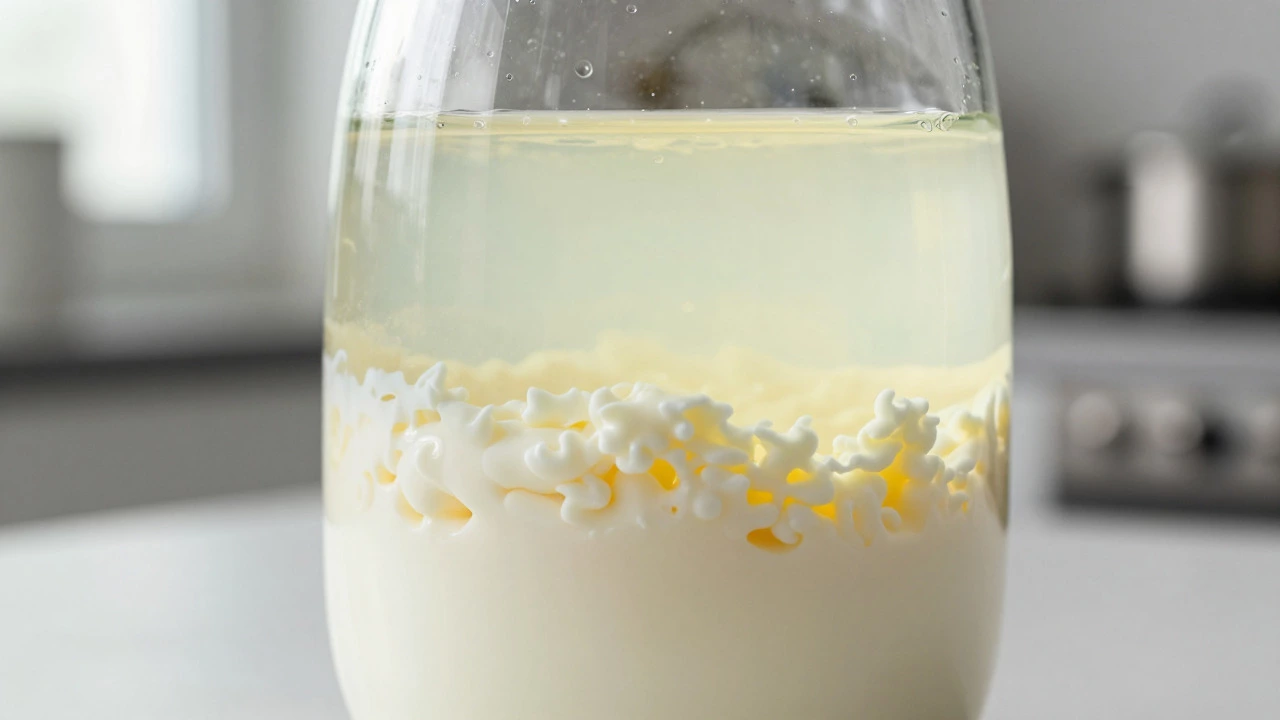
If your milk smells like fresh yogurt and looks uniformly thick, it’s likely desirable souring. If it smells sharp, cheesy in a bad way, or looks separated with watery whey on top and clumps underneath, it might be on the edge of spoilage.
The Science of Paneer Formation
Paneer is a fresh, non-melting cheese made by coagulating milk proteins using an acidic agent. Unlike aged cheeses, paneer doesn’t rely on fermentation for flavor; it relies on the purity of the milk and the heat treatment.
When you heat milk and add an acid (lemon juice, vinegar, or citric acid), the casein micelles break apart and stick together, forming curds. Whey separates from these curds. In commercial settings, this happens within minutes. With already-soured milk, the pH is already low (around 4.6), so the proteins are partially pre-coagulated. This means:
- You don’t need as much added acid.
- The curds form faster.
- The final paneer may have a slightly tangier taste profile.
This is why traditional Indian households often use leftover milk that has soured overnight to make paneer. It’s efficient and reduces waste.
Step-by-Step: Making Paneer from Soured Milk
If you’ve determined your milk is safely soured, here’s how to proceed. Note that the process differs slightly from using fresh milk.
- Inspect the Milk: Ensure there is no mold, slime, or foul odor. A mild sour smell is fine.
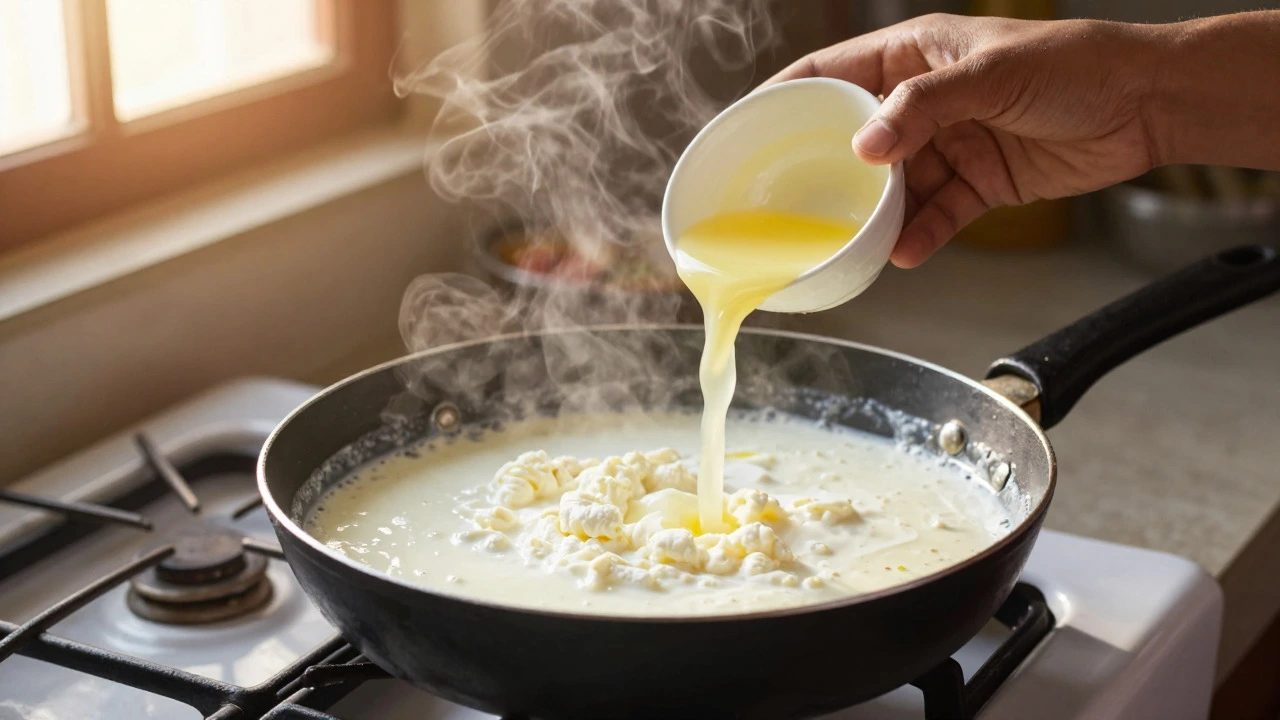
- Heat Gently: Pour the milk into a heavy-bottomed pan. Heat it over medium-low heat. Do not let it boil vigorously, as high heat can scorch the proteins and make the paneer grainy. Aim for a temperature around 80-85°C (175-185°F).
- Add Acid (If Needed): Since the milk is already sour, start with just a splash of lemon juice or vinegar (about 1 tablespoon per liter). Stir gently. If the curds don’t separate clearly, add more acid slowly. Fresh milk requires 3-4 tablespoons per liter; soured milk needs less.
- Let It Set: Once curds form and clear yellowish whey separates, turn off the heat. Let it sit for 5 minutes undisturbed. This helps the curds firm up.
- Strain: Line a colander with cheesecloth or a muslin cloth. Pour the mixture through. Rinse the curds briefly with cold water to remove excess acid and stop the cooking process.
- Press: Gather the cloth corners and hang the bundle under a heavy weight for 15-30 minutes. For softer paneer, press lightly. For firmer cubes suitable for frying, press harder.
Quality Check: How to Tell if Your Paneer Turned Out Well
Using soured milk affects the texture and taste. Here’s what to expect:
| Attribute | Fresh Milk Paneer | Soured Milk Paneer |
|---|---|---|
| Taste | Mild, creamy, neutral | Tangy, slightly acidic |
| Texture | Soft, spongy, holds shape well | Denser, potentially grainier if overheated |
| Color | Pure white | Slightly off-white or cream |
| Yield | Standard yield (~10% of milk volume) | Similar yield, but curds may be smaller |
| Best For | Kadai paneer, palak paneer | Curries where tanginess is desired, fried snacks |
If the paneer tastes too sour, balance it in your dish with a pinch of sugar or extra cream. If it’s too crumbly, you may have heated it too aggressively or added too much acid at once.
When NOT to Use Spoiled Milk
Don’t gamble with your health. Avoid using milk for paneer if:
- It has visible mold spots (even small ones indicate fungal contamination).
- The smell is ammonia-like, rotten, or distinctly “off” rather than tangy.
- The texture is slimy or stringy rather than just thick.
- The milk was stored above 4°C (40°F) for more than 24 hours after opening.
- You’re unsure about the storage history. If someone else handled it, assume the worst.
In these cases, the risk of foodborne illness outweighs the cost of a carton of milk. Save the souring method for milk you know has been refrigerated properly and has only developed natural acidity.
Pro Tips for Better Results
Here are some practical tricks to elevate your homemade paneer game:
- Use Full-Fat Milk: Fat content directly impacts the richness and meltability (or lack thereof) of paneer. Low-fat milk produces dry, crumbly results.
- Citric Acid vs. Lemon Juice: Citric acid powder gives a cleaner taste and more consistent results than lemon juice, which can introduce fruity notes. If using lemon, strain the pulp out.
- Chill Before Cutting: After pressing, chill the paneer block in ice water for 10 minutes. This firms it up, allowing for cleaner cuts without crumbling.
- Store Properly: Keep homemade paneer submerged in cold water in the fridge. Change the water daily. It lasts 3-5 days.
FAQs About Using Spoiled Milk for Paneer
Is it safe to eat paneer made from spoiled milk?
Yes, provided the milk has only naturally soured due to lactic acid bacteria and shows no signs of mold, slime, or foul odor. Heating the milk to 80°C+ during the paneer-making process kills most surface bacteria. However, if the milk was improperly stored, the risk increases.
Why does my paneer taste sour when made from fresh milk?
This usually happens if you used too much acid (lemon juice or vinegar) or didn’t rinse the curds thoroughly after straining. Excess acid remains in the protein matrix. Rinse the curds with cold water until the water runs clear to neutralize the pH.
Can I use UHT milk to make paneer?
Yes, but it behaves differently than pasteurized milk. UHT milk has undergone higher heat treatment, which changes its protein structure. It tends to set faster and can be more brittle. Add acid slowly and avoid boiling to prevent a grainy texture.
How long does homemade paneer last?
What is the best type of milk for making paneer?
Whole cow’s milk with at least 3.5% fat content yields the best results. Buffalo milk, commonly used in North India, produces even richer, creamier paneer due to higher fat and protein levels. Goat milk can also be used but results in a softer, more delicate product.
