Do You Put Lids on Jars When Chutney Is Hot? The Right Way to Seal Chutney for Longevity
 Feb, 3 2026
Chutney Seal Success Calculator
Seal Status
Your chutney jars should be properly sealed for long-term storage.
Ever made a batch of spicy mango chutney, poured it into jars while it was still bubbling hot, and then wondered if you should put the lid on right away? You’re not alone. This question comes up every time someone makes chutney at home-especially in places like Sydney, where summer heat can turn a kitchen into a sauna and food safety becomes a real concern.
Why This Matters More Than You Think
Putting a lid on a hot chutney jar isn’t just about convenience. It’s about creating a vacuum seal that keeps your chutney safe for months. If you get it wrong, you risk mold, fermentation, or worse-botulism. The science behind this is simple: heat drives out air. When you seal a hot jar, that air cools and contracts, pulling the lid down tightly. That’s your seal. No air inside means no bacteria can grow.Many people wait for chutney to cool before capping it. That’s a mistake. By the time it cools, the steam has escaped. The lid won’t suck down. And without that seal, oxygen gets in. Oxygen means spoilage. Spoilage means tossing out your hard work.
The Right Way to Seal Chutney Jars
Here’s exactly how to do it, step by step:- Make sure your jars and lids are clean and dry. Wash them in hot soapy water, then rinse well. You don’t need to sterilize them if you’re using them right away, but boiling them for 10 minutes adds extra safety.
- Heat your chutney until it’s thick and bubbling. It should coat the back of a spoon. If it’s too runny, it won’t preserve well.
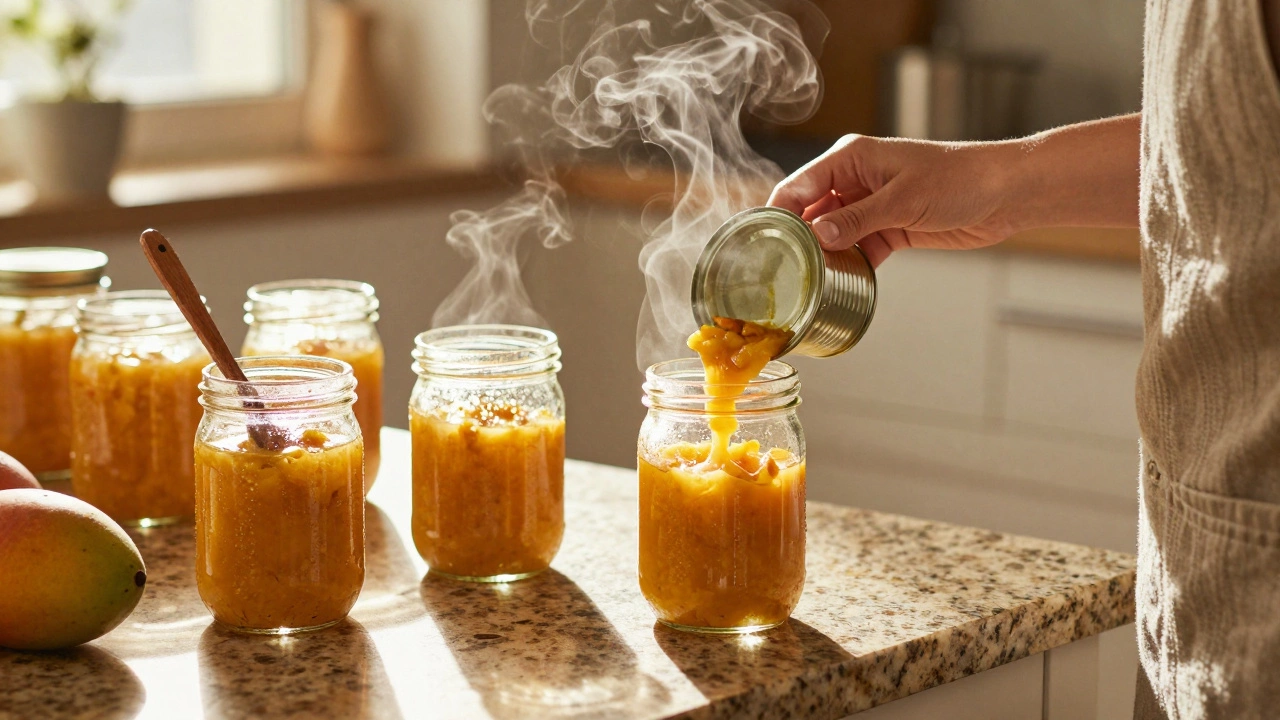
- Immediately ladle the hot chutney into the jars, leaving 1 cm of headspace at the top. Don’t overfill. That space is needed for the vacuum to form.
- Wipe the rims clean with a damp cloth. Any residue-chutney, oil, sugar-can prevent the lid from sealing properly.
- Place the lid on while the chutney is still hot. Screw the band on just until it’s snug. Don’t tighten it hard. You need some room for air to escape during cooling.
- Let the jars sit undisturbed for 12-24 hours. You’ll hear a soft pop as each lid seals. That’s the sound of success.
After 24 hours, press the center of each lid. If it doesn’t move, it’s sealed. If it pops up and down, the seal failed. Refrigerate that jar and use it within two weeks.
What Happens If You Wait?
If you let chutney cool before putting the lid on, you’re essentially opening the door to contamination. Even if you cover the jar with a cloth, airborne yeast and mold spores settle in. Sugar-rich chutneys are especially inviting to microbes. In warm climates like Sydney, room temperature storage after cooling can lead to fermentation in as little as 48 hours.I’ve seen people store chutney in jars with loose lids, thinking, “It’s just a little bit of air.” But air is all microbes need. One jar left unsealed for three days developed a faint fizzy texture. That’s not fizz from carbonation-it’s fermentation. That batch went straight in the bin.
Common Myths About Chutney Storage
- Myth: “I don’t need to seal it if I’m using it within a week.”
Truth: Even short-term storage benefits from a seal. It keeps out fruit flies, dust, and odors from the fridge. Plus, it’s easier to remember if you seal everything the same way. - Myth: “Adding vinegar means it won’t spoil.”
Truth: Vinegar helps, but it’s not a magic shield. Homemade chutney doesn’t have the preservatives or pH control of store-bought versions. A proper seal is still essential. - Myth: “I can reuse old jam lids.”
Truth: Never reuse lids. The rubber seal is designed for one use. Reusing it means a weak or failed seal, even if it looks fine.
How Long Does Sealed Chutney Last?
If sealed properly and stored in a cool, dark place (like a pantry), homemade chutney can last up to 12 months. Once opened, keep it refrigerated and use it within 2-3 months. Always check for signs of spoilage before using:- Visible mold (fuzzy spots, green or white)
- Off smell-sour, yeasty, or alcoholic
- Bubbling or fizzing inside the jar
- Lid bulging or leaking
If any of these happen, throw it out. No exceptions.
What About the Lid Type?
Use standard two-piece metal canning lids: a flat metal disc with a rubber ring, and a screw band. These are designed to create a vacuum seal. Plastic lids, glass lids, or even cloth covers won’t cut it. They don’t form a vacuum. And don’t use twist-off jars from store-bought sauces-they’re not made for home canning. The glass is often thinner and can crack under heat stress.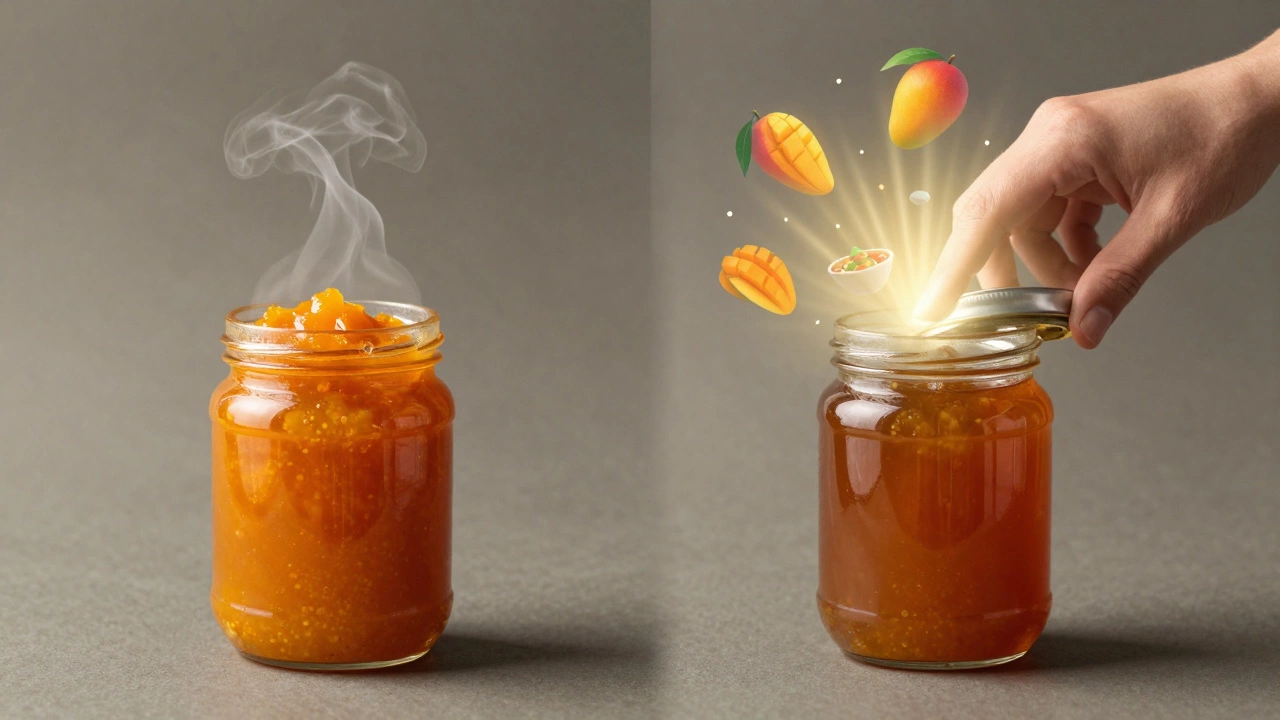
Real-Life Tip from the Kitchen
I make about 15 jars of tamarind chutney every year. I’ve learned that timing matters more than anything. The moment I take the pot off the stove, I start filling jars. I have one person ladling, another wiping rims, and a third placing lids. We work fast, but we don’t rush. Speed with care beats slow and sloppy every time.And here’s something most people don’t know: the color of your chutney deepens after sealing. That bright orange mango chutney you just made? It’ll turn a richer, darker amber after a month. That’s not spoilage-it’s flavor maturing. A good seal lets that happen safely.
What If You Forgot to Seal It?
If you already let your chutney cool without sealing, don’t panic. You can still fix it. Reheat the chutney to a rolling boil for 5 minutes. Pour it into clean, hot jars. Add fresh lids. Seal immediately. This resets the clock and gives you a proper vacuum seal.But don’t do this more than once. Reheating too many times changes the texture and kills the fresh flavor. Better to get it right the first time.
Final Thought: It’s Not Just About Safety
Sealing chutney while hot isn’t just a food safety rule-it’s a ritual. It’s the moment your kitchen work turns into something that lasts. A jar of chutney sealed the right way isn’t just food. It’s flavor preserved from summer, ready for winter. It’s a gift you give your future self.So next time you make chutney, don’t wait. Don’t second-guess. Put the lid on while it’s hot. Let the vacuum do its job. And when you open that jar months later and smell that first burst of spice and sweetness? You’ll know you did it right.
Can I use plastic lids instead of metal ones for chutney jars?
No. Plastic lids don’t create a vacuum seal. They’re not designed for canning and won’t protect your chutney from air, mold, or bacteria. Always use two-piece metal canning lids with a rubber sealing ring.
Do I need to sterilize jars before filling them with hot chutney?
If you’re using clean jars and filling them while the chutney is still boiling hot, sterilization isn’t strictly necessary. But boiling jars for 10 minutes adds a safety layer, especially if you plan to store the chutney for more than a few months. It’s a small step that prevents problems later.
Why does my chutney sometimes bubble after sealing?
Light bubbling right after sealing is normal-it’s trapped air escaping as the chutney cools. But if bubbling continues after 24 hours, or you see fizzing, it means fermentation has started. That chutney is spoiled and should be thrown away.
Can I store sealed chutney in the fridge instead of a pantry?
Yes, you can store sealed chutney in the fridge. It will last longer-up to 18 months. But it’s not necessary. A cool, dark pantry at 15-20°C is perfectly fine. Refrigeration is helpful if you live in a very hot climate or plan to open the jar within a few months.
Is it safe to reuse chutney jars from store-bought products?
You can reuse the glass jars, but never reuse the lids. Store-bought lids are not designed for home canning and won’t form a proper seal. Always use new two-piece metal canning lids for safety. The glass jars are fine as long as they’re free of cracks or chips.
