Does Indian Food Have Eggs? A Clear Guide for Vegetarian Diners
 Dec, 26 2025
Many people assume Indian food is naturally vegetarian-after all, India has one of the highest rates of vegetarianism in the world. But when you’re sitting at a restaurant or cooking from a recipe, a simple question pops up: Does Indian food have eggs? The answer isn’t yes or no. It’s more like, ‘It depends.’
Indian Vegetarian Food Isn’t Always Egg-Free
In India, vegetarianism often means no meat, poultry, or fish. But eggs? They’re a gray area. Many Hindus, Jains, and some Buddhists avoid eggs because they see them as potential life. But in practice, especially in urban areas and among younger generations, eggs are commonly eaten by people who call themselves vegetarian.When you order a ‘vegetarian thali’ in Delhi or Mumbai, you might get dal, rice, roti, and a vegetable curry. But if the kitchen uses eggs in the bread-like in some versions of paratha or bhatura-you won’t always know unless you ask. Eggs aren’t listed on menus. They’re just part of the cooking.
Eggs in Common Indian Dishes
Some dishes you might think are purely vegetarian actually contain eggs:- Paneer Tikka Masala - usually egg-free, but some restaurants use egg wash on the paneer cubes before grilling to make them crispier.
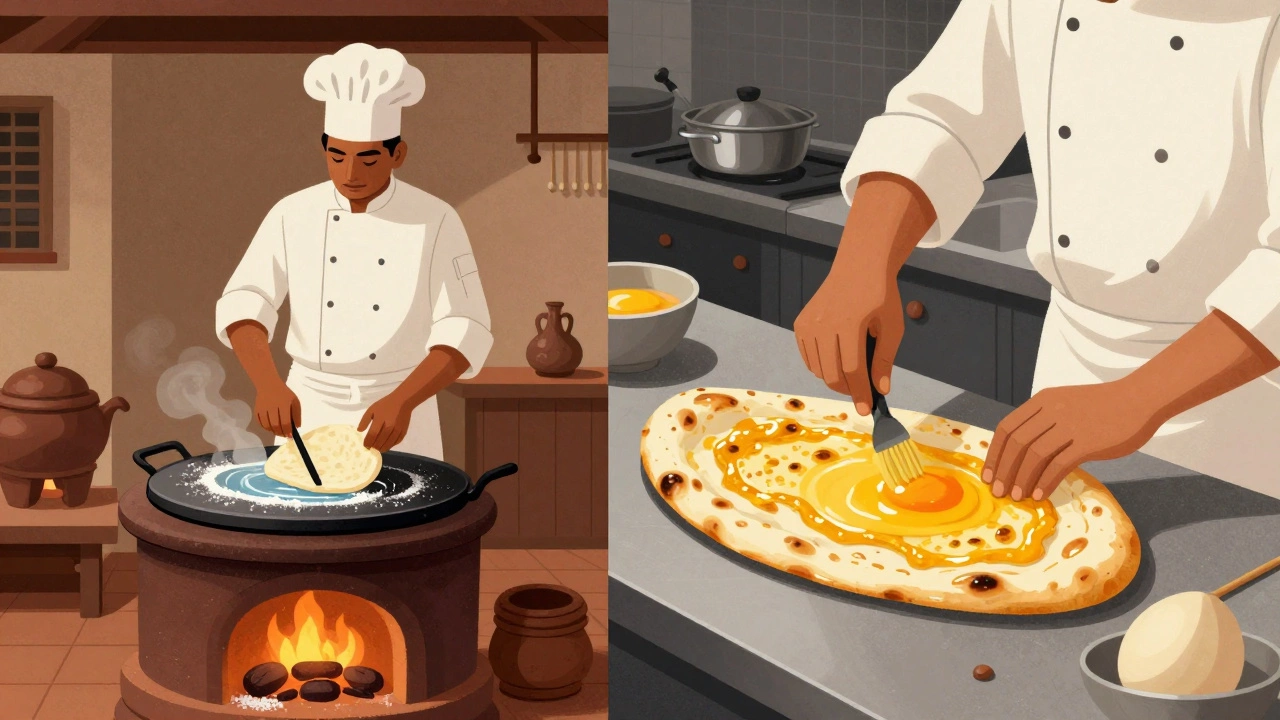
- Naan - traditional naan doesn’t have eggs, but many bakeries in India and abroad add egg wash for shine and softness.
- Parathas - especially stuffed ones like aloo paratha, some versions include beaten egg in the dough for richness.
- Idli and Dosa batter - these are naturally egg-free, made from fermented rice and lentils. But in some commercial kitchens, eggs are added to make them fluffier.
- Indian desserts - like kheer or gulab jamun? Usually egg-free. But pay attention to custard-based sweets like eggless custard (yes, that’s a thing) or traditional kheer made with condensed milk and eggs.
The biggest surprise for many? Egg curry. It’s a real dish in parts of South India and Kerala. It’s not meat, but it’s not vegan either. It’s hard-boiled eggs cooked in a spicy tomato-coconut gravy. Locals call it vegetarian. Outsiders often don’t.
How to Know If a Dish Has Eggs
If you’re avoiding eggs for dietary, religious, or ethical reasons, you can’t rely on the word ‘vegetarian’ on a menu. You need to ask directly. Here’s how to do it without sounding rude:- ‘Does this dish contain eggs or egg wash?’
- ‘Is this made with any animal products besides milk?’
- ‘Is the bread or roti made with egg?’
Many Indian cooks understand the question. In fact, in households and small eateries, they’ll often say, ‘No egg, I promise,’ and point to the ingredients. In bigger restaurants, staff might not know. That’s when you ask to speak to the chef.
What’s Really in Indian Vegetarian Cooking?
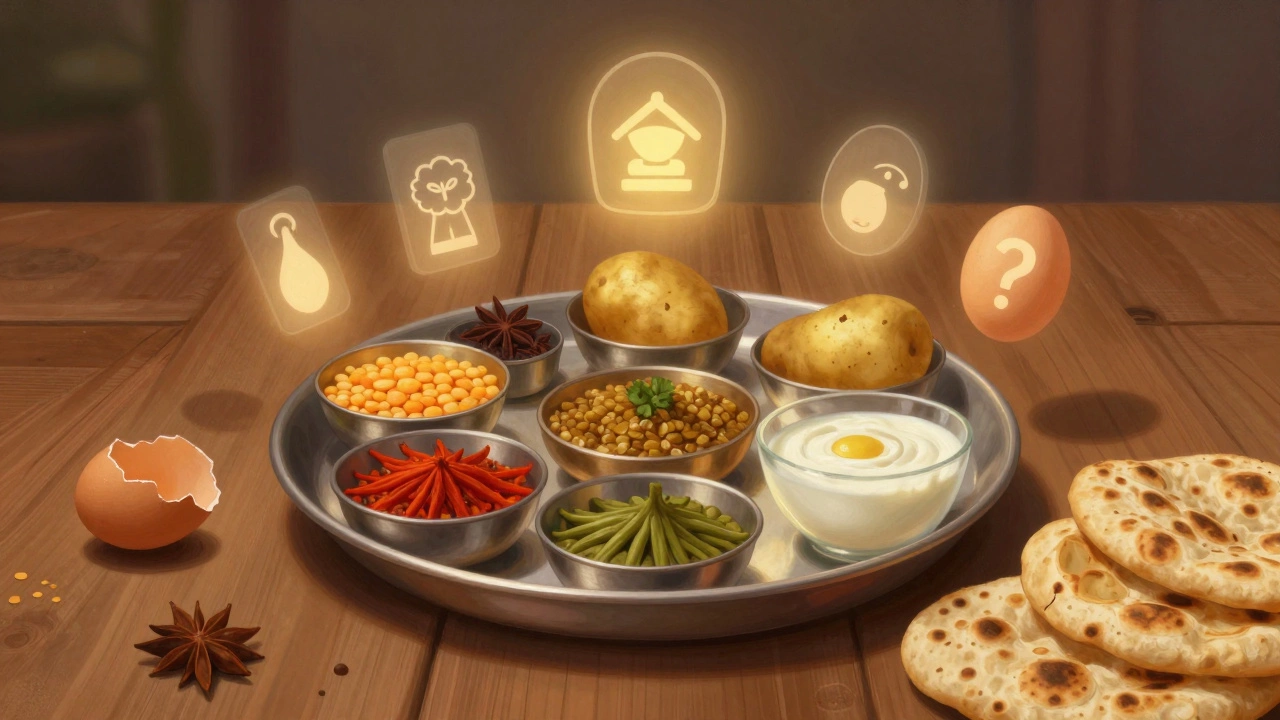
The foundation of most Indian vegetarian dishes doesn’t need eggs. Lentils (dal), chickpeas (chana), spinach (saag), potatoes (aloo), cauliflower (gobi), yogurt (dahi), and spices like turmeric, cumin, and coriander are the stars. The cooking methods-slow simmering, tempering with mustard seeds, frying in ghee-are all egg-free by tradition.Even breads like roti, chapati, and phulka are made with just flour, water, and salt. No eggs. No milk. Just simple, ancient techniques passed down for centuries.
The real changes came with urbanization, Western influence, and commercial food production. Bakeries started adding eggs to bread for texture. Restaurants began using egg wash for visual appeal. And now, you have to look beyond the label.
How to Cook Egg-Free Indian Food at Home
If you want to be sure your Indian meals are egg-free, cook them yourself. Here’s what works:- Use water or plant-based milk instead of egg wash on breads.
- Replace eggs in recipes with flaxseed meal mixed with water (1 tbsp ground flax + 3 tbsp water = 1 egg).
- Buy spices and lentils from bulk stores to avoid cross-contamination.
- Stick to traditional recipes from South India or Punjab-they’re more likely to be egg-free.
For example, try making chana masala with canned chickpeas, onions, tomatoes, ginger, garlic, and garam masala. Serve it with plain roti. No eggs. No guesswork. Just flavor.
Restaurant Tips for Egg-Free Eating
If you’re eating out in India or abroad:- Go to Jain restaurants-they avoid eggs, onions, garlic, and root vegetables. They’re rare but reliable.
- Ask for ‘shakahari’ (Sanskrit for vegetarian) and specify ‘no egg’.
- Choose street food like pani puri, bhel puri, or sev puri-they’re almost always egg-free.
- Avoid anything fried unless you’re sure the oil isn’t shared with egg-based items.
Also, check the packaging if you buy packaged snacks. Some packaged samosas or namkeen contain egg powder as a binder. Look for ‘egg-free’ labels.
Why This Confusion Exists
The confusion comes from how ‘vegetarian’ is defined. In Western countries, vegetarian usually means no animal flesh-including eggs. In India, vegetarian often means no meat or fish, but eggs are still considered acceptable by many. It’s cultural, not universal.Studies from the National Institute of Nutrition in Hyderabad show that over 30% of self-described vegetarians in urban India consume eggs regularly. That number is higher among younger people and in states like Kerala and Tamil Nadu.
So if you’re traveling, dining out, or cooking for someone from India, don’t assume. Ask. It’s not rude-it’s respectful.
What to Order If You’re Avoiding Eggs
Here’s a simple list of Indian dishes that are almost always egg-free:- Dal tadka
- Chana masala
- Aloo gobi
- Palak paneer
- Vegetable biryani (ask if it’s made with vegetable stock, not chicken)
- Idli and sambar
- Dosa with coconut chutney
- Raita
- Papadum (check ingredients-some have egg)
Stick to these, and you’ll be safe. Avoid anything that looks fluffy, creamy, or glazed unless you confirm.
Final Takeaway
Indian food doesn’t inherently have eggs. But many modern versions do. The tradition is egg-free. The reality? It’s mixed. If you need to avoid eggs, don’t trust the word ‘vegetarian.’ Ask. Read labels. Cook at home. And remember-India’s real vegetarian cuisine is built on lentils, spices, and centuries of wisdom, not eggs.Are all Indian vegetarian dishes egg-free?
No. While traditional Indian vegetarian dishes like dal, sabzi, and roti don’t contain eggs, many modern or restaurant versions do. Eggs are sometimes added to breads like naan or paratha for texture, or used as a binder in snacks. Always ask if you’re avoiding eggs.
Is egg curry considered vegetarian in India?
Yes, in many parts of India, especially in South India, egg curry is served as a vegetarian dish. It’s made with hard-boiled eggs cooked in a spiced gravy. While it’s not vegan, it’s commonly labeled vegetarian because it doesn’t contain meat or fish. This causes confusion for visitors who follow Western vegetarian definitions.
Can I find egg-free Indian food in restaurants abroad?
Yes, but you need to be specific. Many Indian restaurants abroad use eggs in breads and desserts to match Western tastes. Ask if the naan, paratha, or dessert contains eggs. Jain restaurants or those owned by strict vegetarians are your safest bet. Look for signs like ‘no onion, no garlic, no egg’ on the menu.
What Indian breads are usually egg-free?
Roti, chapati, and phulka are traditionally made with just flour, water, and salt-no eggs. Naan and paratha may contain eggs or egg wash, especially in restaurants. Always ask. Homemade versions are safer if you control the ingredients.
Do Indian sweets contain eggs?
Most traditional Indian sweets like gulab jamun, jalebi, and kheer are egg-free. But some modern desserts like custards, cakes, or eggless cakes (yes, they exist) may use eggs or egg substitutes. Always check the ingredients or ask the maker if you’re unsure.
