How Long Does Biryani Take to Cook? A Complete Timing Guide
 Aug, 14 2026
Biryani Timing Planner
Configure Your Recipe
(Includes Marination)
- Active Work: 1 Hour 10 Mins
- Passive Waiting: 2 Hours 5 Mins
- Complexity: Medium
Detailed Phase Breakdown
There is nothing quite like the smell of saffron and caramelized onions filling your kitchen. But if you have ever tried making biryani at home, you know that timing is everything. The biggest question beginners ask is simple: how many hours does biryani take to cook? The short answer is anywhere from 45 minutes to over four hours, depending on the method you choose. It is not just about throwing ingredients into a pot and waiting. It is a process of layering flavors, marinating meat, and slow-cooking rice until it is perfectly tender.
If you are planning a dinner party or just want a hearty meal for the family, understanding the timeline is crucial. You cannot rush this dish. If you do, the meat will be tough, and the rice will be mushy. Let’s break down exactly where those hours go, so you can plan your day without stress.
The Hidden Time: Marination
Before you even turn on the stove, the clock starts ticking. The secret to authentic Hyderabadi biryani or any regional variation lies in the marinade. This is where the magic happens. You are not just coating the meat; you are breaking down fibers and infusing deep flavor.
For chicken, you need at least two to three hours of marination. If you have the luxury of time, leaving it overnight in the refrigerator yields the best results. For tougher cuts like goat or mutton, you should aim for four to six hours minimum. Without this step, no amount of cooking time during the actual preparation will save the texture. The yogurt acts as a tenderizer, while spices like garam masala, turmeric, and red chili powder penetrate the meat. Rushing this stage means you end up with bland, chewy pieces instead of succulent bites.
Preparation and Par-Cooking
Once the meat is ready, you move to the active cooking phase. This usually takes about 30 to 45 minutes. First, you prepare the base. This involves frying whole spices like bay leaves, cardamom, and cloves in ghee until they release their aroma. Then, you add the marinated meat and cook it until it is about 70% done. Yes, only 70%. The remaining cooking happens later, during the final steaming process. If you cook the meat fully now, it will dry out by the time the biryani is finished.
While the meat simmers, you prepare the rice. Basmati rice needs to be washed thoroughly to remove excess starch. Soak the rice for 20 to 30 minutes before boiling. Boiling water with salt, whole spices, and lemon juice brings the rice to a boil. You cook the rice until it is par-boiled-about 70% cooked. This means the grain is firm but has swollen. Drain it immediately. This step takes roughly 15 to 20 minutes. Precision here is key. Overcooked rice turns to paste; undercooked rice remains hard and unpleasant.
The Dum Method: Low and Slow
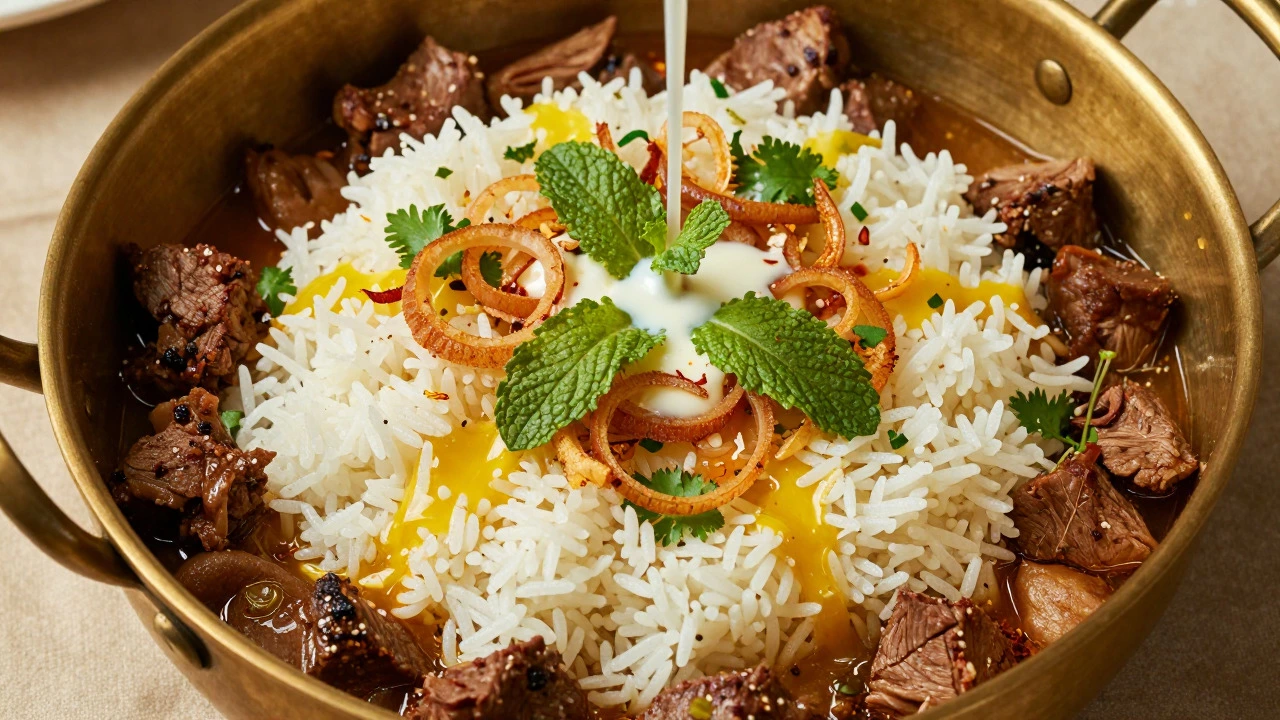
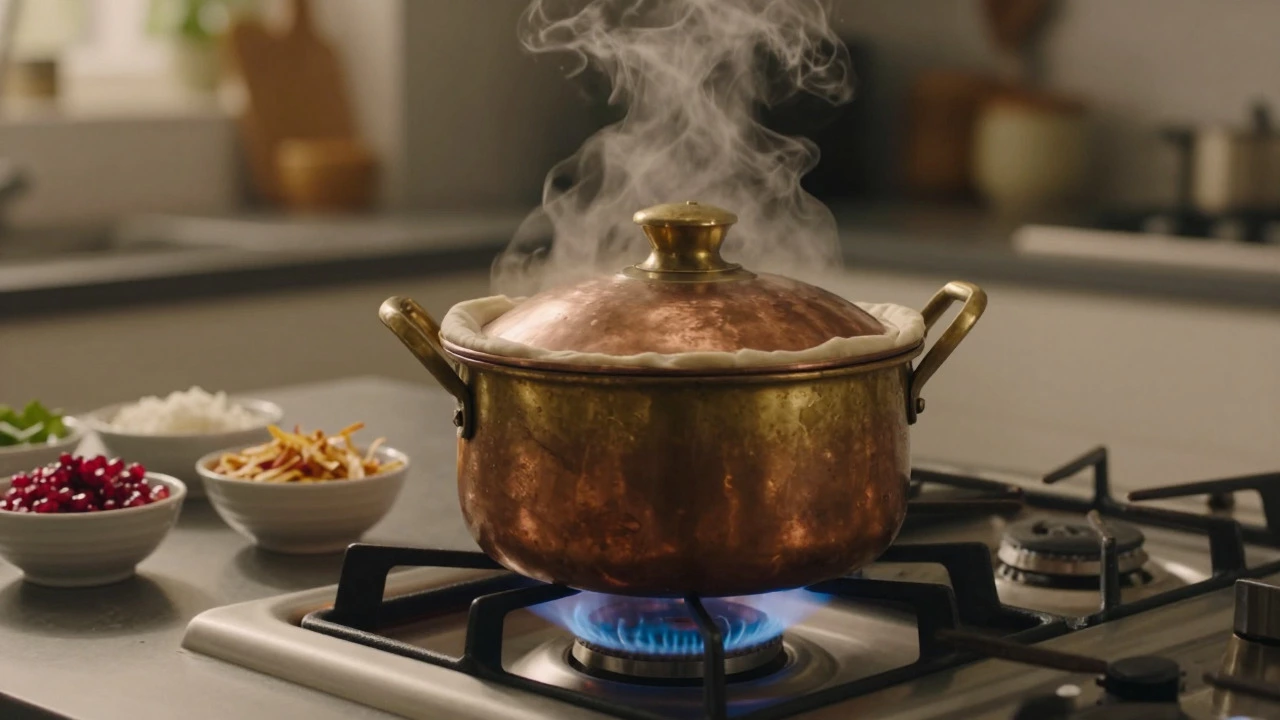
This is the heart of the dish. Dum pukht is a traditional slow-cooking technique where food is sealed in a heavy-bottomed pot and cooked on low heat. The term 'dum' refers to the steam trapped inside. Here is how the timing breaks down for this critical phase:
- Layering: Spread half the meat mixture in the pot. Add half the par-cooked rice. Sprinkle fried onions, mint leaves, coriander, saffron milk, and more ghee. Repeat with the remaining layers. Finish with rice on top.
- Sealing: Cover the pot with aluminum foil or a tight-fitting lid. Some cooks use dough to seal the edges, ensuring zero steam escapes.
- Cooking Time: Place the pot on the lowest possible flame. Cook for 20 to 30 minutes for chicken biryani. For mutton or lamb, extend this to 40 to 60 minutes.
During this time, the steam circulates, cooking the rice completely and finishing the meat. The flavors meld together. The rice absorbs the juices from the meat below. This is why you cannot skip the resting period after cooking. Let the pot sit for 10 to 15 minutes off the heat before opening. This allows the grains to settle and become distinct.
Quick vs. Traditional: Choosing Your Path
Not everyone has four hours to spare. Modern life demands quicker solutions. Here is a comparison of different approaches to help you decide which fits your schedule.
| Method | Total Time | Active Work | Best For |
|---|---|---|---|
| Traditional Dum (Chicken) | 3 - 4 hours | 1 hour | Weekend meals, special occasions |
| Traditional Dum (Mutton) | 4 - 5 hours | 1.5 hours | Festive gatherings, large families |
| Pressure Cooker Method | 45 - 60 minutes | 20 minutes | Weeknight dinners, quick fixes |
| Instant Pot / Electric Pressure Cooker | 30 - 40 minutes | 15 minutes | Busy professionals, small households |
| Kacchi Biryani (Raw Meat) | 2 - 3 hours | 1 hour | Purists seeking authentic texture |
The pressure cooker method is a game-changer for weeknights. You marinate the meat quickly, cook it partially in the pressure cooker, then layer with rice and steam for just 10 to 15 minutes under pressure. The result is surprisingly close to the traditional version, though it lacks the subtle smokiness of the dum method. If you are short on time, this is your best bet. However, for a true feast, stick to the slow-cooked route.
Troubleshooting Common Timing Issues
Even experienced cooks face challenges. Here are some common problems related to timing and how to fix them.
Rice is too soft: You likely boiled the rice too long before layering. Next time, check the grain after 8-10 minutes of boiling. It should still have a slight bite. Also, ensure you are using aged basmati rice, which holds its shape better than new crop rice.
Meat is tough: The marination time was insufficient, or you cooked the meat too aggressively before the dum stage. Use a blender to make a fine spice paste for better penetration. Extend marination time to overnight if possible.
Burnt bottom layer: The flame was too high during the dum phase. Always use the lowest setting. Placing a tawa (griddle) between the burner and the pot can help distribute heat evenly and prevent scorching.
Lack of aroma: You skipped the blooming of spices or used stale saffron. Toast whole spices in dry pan before grinding or adding. Store saffron threads in an airtight container away from light. Freshness matters immensely in biryani.
Pro Tips for Perfect Timing
To master the art of biryani, keep these tips in mind. They will save you time and improve quality.
- Prep Ahead: Chop all vegetables, fry onions, and grind spices the night before. Store them in separate containers. This cuts active cooking time by half.
- Use a Timer: Set alarms for each stage. Marination, boiling rice, and dum cooking all require precise attention. Distractions lead to mistakes.
- Invest in Good Equipment: A heavy-bottomed handi or Dutch oven retains heat better than thin pots. This ensures even cooking during the dum phase.
- Adjust for Altitude: If you live in a high-altitude area, water boils at a lower temperature. Increase cooking times slightly for both rice and meat.
- Saffron Infusion: Steep saffron in warm milk for at least 15 minutes before adding. This releases the color and flavor fully, enhancing the visual appeal and taste.
Making biryani is a labor of love. It requires patience, precision, and respect for tradition. Whether you spend three hours on a weekend or 45 minutes on a Tuesday, the joy comes from sharing the meal. Do not let the time commitment scare you. Break it down into manageable steps, and soon you will be serving restaurant-quality biryani at your own table.
How long does it take to make biryani from scratch?
From start to finish, including marination, preparing rice, and the dum cooking process, it typically takes 3 to 4 hours for chicken biryani and 4 to 5 hours for mutton biryani. If you use a pressure cooker, you can reduce the total time to about 45 to 60 minutes.
Can I make biryani faster without losing flavor?
Yes, by using pre-ground spices and chopping ingredients ahead of time. Using a pressure cooker significantly reduces cooking time. However, for the deepest flavor, allow at least 2 hours for marination, even if you speed up the cooking phase.
What is the difference between Kacchi and Pakki biryani timing?
In Pakki biryani, the meat is cooked separately before layering with rice, taking about 30-40 minutes for the meat phase. In Kacchi biryani, raw marinated meat is layered with rice and cooked together in one pot, which requires careful timing (usually 45-60 minutes on low heat) to ensure the meat cooks through without burning the rice.
How long should I marinate chicken for biryani?
For the best results, marinate chicken for at least 2 to 3 hours. Overnight marination in the refrigerator is ideal as it allows the spices to penetrate deeply, resulting in more tender and flavorful meat.
Does the type of rice affect cooking time?
Yes, aged Basmati rice is preferred because it has less moisture and cooks faster and more evenly than new crop rice. New crop rice may require slightly longer soaking and boiling times, increasing the risk of becoming mushy if not monitored closely.
