How Long Does Dal Take to Soften? Cooking Times for Every Type
 May, 12 2026
Dal Cooking Time Calculator
There is nothing worse than biting into a bowl of dal, which is a staple Indian lentil dish that serves as the comfort food anchor of millions of meals only to find the lentils are still hard and crunchy. You’ve simmered it, you’ve seasoned it, but the texture is wrong. The main question on your mind is usually: how long does dal take to soften?
The honest answer is: it depends entirely on the type of dal you are using and the method you choose to cook it with. Yellow split peas behave very differently from whole red kidney beans. If you get the timing wrong, you end up with either mushy soup or inedible rocks. Let’s break down exactly what happens in the pot so you can get that perfect, creamy consistency every single time.
Why Some Dals Take Longer Than Others
Before we look at specific minutes, you need to understand why some lentils soften faster than others. It comes down to structure. Whole legumes have a tough outer skin and a dense interior, meaning they hold their shape for a long time. Split lentils, on the other hand, have had that protective skin removed and have been cut in half. This exposes more surface area to the water, allowing them to break down rapidly.
Think of Masoor dal (red lentils). These are small, orange-red, and split. They disintegrate almost as soon as they hit boiling water. In contrast, Chana dal (split chickpeas) are denser and have a thicker coat, requiring significantly more heat and time to become tender. Understanding this distinction is the first step toward mastering a simple dal recipe.
Cooking Times by Method
The tool you use changes the timeline dramatically. Most Indian households rely on the pressure cooker because it traps steam and raises the internal temperature above the boiling point of water. This forces moisture into the lentils much faster than an open pot can. However, if you don’t own one, or prefer the hands-on approach of a stovetop pot, the times will be longer.
| Dal Type | Pressure Cooker (Whistles) | Open Pot / Stovetop | Instant Pot / Electric |
|---|---|---|---|
| Masoor Dal (Red Lentils) | 3-4 Whistles | 15-20 Minutes | 8-10 Minutes (Manual) |
| Toor Dal (Pigeon Peas) | 6-8 Whistles | 30-40 Minutes | 15-18 Minutes (Manual) |
| Moong Dal (Yellow Split Mung) | 4-5 Whistles | 20-25 Minutes | 10-12 Minutes (Manual) |
| Chana Dal (Split Chickpeas) | 8-10 Whistles | 45-60 Minutes | 20-25 Minutes (Manual) |
| Kabuli Chana (Whole White Chickpeas) | 12-15 Whistles* | 90+ Minutes* | 35-40 Minutes (Manual)* |
*Note: Whole white chickpeas almost always require soaking for 8-12 hours before cooking to reduce these times significantly. Never cook dry whole chickpeas without soaking unless you have all day.
The Soaking Factor: To Soak or Not to Soak?
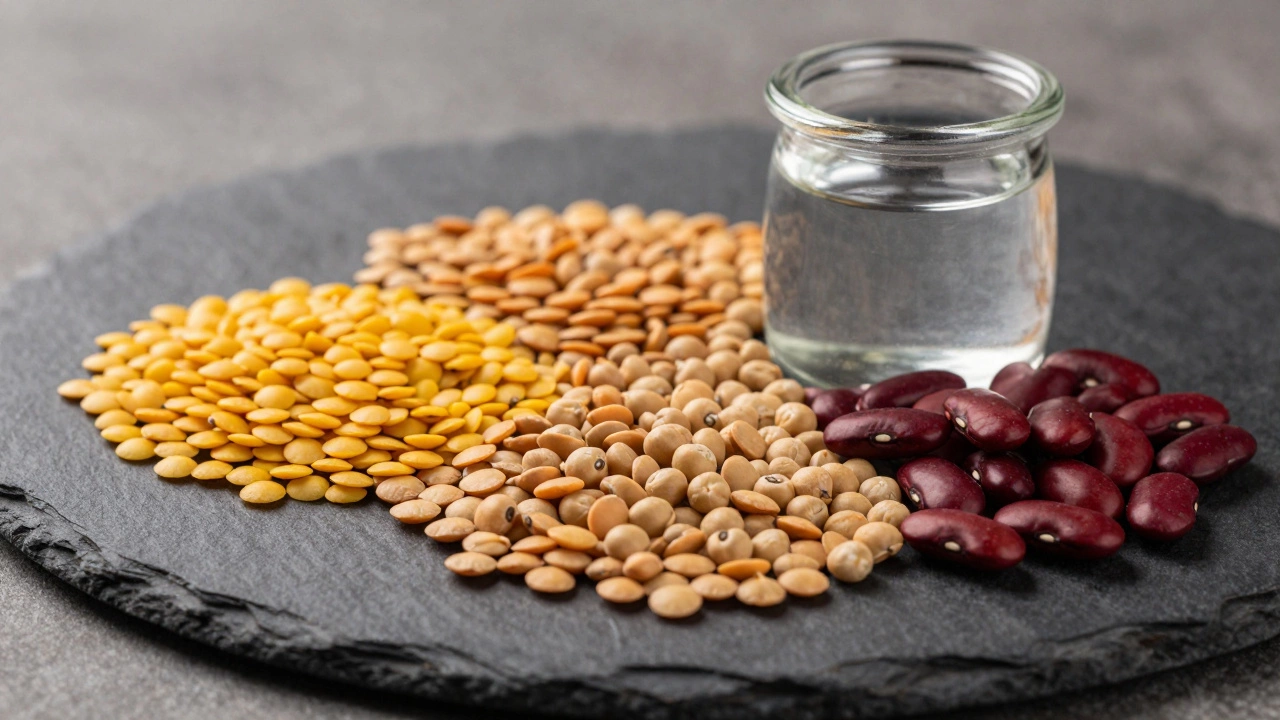
This is where many home cooks make mistakes. For small, split dals like Masoor, Moong, and Toor, soaking is optional. It helps slightly with digestion and reduces cooking time by about 20%, but it isn't strictly necessary if you are short on time. You can throw them straight into the pot after rinsing.
For larger, harder dals like Chana dal or Rajma (kidney beans), soaking is non-negotiable. Soaking not only softens them but also removes oligosaccharides-the complex sugars that cause gas and bloating. If you skip the soak for these types, even a pressure cooker might struggle to fully soften them, leaving you with uneven textures where some pieces are mushy and others remain hard.
Common Mistakes That Keep Dal Hard
If you followed the timer but your dal is still firm, something else went wrong. Here are the usual suspects:
- Not enough water: Lentils expand as they absorb water. A good rule of thumb is a 1:2 ratio for split dals (1 cup dal to 2 cups water) and 1:3 for whole or harder dals. If the water evaporates before the dal is soft, the cooking process stops.
- Adding salt too early: There is an old myth that salt hardens lentils. While this is exaggerated, adding a large amount of salt at the very beginning can slow down the softening process slightly. It is safer to add most of your salt after the dal has softened.
- Using acidic ingredients too soon: Tomatoes, tamarind, or vinegar create an environment that prevents pectin breakdown in the bean skins. If you want soft dal, add these acidic ingredients during the final tempering stage, not during the initial boil.
- Old stock: If your dal has been sitting in the cupboard for over a year, it will take much longer to soften, no matter how hard you try. Freshness matters.
How to Tell When Dal is Perfectly Soft
You don't need a thermometer to know when your dal is done. Use your senses. First, look at the water. As the starches release, the liquid should turn cloudy and thick. Second, use the "squish test." Take a spoonful of dal and press it against the side of the pot. If it smears easily and leaves a creamy residue, it is done. If individual grains bounce back or feel distinct and gritty, keep cooking.
For a simple dal recipe, you want the dal to be soft enough that you can mash it slightly with a fork. This creates the body for the gravy. If you are making a khichdi or a soupier version, you might want it slightly firmer, but never hard.
Pro Tips for Faster Softening
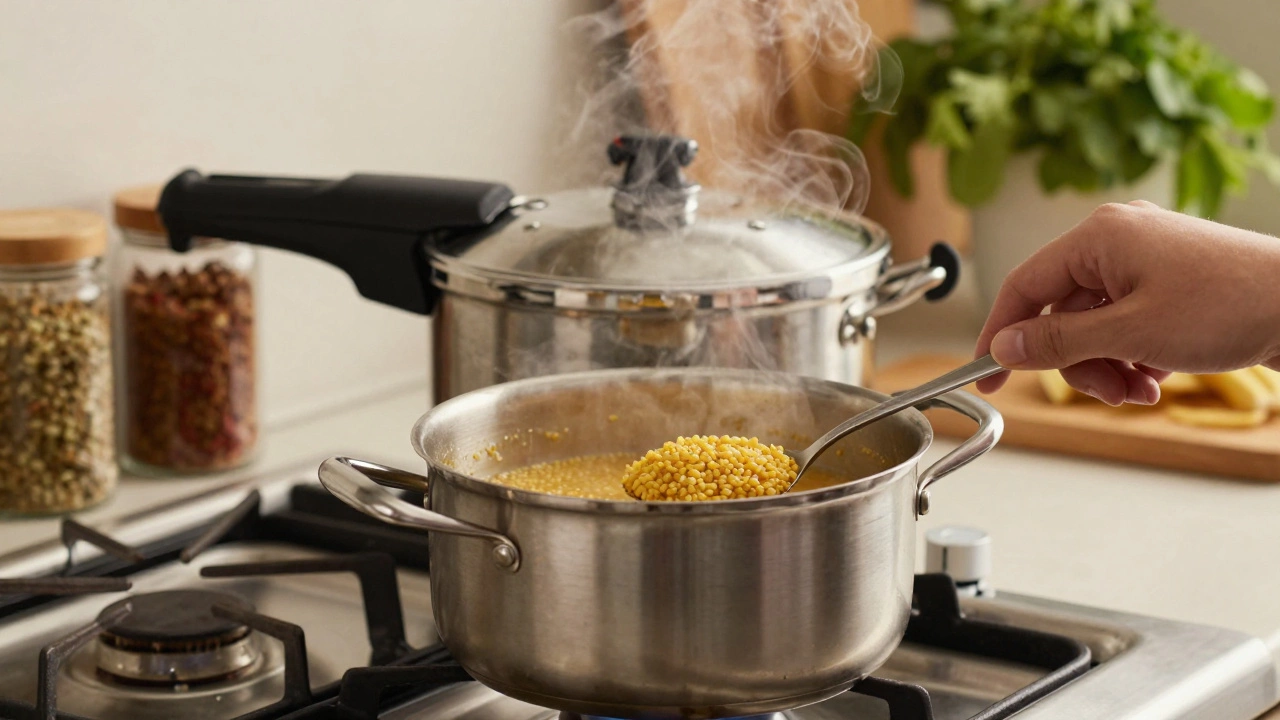
If you are in a rush, there are tricks to speed up the process without sacrificing taste. One popular hack is adding a pinch of baking soda. Just a tiny pinch (less than 1/8 teaspoon) raises the pH level of the water, which breaks down the hemicellulose in the bean skins faster. Be careful not to add too much, or your dal will smell metallic and lose nutrients.
Another tip is to rinse your dal thoroughly under cold water until the water runs clear. This removes excess dust and loose starches that can sometimes cause foaming in the pressure cooker, leading to burnt bottoms instead of soft lentils. Finally, ensure your lid is sealed tightly. Steam is your best friend; escaping steam means lost heat and longer cook times.
Storage and Reheating Softened Dal
Once your dal is perfectly soft, you might not eat it all at once. Stored correctly, cooked dal lasts 3-4 days in the refrigerator. Interestingly, dal often tastes better the next day as the flavors meld together. When reheating, add a splash of fresh water. Cooked lentils absorb liquid as they cool, so reheating without extra water can make them dry and pasty rather than soft and creamy.
Avoid freezing dal with heavy cream or yogurt added, as dairy can separate upon thawing. Freeze the plain cooked dal, then add your tempering and garnishes when you reheat it. This ensures the texture remains smooth and inviting.
Does soaking dal really make it softer?
Yes, soaking significantly reduces cooking time and results in a softer texture, especially for harder varieties like Chana dal and Kabuli chana. For softer split lentils like Masoor or Moong, soaking is optional but can help reduce gas-causing compounds.
Why is my dal still hard after pressure cooking?
This usually happens due to insufficient water, adding acidic ingredients (like tomatoes) too early, or using very old lentils. Ensure you have enough water to cover the dal by at least an inch, and avoid acid until the dal is fully tender.
Can I use baking soda to soften dal faster?
Yes, a tiny pinch of baking soda can speed up the softening process by breaking down bean skins. However, use sparingly as too much can affect the flavor and destroy some B vitamins.
How do I know when dal is done without tasting it?
Perform the "squish test." Press a lentil against the side of the pot with a spoon. If it smears easily and looks creamy, it is done. If it holds its shape or feels gritty, it needs more time.
What is the best water-to-dal ratio for softening?
A general rule is 1:2 for split dals (like Masoor or Moong) and 1:3 for whole or harder dals (like Chana or Rajma). Adjust based on whether you want a soupy or thick consistency.
