How to Keep Roti Soft for Days: Simple Tips That Actually Work
 Jan, 13 2026
Roti Storage Calculator
Calculate Roti Storage Method
Enter how many days you need to store your roti to get the best method for keeping them soft.
Recommended Storage Method
Nothing beats a warm, fluffy roti fresh off the tawa-until it turns hard and brittle by lunchtime. You’re not alone if you’ve made a batch of roti only to find them stiff, dry, and impossible to fold by the next meal. The problem isn’t your recipe. It’s what happens after they come off the heat.
Why Roti Gets Hard
Roti turns hard because moisture escapes fast. Wheat flour has starch and protein, and when baked, the water inside evaporates. Without proper handling, that moisture doesn’t come back. The more air exposure, the faster it dries. Even storing roti in a plastic bag won’t help if you do it wrong.
Temperature matters too. Leaving roti out at room temperature for more than 2 hours starts the staling process. Refrigerating them raw? That’s worse-it pulls out moisture and makes the dough tough. Freezing? Only if done right.
Step-by-Step: How to Make Roti That Stays Soft
Follow these steps exactly. They’re based on how home cooks in Punjab and Gujarat keep roti soft for days-not by fancy tools, but by simple, proven habits.
- Use the right flour. Opt for whole wheat atta with medium protein content-around 10-12%. Too high (like bread flour) and your roti gets chewy. Too low, and it falls apart. Look for brands labeled "roti atta"-they’re milled for softness.
- Hydrate the dough properly. Mix flour and water slowly. Add water gradually until the dough feels like your earlobe-soft, pliable, not sticky. Let it rest for at least 30 minutes. This lets the flour fully absorb water, which keeps roti moist longer.
- Add a fat source. Mix in 1 teaspoon of ghee or oil per cup of flour before kneading. Fat coats the gluten strands and slows moisture loss. Some add a pinch of sugar too-it helps retain water and gives a slight softness boost.
- Cook on medium heat. Too hot? The outside burns before the inside steams. Too cool? Roti gets dense. Use medium-low heat. Flip once, press gently with a cloth to puff it up. That puff traps steam inside.
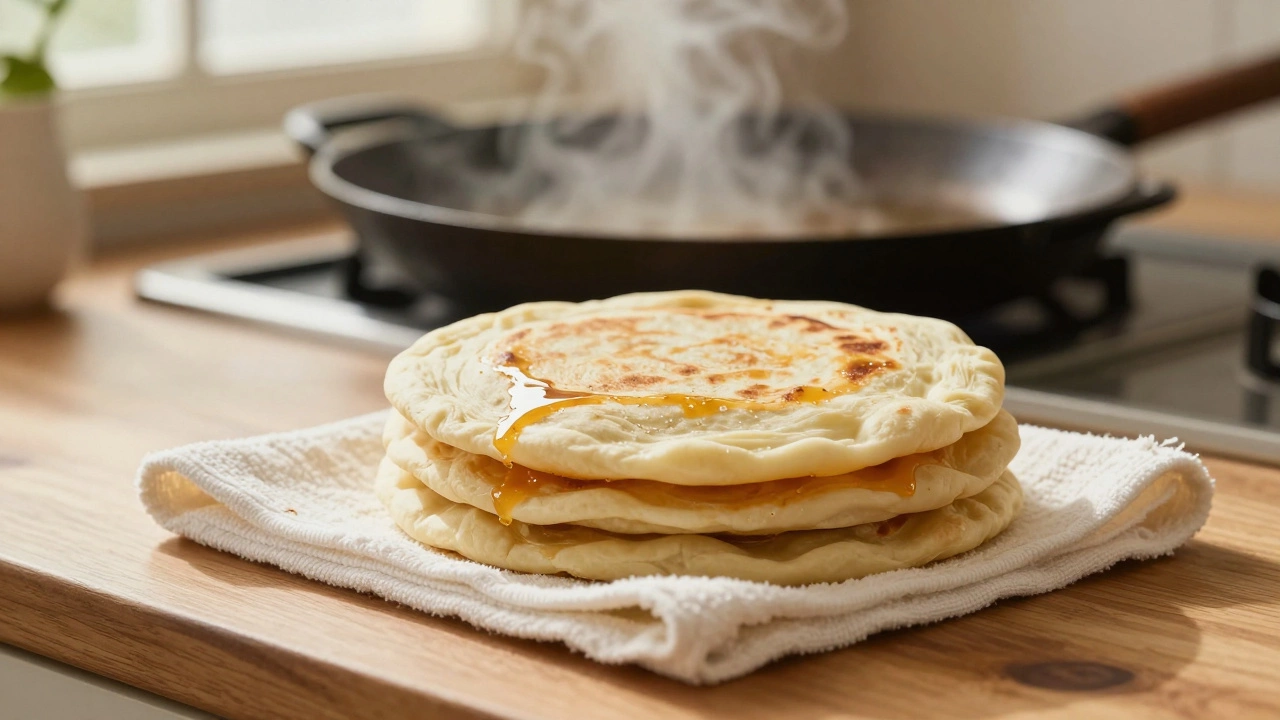
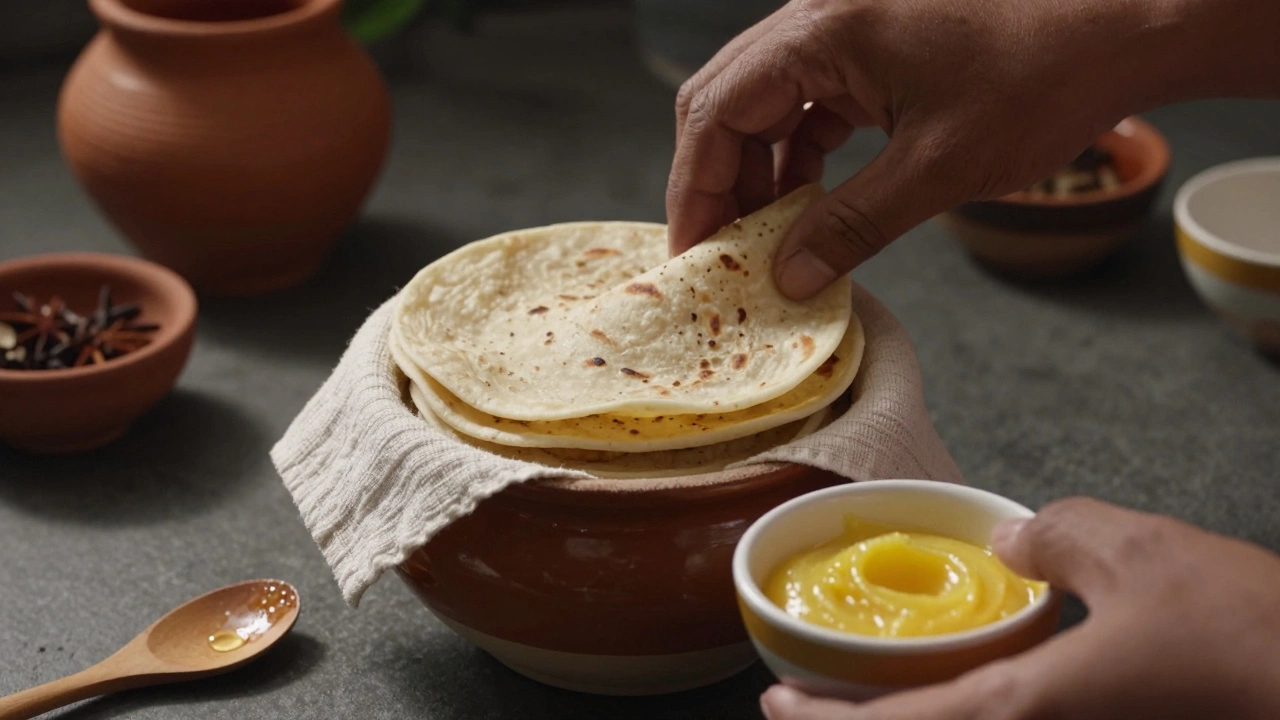
- Stack and cover immediately. As soon as each roti comes off the tawa, drop it into a stack. Cover it with a clean, dry cotton kitchen towel. Don’t use plastic wrap yet. The towel lets excess steam escape slowly, preventing sogginess while keeping warmth in.
Storage That Actually Works
Once your roti are cooked and stacked, here’s how to store them so they stay soft for up to 5 days.
- Short-term (1-2 days): Keep the stack wrapped in the cotton towel inside an airtight container. Place it at room temperature. No fridge.
- Medium-term (3-5 days): Wrap the entire stack in aluminum foil, then place it in a sealed plastic container. Refrigerate. When reheating, skip the microwave-use a dry tawa or skillet. Heat each roti for 15 seconds per side, then press with a cloth to restore softness.
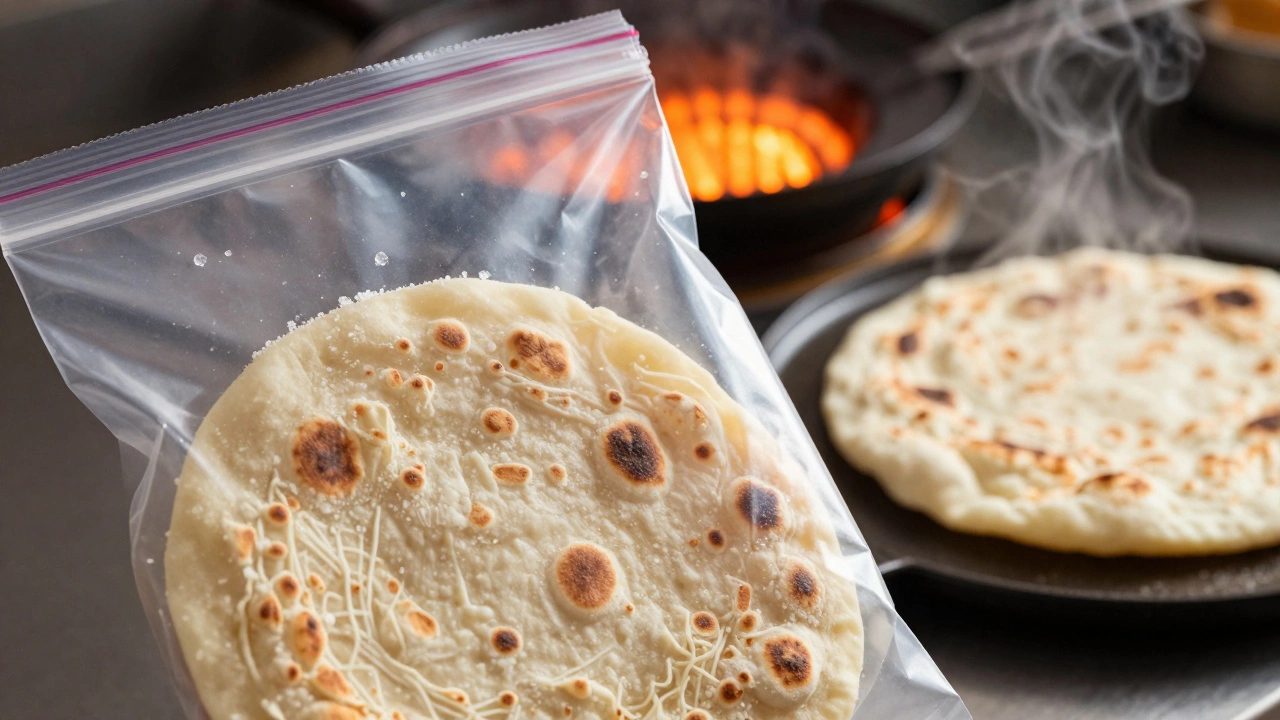
- Long-term (up to 30 days): Freeze them. Separate each roti with parchment paper. Put the stack in a ziplock bag, squeeze out air, and freeze. To use, take out 3-4 and reheat on a tawa without thawing. They’ll come back soft as fresh.
Never store roti in the fridge without wrapping. The cold air dries them out like a desert. And never microwave a cold roti straight from the fridge-it turns rubbery.
Reheating Like a Pro
Reheating is where most people mess up. Microwaving is quick, but it turns roti into a chewy, gummy mess. Here’s what works:
- Heat a tawa or skillet over medium heat.
- Place the roti directly on the surface.
- After 10 seconds, flip it.
- Press gently with a clean cloth or paper towel to help it puff.
- Remove and wrap in a towel for 1 minute. The trapped steam rehydrates the surface.
If you’re in a rush, use a toaster oven on 300°F for 2 minutes. It’s better than a microwave. Never use a microwave unless you spray the roti lightly with water first and cover it with a damp paper towel.
Common Mistakes That Make Roti Hard
Even if you follow the recipe, these habits ruin softness:
- Using cold water to make dough-it doesn’t hydrate the flour evenly.
- Rolling roti too thin-they dry out faster during cooking.
- Leaving cooked roti uncovered on the counter-exposure to air = instant staling.
- Storing in plastic right after cooking-traps too much steam, makes them soggy then moldy.
- Reheating in microwave without moisture-guaranteed rubbery result.
One family in Lucknow keeps roti soft for a week by using this trick: after stacking, they brush each roti lightly with ghee before wrapping. It’s not traditional, but it works. The fat creates a barrier against drying.
What Not to Do
Forget the "add milk" hack. Milk makes roti slightly softer, but it spoils faster and doesn’t help with long-term storage. Same with baking soda-it changes the flavor and texture, and it’s not needed.
Don’t buy roti-making machines unless you’re making hundreds daily. Most home machines overcook and dry out roti. Stick to the tawa. It’s slower, but it gives you control.
Why This Works
Soft roti stays soft because you control moisture at every stage: hydration, cooking, and storage. The key isn’t one trick-it’s the chain. Hydrate well. Cook gently. Trap steam. Wrap smart. Reheat properly. Skip any step, and the roti pays the price.
People think soft roti is about skill. It’s not. It’s about timing and temperature. Once you get the rhythm, you’ll never have hard roti again.
Can I add baking soda to make roti soft?
No. Baking soda changes the pH of the dough, which can make roti taste soapy or bitter. It also affects the texture, making it less elastic. Soft roti comes from proper hydration and fat-not chemical leavening.
Why does my roti crack when I roll it?
Cracking means the dough didn’t rest long enough or wasn’t hydrated well. Let the dough rest for at least 30 minutes after kneading. If it’s still cracking, add a teaspoon of water and knead for another minute. The flour needs time to absorb moisture fully.
Can I use oil instead of ghee?
Yes. Any neutral oil like sunflower or canola works fine. Ghee adds flavor and keeps roti soft slightly longer, but oil does the job if you’re avoiding dairy. Use the same amount-1 teaspoon per cup of flour.
How long can I store roti in the freezer?
Up to 30 days if stored properly. Separate each roti with parchment paper to prevent sticking. Use a heavy-duty ziplock bag and squeeze out all the air. When reheating, don’t thaw-just put them straight on a hot tawa.
Should I refrigerate roti if I’m eating it the next day?
No. Refrigeration dries out roti faster. Keep it at room temperature in an airtight container wrapped in a cotton towel. Only refrigerate if you won’t eat it within 2 days.
Final Tip: Test the Softness
After reheating, press a roti gently between your fingers. If it springs back slowly and feels slightly sticky, it’s perfect. If it snaps or feels dry, you missed a step. Go back to the dough stage next time-hydration is everything.
Soft roti isn’t magic. It’s science. And with these steps, you’ll make roti that stays soft from breakfast to dinner, even days later.
