Is Breakfast Really the Most Important Meal in India? A Cultural Deep Dive
 Sep, 1 2026
Indian Regional Meal Importance Explorer
Select a region below to see which meal holds cultural significance and the reasons behind it.
Typical Foods:
Why It Matters:
You’ve probably heard the old adage: "Eat breakfast like a king, lunch like a prince, and dinner like a pauper." It’s catchy. It sounds logical. But if you ask your grandmother in Kerala or your colleague in Mumbai, they might look at you with genuine confusion. In many parts of India, a country with diverse culinary traditions spanning thousands of years, the concept of "breakfast" as a distinct, heavy, mandatory meal is actually a relatively modern urban phenomenon.
So, what is the most important meal in India? If you’re looking for a single, universal answer, you won’t find one. The truth is far more interesting and deeply rooted in geography, climate, and labor patterns. For some, it’s the morning chai and idli. For others, it’s a hearty lunch of rice and dal. And for many farmers and laborers, the day truly begins only after a substantial midday feast. Let’s break down why the "most important meal" changes depending on where you are standing on the subcontinent.
The Myth of the Universal Breakfast
In Western countries, breakfast often serves as fuel to get through a workday that starts early and ends late. But historically in India, the rhythm of life was dictated by the sun and the seasons. Before industrialization changed our schedules, people ate when they were hungry and when the food was ready. This wasn't laziness; it was efficiency.
Consider the agricultural heartlands of Punjab or Uttar Pradesh. Farmers wake up before dawn, but they don’t necessarily sit down to a full spread of parathas immediately. They might have tea and a light snack. The real energy comes later, when the heat of the day makes working impossible without proper sustenance. In contrast, the corporate hubs of Bangalore or Gurgaon have adopted the "power breakfast" culture, driven by long commutes and 9-to-5 jobs. This creates a massive disconnect between urban and rural nutritional priorities.
When we talk about the most important meal, we have to define "important." Is it about calorie intake? Social bonding? Religious observance? Or simply survival? The answer shifts dramatically across regions.
North India: Where the Day Starts Heavy
If there is any region in India that leans heavily into the idea of a significant first meal, it’s the North. Think of Delhi, Punjab, Haryana, and Rajasthan. Here, breakfast is not just a snack; it’s a statement of abundance and hospitality.
| Region | Typical Breakfast | Lunch Importance | Cultural Driver |
|---|---|---|---|
| North (Punjab/Delhi) | Paratha, Chole Bhature, Poha | Moderate | Agricultural heritage & cold winters requiring high energy |
| South (Kerala/Tamil Nadu) | Idli, Dosa, Appam | High | Tropical climate favoring lighter mornings; hot humid afternoons |
| East (Bengal/Odisha) | Luchi, Alur Dom, Ruti | Very High | Rice-based diet; fish and lentils require longer digestion time |
| West (Maharashtra/Gujarat) | Dhokla, Upma, Vada Pav | Moderate-High | Urban trading communities; varied vegetarian traditions |
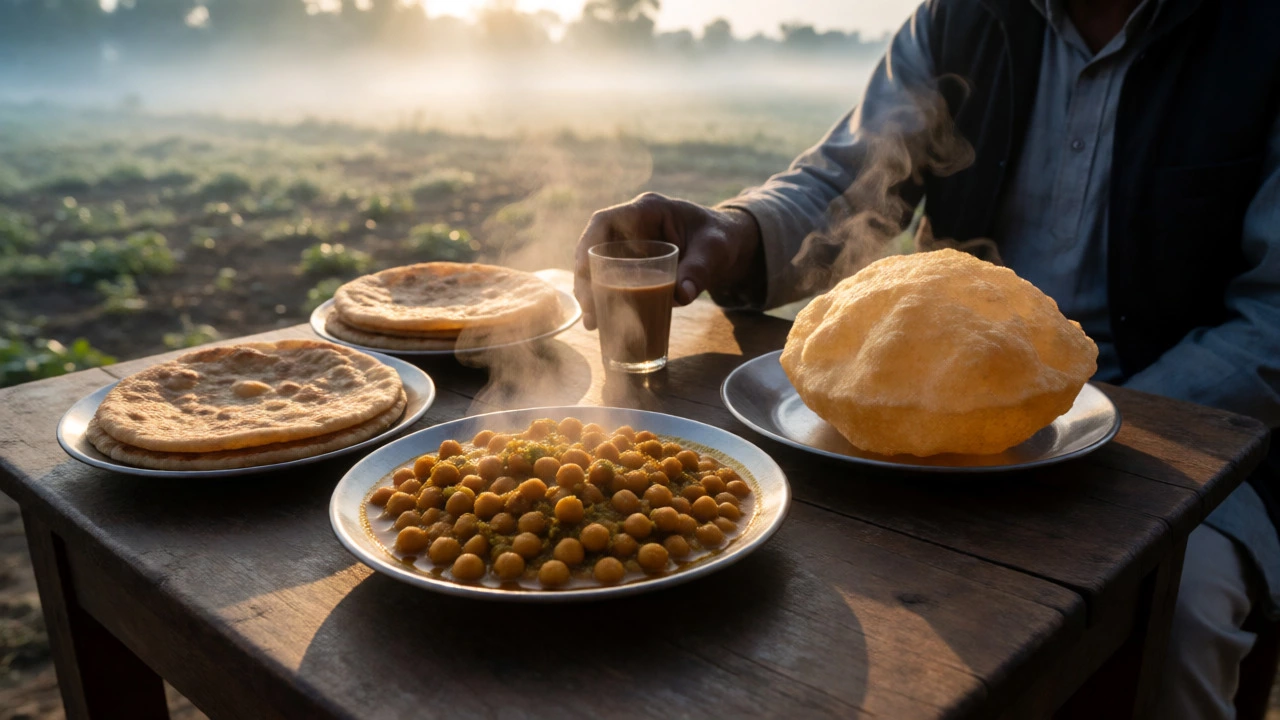
In these states, a plate of steaming hot Chole Bhature, a popular Punjabi dish consisting of spicy chickpea curry and fried bread isn’t just food-it’s preparation for a hard day. The caloric density is high because the physical demands of farming and the colder temperatures require it. Skipping this meal can leave a person feeling weak until evening. So, for a farmer in Ludhiana, breakfast arguably holds the title of "most important" because it sets the metabolic tone for the entire day.
But even here, the definition is fluid. Many families skip the heavy morning meal during summer months, opting instead for lighter options like poha or upma, shifting their caloric load to lunch. This adaptability is key to understanding Indian eating habits. We don’t follow rigid rules; we follow hunger and weather.
The South: Light Mornings, Hearty Evenings
Travel south, and the script flips completely. In Tamil Nadu, Karnataka, Kerala, and Andhra Pradesh, breakfast is traditionally light, fermented, and easy to digest. Idlis, dosas, and uttapams dominate the morning scene. Why? Because the climate is hot and humid year-round. Eating a heavy, oily breakfast in Chennai at 8 AM feels sluggish. Your body doesn’t need the extra heat generation from digestion when it’s already struggling to cool itself.
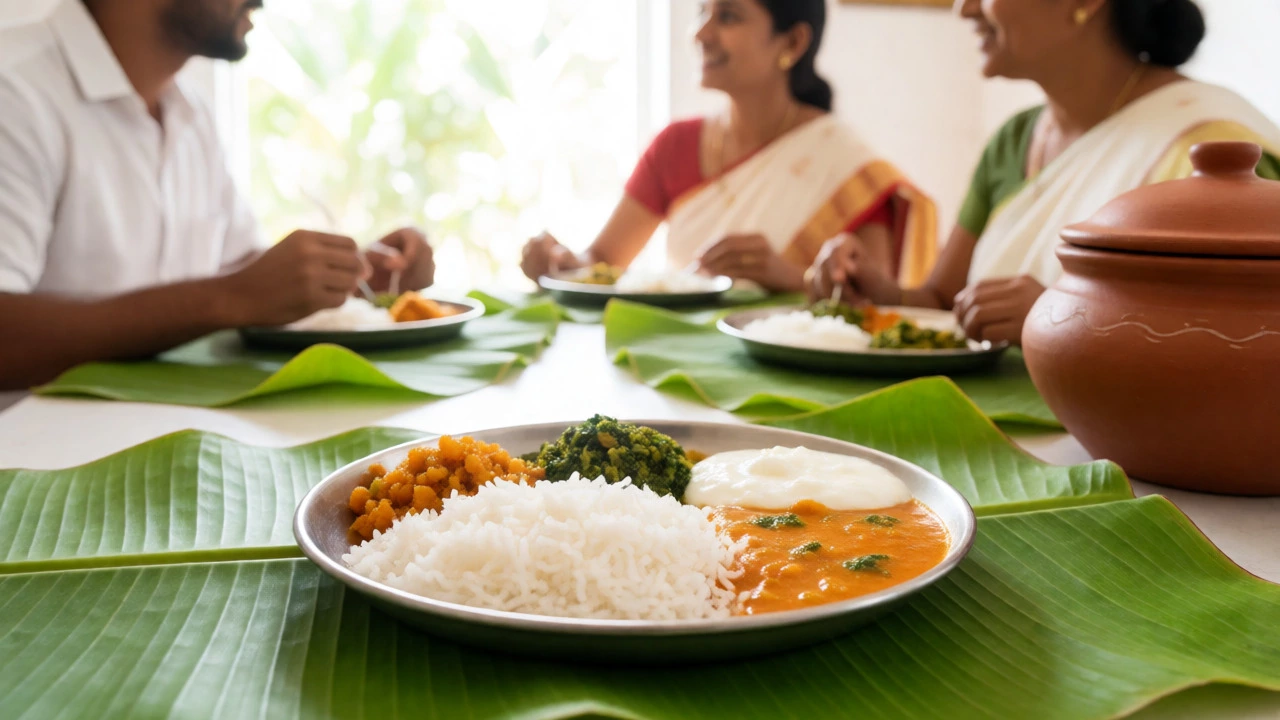
For millions in South India, Lunch, the midday meal typically consisting of rice, sambar, rasam, and vegetables, is the undisputed king of meals. It’s the main event. Families gather around noon, and the meal is served on banana leaves or steel plates, emphasizing hygiene and tradition. The combination of rice (carbs), sambar (lentils and veggies), and curd (probiotics) provides a complete nutritional profile that sustains them through the hottest part of the day.
Try skipping lunch in a traditional South Indian household, and you’ll hear about it for weeks. Dinner, by contrast, is often kept light-perhaps just a bowl of kanji (rice porridge) or leftover idlis. The logic is sound: you don’t want to sleep on a full stomach in tropical heat. So, if you’re asking what matters most in Madurai or Trivandrum, the answer is clearly lunch.
The East and Northeast: Rice, Fish, and Fermentation
Move towards Bengal, Odisha, and the Northeastern states, and you encounter another variation. In West Bengal, breakfast might include luchi (deep-fried white flour bread) with alur dom (spicy potato curry). It’s delicious, but it’s rarely the heaviest meal of the day.
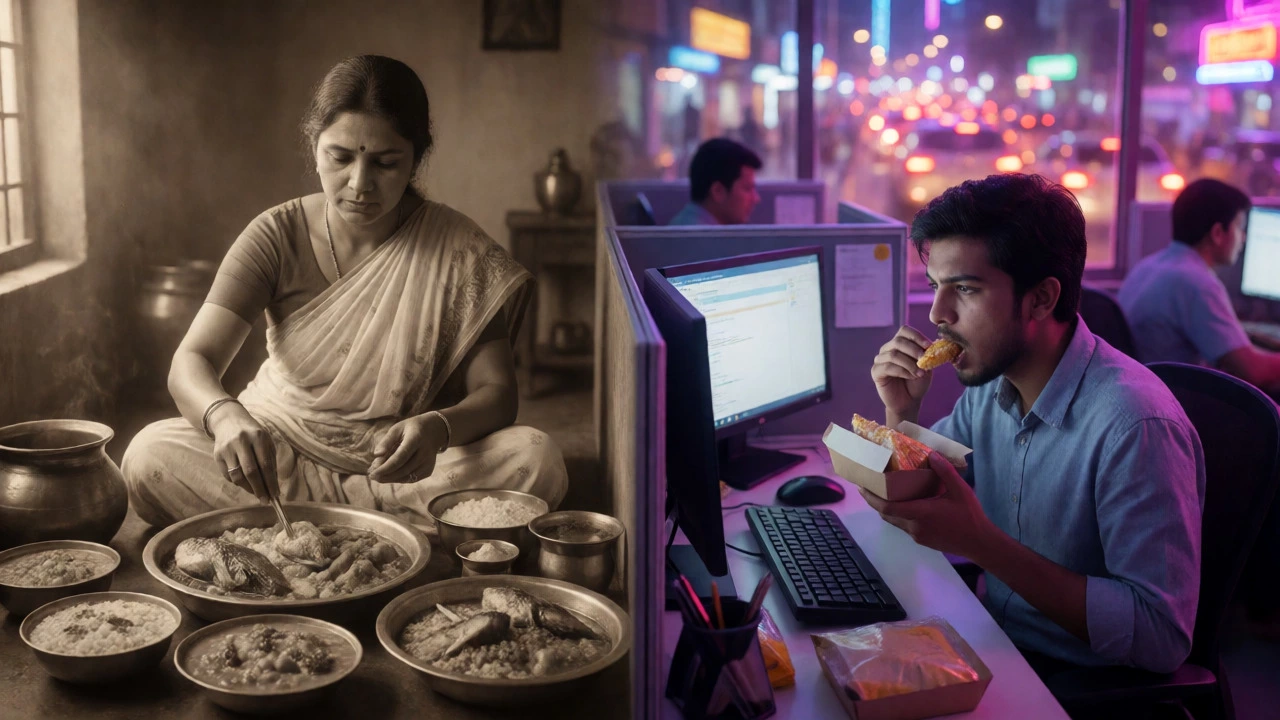
Here, lunch again takes precedence, featuring multiple courses of fish, lentils, and rice. The Bengali approach to food is highly ritualistic. You eat specific items in a specific order. The midday meal allows for this complexity. You can’t rush through a multi-course Bengali lunch over a quick desk break. Therefore, the home-cooked lunch remains the anchor of daily nutrition and social interaction.
In the Northeast, such as Assam or Nagaland, the pattern varies by tribe and terrain. Some communities practice a form of intermittent fasting naturally, eating two large meals a day. For these groups, neither breakfast nor lunch is singularly "most important"-it’s the total daily intake that matters, often centered around rice and meat preparations suited to the hilly terrain.
Why Urbanization Is Changing the Game
Let’s be honest: the traditional patterns described above are eroding in metropolitan cities. If you live in Mumbai, Delhi, or Bangalore, your relationship with food is likely dictated by convenience, not culture. The rise of delivery apps has made it possible to eat anything at any time. A software engineer in Hyderabad might grab a vada pav from a street vendor on the way to work, eat a salad for lunch, and then binge on biryani at night.
This fragmentation has led to a crisis of identity regarding meals. We are losing the natural cues of hunger and satiety. We eat because it’s 1 PM, not because we are hungry. We skip breakfast because we overslept, not because we aren’t hungry.
Nutritionists now argue that the "most important meal" is actually the one you don’t skip consistently. Regularity matters more than timing. However, cultural inertia is powerful. In India, family bonds are forged over food. If you skip lunch, you miss out on connecting with your family. If you skip dinner, you might miss the conversation with your partner. These social aspects often outweigh pure nutritional science in determining which meal feels "most important."
