Is It OK to Eat Beef in India? What You Need to Know About Beef, Culture, and Street Food
 Jan, 27 2026
India Beef Consumption Checker
Check if beef consumption is legally permitted and culturally acceptable in your chosen Indian state. This tool is designed for travelers and food enthusiasts who want to understand the complex regional variations in India.
Walking through the streets of Mumbai or Delhi at night, you’ll smell sizzling kebabs, spicy chaat, and crispy samosas. But if you’re looking for a beef burger or a beef curry, you won’t find it-unless you’re in certain parts of the country. The question isn’t just about food-it’s about history, religion, and everyday life in India.
Beef Isn’t Illegal Everywhere in India
Many people assume beef is banned across India. That’s not true. India doesn’t have a single national law banning beef. Instead, each state makes its own rules. In states like Uttar Pradesh, Bihar, and Gujarat, selling or eating beef is illegal under strict cow protection laws. But in Kerala, West Bengal, Goa, and the northeastern states like Nagaland and Meghalaya, beef is openly sold, cooked, and eaten. In fact, beef is a major part of the local street food scene in these places.
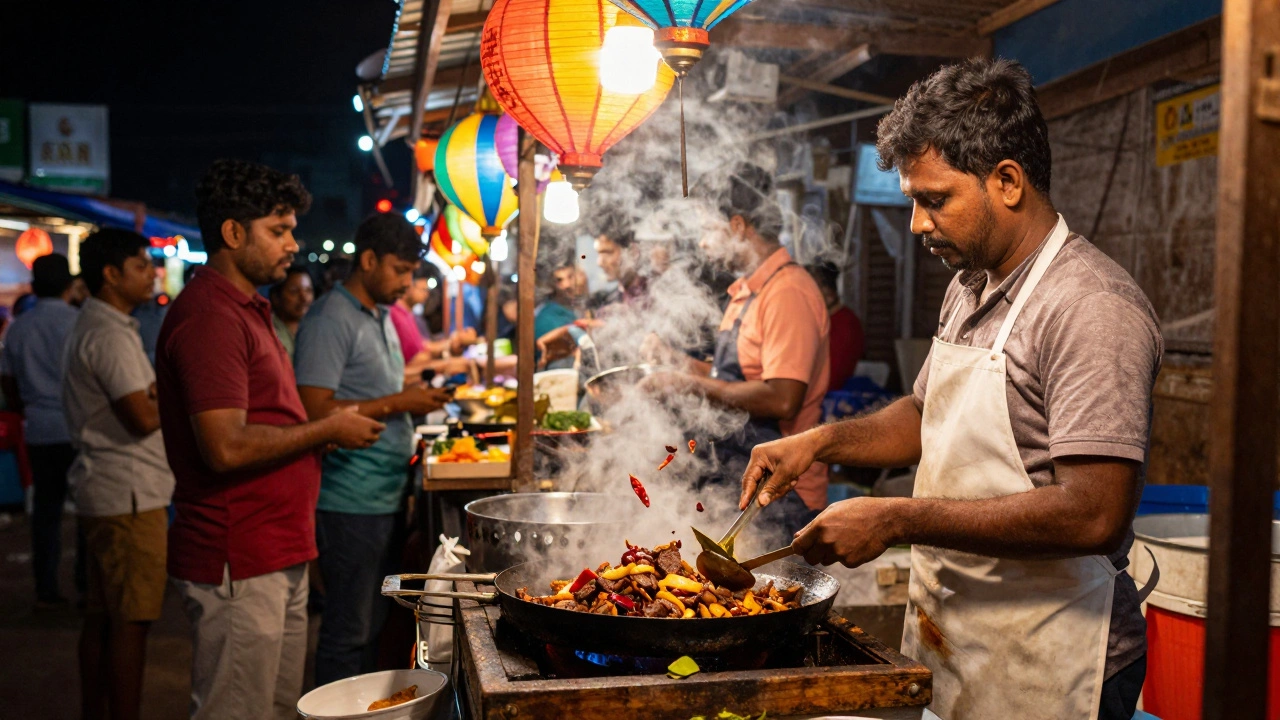
For example, in Kerala, you’ll find beef fry at roadside stalls-thin slices of beef stir-fried with curry leaves, garlic, and red chilies. In Assam, masor tenga (sour fish curry) often comes with beef curry on the side. In Nagaland, smoked beef is a staple. These aren’t hidden dishes. They’re daily meals. If you’re traveling through these regions, you’re more likely to see beef on a street cart than a vegetarian thali.
Why Is Beef a Sensitive Topic?
The issue isn’t about health or taste-it’s about religion. Cows are sacred to Hindus, who make up about 80% of India’s population. In Hindu tradition, the cow is seen as a symbol of life, generosity, and motherhood. Many Hindus believe harming a cow is spiritually wrong. This belief goes back thousands of years, and today, it shapes laws, politics, and social behavior.
But India is not just Hindu. Muslims, Christians, Sikhs, and tribal communities have eaten beef for generations. For them, beef is protein, tradition, and sometimes, survival. In low-income communities, beef is one of the cheapest sources of meat. Banning it doesn’t just limit choice-it can hurt livelihoods. Butchers, traders, and small vendors in states where beef is legal depend on it for income.
What Happens When You Eat Beef in a Beef-Free State?
If you’re in a state like Rajasthan or Haryana and you bring beef into a restaurant or try to buy it on the street, you risk trouble. Police have cracked down on beef traders. There have been cases of mob violence against people accused of transporting or consuming beef. Even carrying beef in your bag can lead to harassment.
That doesn’t mean you’ll be arrested everywhere. But the social pressure is real. Locals might stare. Shopkeepers might refuse to serve you. In tourist areas, some vendors quietly serve beef to foreigners-but only if you ask in private. It’s not about law enforcement. It’s about fear, misunderstanding, and deep cultural tension.
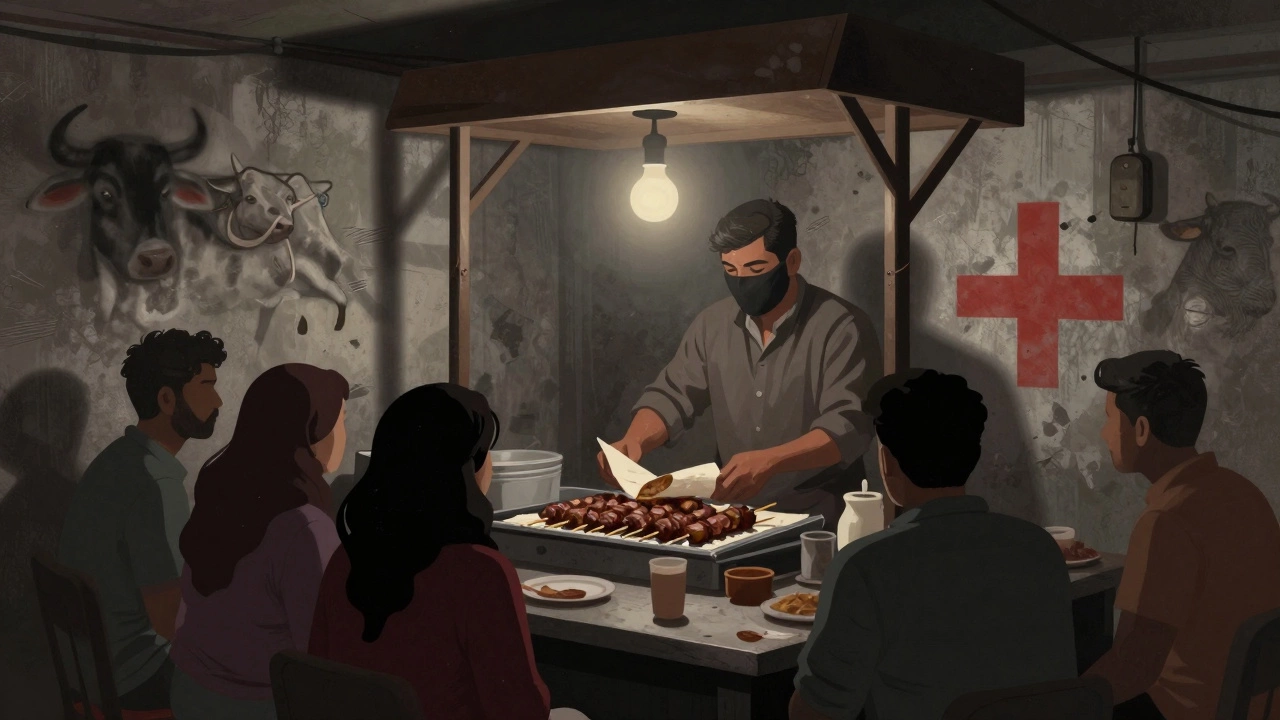
Street Food Culture Doesn’t Ignore Beef-It Just Hides It
India’s street food is one of the most diverse in the world. But outside of the northeast and south, beef rarely appears on menus. That doesn’t mean it’s absent. In cities like Lucknow or Hyderabad, you might see a vendor selling kebabs or seekh kebab without labeling the meat. If you ask, some will say it’s lamb or chicken. Others won’t answer at all.
There’s also a growing underground market. In Delhi, some food bloggers have documented secret beef stalls near railway stations, open only after dark. These aren’t illegal because the law is weak-they’re hidden because the social cost is too high. People who eat beef in these areas often do so quietly, out of respect for local norms.
Can Tourists Eat Beef in India?
Yes-but with caution. If you’re in Goa, Kerala, or Tripura, you can order beef curry without a second thought. In fact, many restaurants in these areas proudly list beef dishes on their menus. But if you’re in Varanasi, Jaipur, or Ahmedabad, don’t ask for beef. Don’t even mention it. You’ll risk offending people, drawing unwanted attention, or worse.
Here’s a simple rule: if you’re unsure, look at what the locals are eating. If everyone’s having paneer tikka or chole bhature, don’t order beef. If you see people eating meat curries and the menu says meat without specifying, it’s probably chicken or mutton. In India, meat on a street food menu almost never means beef.
What About Beef in Indian Restaurants Outside India?
Indian restaurants in the U.S., Australia, or the UK often serve beef curry or beef biryani. That’s because their customers expect it. But in India, those same dishes would be made with lamb, chicken, or goat. The same recipe, different meat. It’s not about taste-it’s about context.
Some Indian chefs abroad have started labeling their beef dishes as “Western-style Indian beef curry” to avoid confusion. It’s a small way to honor both the recipe and the culture it came from.
Beef and the Future of Indian Food
India’s food culture is changing. Younger generations are more open to eating what they want. Urban centers like Bengaluru and Pune have seen a rise in vegan and plant-based diets-but also in meat-eating freedom. Some food startups now offer lab-grown meat, hoping to bypass the cultural debate entirely.
But for now, the reality is simple: where you are in India determines what you can eat. There’s no universal answer. What’s normal in Shillong is taboo in Varanasi. What’s a delicacy in Kerala is a crime in Gujarat.
If you’re visiting India and want to understand its food, don’t just ask what’s allowed. Ask why. Listen to the stories behind the dishes. The answer isn’t in laws or bans-it’s in the lives of the people who cook, sell, and eat them.
What You Should Do When You Visit India
- Respect local laws and customs-even if you don’t agree with them.
- When in doubt, choose chicken, mutton, or paneer. They’re everywhere and delicious.
- Ask locals about their favorite street food. They’ll guide you to the best spots.
- If you’re in a beef-friendly state, enjoy it. But don’t flaunt it.
- Never argue about beef with strangers. It’s not worth the risk.
India’s food isn’t just about flavor. It’s about identity. Eating beef here isn’t just a dietary choice-it’s a cultural statement. And in a country as diverse as India, that statement can carry a heavy weight.
Is beef completely banned in India?
No, beef is not banned nationwide. Only 20 out of 28 states have laws restricting cow slaughter or beef sales. States like Kerala, West Bengal, Goa, and the Northeast allow beef openly. In these places, beef is part of daily meals and street food culture.
Can tourists get in trouble for eating beef in India?
You won’t be arrested just for eating beef, but you can face social backlash, harassment, or even violence in states where it’s banned. In conservative areas, locals may report you, and vendors may refuse service. It’s safer to avoid beef unless you’re certain it’s legal and socially accepted where you are.
What meat is commonly used in Indian street food instead of beef?
Chicken, mutton (goat), and paneer (Indian cheese) are the most common meats in Indian street food. Tandoori chicken, chicken tikka, mutton kebabs, and paneer tikka are everywhere. Even when a vendor says "meat," it almost always means chicken or mutton-not beef.
Why do some Indians eat beef if cows are sacred?
Not all Indians are Hindu. Muslims, Christians, Sikhs, and tribal communities have eaten beef for centuries. In many rural and lower-income areas, beef is an affordable source of protein. For them, it’s not about religion-it’s about nutrition, tradition, and survival.
Is beef curry popular in India?
Yes-but only in certain regions. Beef curry is a staple in Kerala, Goa, and the Northeast. In these places, it’s cooked with coconut, tamarind, or local spices and served with rice or bread. In North and West India, beef curry is rare or nonexistent on menus.
