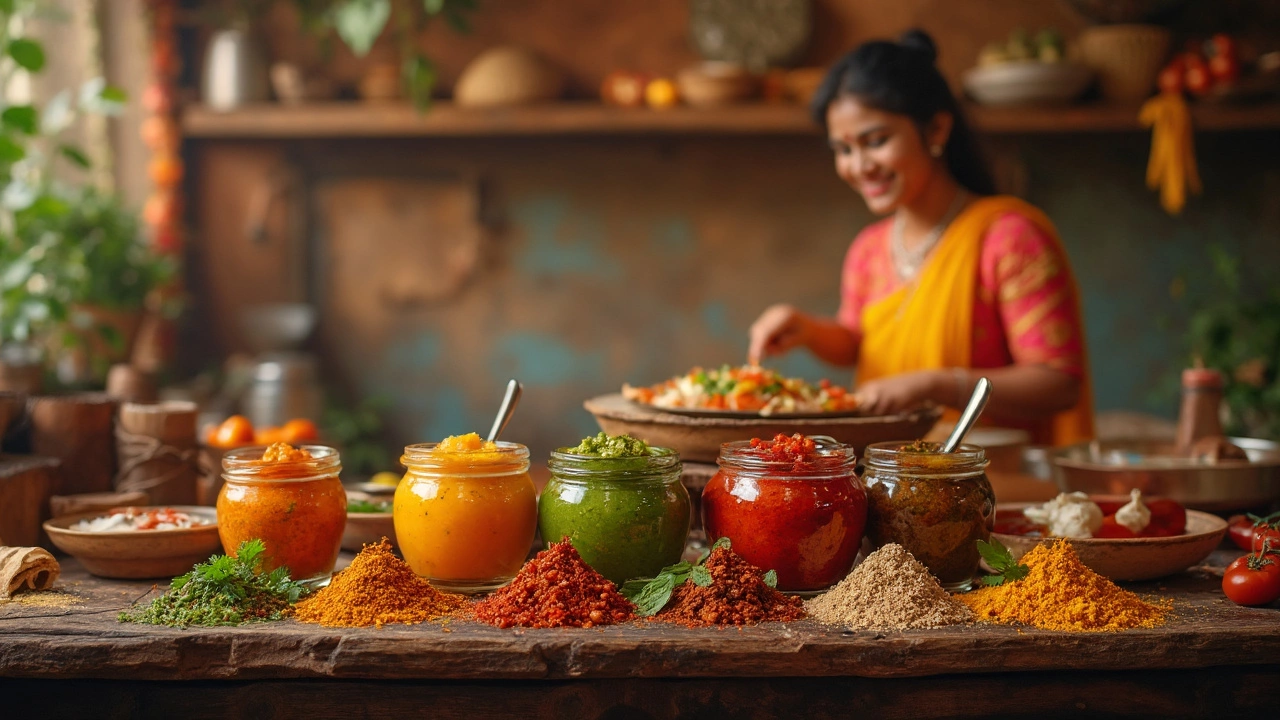
American Chutney: What It Really Means and How It Differs from Indian Chutney
When Americans say "chutney," they’re usually talking about something very different from what you’d find in an Indian kitchen. American chutney, a sweet, vinegary fruit preserve often made with apples, raisins, and spices. Also known as relish, it’s served with cold cuts, cheese, or sandwiches—not with curry or dosa. This isn’t just a naming quirk. It’s a cultural split in flavor, texture, and purpose.
Indian chutney, on the other hand, is alive with heat, tang, and freshness. Think mint-cilantro with green chilies, tamarind with jaggery, or coconut with roasted lentils. These are made daily, eaten immediately, and meant to cut through rich food. Indian chutney, a spicy, herbal, or fruity condiment used to balance flavors in meals doesn’t sit on a shelf for months. It’s a living part of the meal. Meanwhile, English chutney, a slow-cooked, caramelized preserve with onions, vinegar, and dried fruit, sits somewhere in between—sweet, dense, and shelf-stable, but still not the same as the fresh chutneys you’ll find in Mumbai or Delhi.
The confusion isn’t just about taste—it’s about how these condiments function. In India, chutney is a flavor bridge: it wakes up bland rice, cools down spicy curry, or adds crunch to a snack. In the U.S., "chutney" often just means a sweet spread, like cranberry sauce at Thanksgiving. That’s why you’ll see jars labeled "apple chutney" next to mustard in American grocery stores—but never next to samosas.
And here’s the kicker: if you try to use American-style chutney in an Indian recipe, it’ll fall flat. The sugar overload kills the bright acidity. The lack of fresh herbs misses the whole point. That’s why recipes on this site focus on the real thing—chutneys made with coriander, garlic, roasted peanuts, or mango, blended fresh and served right away.
So when you see "American chutney" in a recipe or a label, know this: it’s not the same as the chutney that’s been part of Indian meals for centuries. The names sound alike, but the soul is different. One is a pantry staple. The other is a daily ritual.
Below, you’ll find real stories, real recipes, and real answers about what chutney means in different kitchens—from street stalls in Delhi to dinner tables in Ohio. No fluff. No confusion. Just the facts you need to cook it right.