Oct, 13 2025, 0 Comments
Creative Biryani Ideas: Fun Twists to Make Your Biryani More Exciting
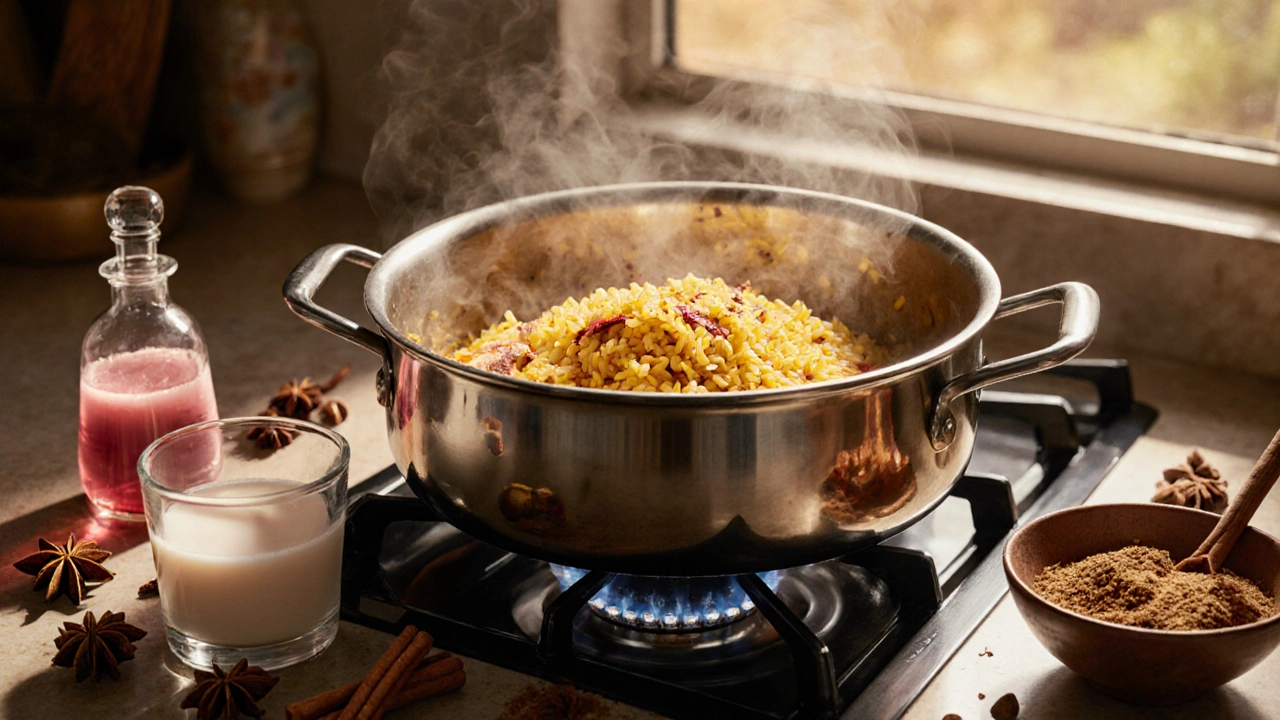
Discover fun flavor twists, ingredient swaps, and plating tricks to turn ordinary biryani into a show‑stopping dish.
Read MoreWhen you think of biryani, a layered rice dish cooked with spices, meat or vegetables, and often garnished with fried onions and saffron. Also known as biryani rice, it's not just a meal—it's a cultural ritual in Indian homes, from bustling Delhi streets to quiet Kerala kitchens. But biryani isn’t one thing. It’s a family of dishes, each shaped by region, history, and family tradition. What makes Hyderabadi biryani different from Lucknowi? Why does Kolkata biryani include potatoes? And why do some versions use yogurt while others rely on whole spices slow-cooked in ghee?
The answer lies in the biryani spices, a blend of whole and ground spices like cardamom, cloves, cinnamon, bay leaves, and sometimes mace or star anise, used to build deep, layered flavor without overpowering the rice. Not all biryanis use garam masala—the real magic happens when you know which spices to leave out. For example, turmeric is rarely used in authentic Hyderabadi biryani, while Kashmiri biryani leans on saffron and dry fruits for sweetness. Then there’s the rice: long-grain basmati is standard, but how you par-boil it, how much water you use, and whether you layer it with meat or cook it all together changes everything.
And then there’s the cooking method. Dum cooking—sealing the pot with dough and slow-steaming the biryani—isn’t just tradition; it’s science. It locks in steam, infuses flavor, and keeps the rice separate and fluffy. In Lucknow, they do it gently, with tender meat and subtle spice. In Hyderabad, they go bold—with fried onions, chili, and even rose water. And in Bengal, they add boiled eggs and potatoes, a legacy of colonial influence.
What you’ll find in the posts below isn’t just recipes. It’s the real talk from kitchens across India. You’ll learn why some cooks swear by fried onions as the soul of biryani, why others avoid tomatoes entirely, and how a pinch of baking soda can make your rice perfect without turning it mushy. You’ll see how biryani connects to other Indian staples—like how the same spice blend used in biryani shows up in curries and dal, and why getting garam masala right matters even when you’re not making it.
There’s no single ‘correct’ biryani. But there are clear rules—about spice balance, rice texture, layering, and patience—that turn good biryani into great biryani. Whether you’re making it for a family dinner, a festival, or just because you crave something rich and aromatic, the variations here will help you find your version. No fluff. No guesswork. Just what works, from real Indian kitchens to your stove.
Oct, 13 2025, 0 Comments
Discover fun flavor twists, ingredient swaps, and plating tricks to turn ordinary biryani into a show‑stopping dish.
Read More