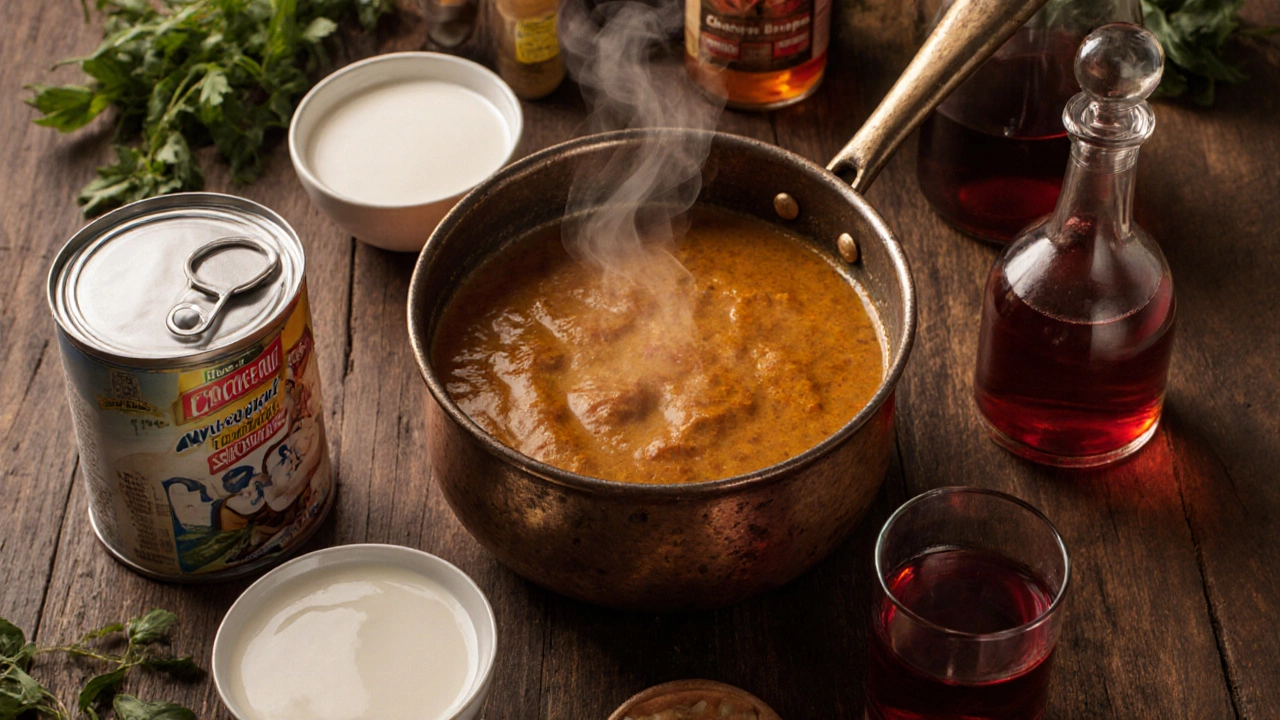
Broth for Curry: How Indian Kitchens Build Flavor from Scratch
When you think of broth for curry, a simmered liquid base infused with spices, aromatics, and sometimes meat or legumes that forms the foundation of Indian curries. It's not just water with spices stirred in—it's the hidden backbone of flavor in every dal, chicken curry, or paneer masala you love. Most home cooks skip it, using plain water or canned tomato puree, but real Indian kitchens start with broth. It’s what turns a good curry into a memorable one. This isn’t about fancy ingredients—it’s about layering taste slowly, the way grandmothers taught their daughters.
curry stock, a concentrated liquid made by simmering onions, garlic, ginger, and whole spices like cumin, cardamom, and cloves is often the first step. In South India, they might use tamarind water or coconut milk as a base. In the North, it’s often yogurt or tomato blended with roasted spices. And in many households, leftover dal broth, the liquid left after cooking lentils like urad dal or toor dal, rich in starch and natural umami gets reused as the foundation for the next day’s curry. It’s not waste—it’s wisdom.
Why does this matter? Because broth carries heat, depth, and body. Water boils off and leaves nothing. Broth clings to the meat or veggies, carrying spices deep into the fibers. You can’t fake it with bouillon cubes. Real broth comes from patience—slowly toasting cumin seeds until they pop, frying onions until they’re caramelized, then adding water and letting it reduce for 20 minutes. That’s when the magic happens: the spices dissolve, the starches thicken, and the flavor becomes rounded, not sharp.
Some cooks add chicken bones or shrimp shells to their broth for extra richness. Others skip meat entirely and use roasted peanuts, cashews, or even soaked dried coconut for body. In vegetarian kitchens, soaked chana dal or soaked dried fenugreek leaves (kasuri methi) get added to the pot to deepen the flavor without meat. It’s all about what’s available, what’s local, and what’s been passed down.
You’ll find this technique in every post below—whether it’s about the perfect chicken curry, how to make dal makhani taste like it came from a Punjabi dhaba, or why garam masala doesn’t work unless the base is right. These aren’t just recipes. They’re lessons in how flavor is built, one simmering pot at a time.
What you’ll see in the posts ahead isn’t just how to make curry—it’s how to make it matter. From the exact ratio of urad dal to rice in batter to why turmeric needs fat to activate, every post ties back to one truth: great curry starts with a good broth. And once you get that right, everything else just falls into place.