Oct, 22 2025, 0 Comments
What Americans Call Chutney - Names, Differences, and How to Use It
Discover why Americans call Indian chutney "relish", how the terms differ, and tips for cooking or labeling chutney for the US market.
Read MoreWhen you think of chutney, a spicy, sweet, or tangy condiment made from fruits, vegetables, or herbs, often used in Indian cuisine. Also known as chatni, it's not just a side—it's the flavor engine behind biryanis, dosas, and even pizza toppings at Pizza Paradise India. Now, picture relish, a chopped, pickled condiment, usually made from vegetables like cucumbers or onions, common in American and British meals. Also known as pickle relish, it’s the crunchy, vinegary partner to hot dogs and burgers. These two might look alike on a plate, but they come from completely different food worlds.
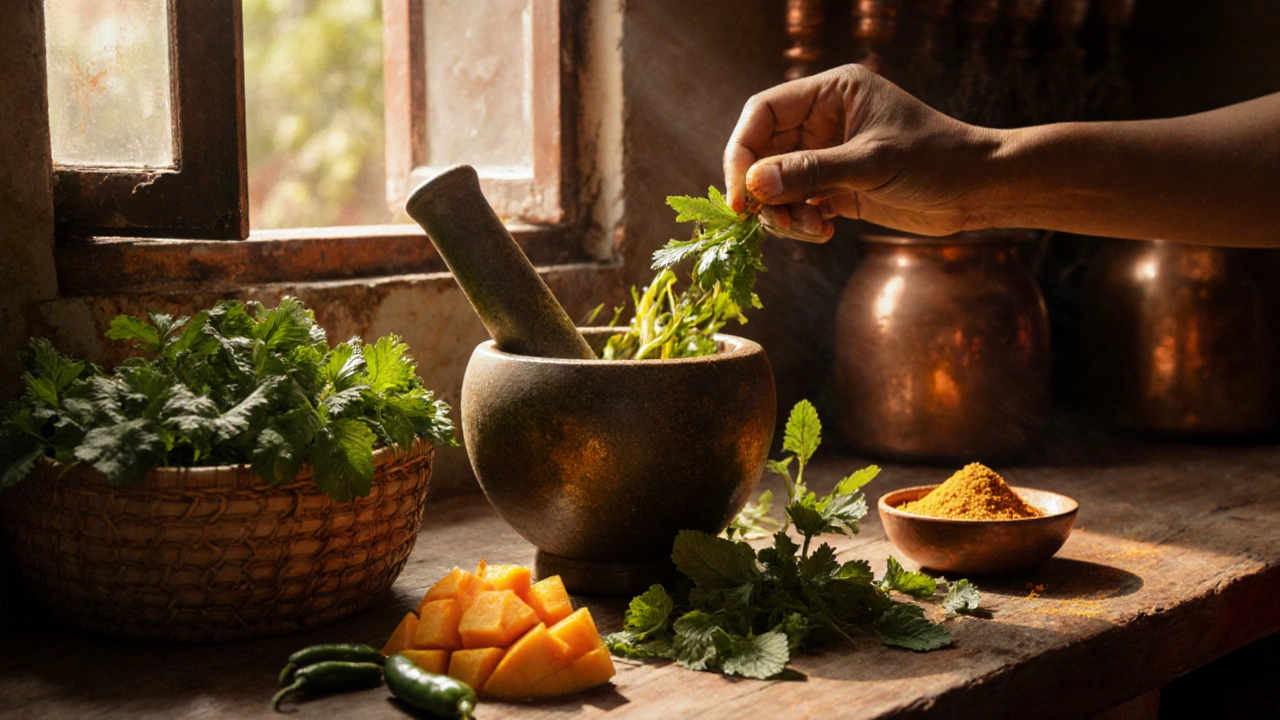
Indian chutney is alive with fresh herbs like cilantro, spices like green chilies, and tart fruits like tamarind or mango. It’s often blended raw and served cool to preserve its brightness, as shown in posts about tamarind chutney, a thick, sweet-sour sauce made from soaked tamarind pulp, jaggery, and spices, used in chaat and snacks and coconut chutney, a creamy, mildly spicy paste made from grated coconut, roasted lentils, and green chilies, served with idli and dosa. Meanwhile, relish is cooked, preserved, and shelf-stable—think sweet pickle relish with celery seed and sugar, or the British-style English chutney, a slow-cooked fruit preserve with apples, onions, vinegar, and warm spices, often paired with cheese. The difference isn’t just taste—it’s intention. Chutney is made daily, fresh, and eaten quickly. Relish is made in batches, stored for months, and used as a pantry staple.
Temperature matters too. As one post explains, chutney can be served cold or warm depending on the type—herb chutneys lose their punch when heated, while cooked mango or tamarind versions come alive with warmth. Relish? It’s almost always cold. Texture is another divider: chutney is smooth or slightly chunky, meant to blend into the dish. Relish stays crunchy, designed to add bite. And while Indian chutneys often include garlic, ginger, or roasted cumin, relish sticks to vinegar, sugar, and mustard seed. You won’t find fenugreek in a relish jar, and you won’t find pickled cucumber in a traditional South Indian chutney.
That’s why confusing the two is like mixing up tea and coffee—both are drinks, both are served hot, but they’re built for different moments. At Pizza Paradise India, we use chutney as a flavor bridge between Italian and Indian styles—think tamarind chutney on a paneer pizza or mint chutney drizzled over a spicy chicken crust. Relish? It doesn’t belong there. Not because it’s bad, but because it doesn’t speak the same language.
Below, you’ll find real kitchen insights on how chutney is made, stored, and served across India—from street stalls to home kitchens. You’ll also see how English chutney evolved under colonial rule, and why some so-called "chutneys" sold abroad aren’t chutneys at all. Whether you’re making dosa batter, fixing a bland curry, or just trying to understand what’s on your plate, this collection gives you the clarity you need.
Oct, 22 2025, 0 Comments
Discover why Americans call Indian chutney "relish", how the terms differ, and tips for cooking or labeling chutney for the US market.
Read More