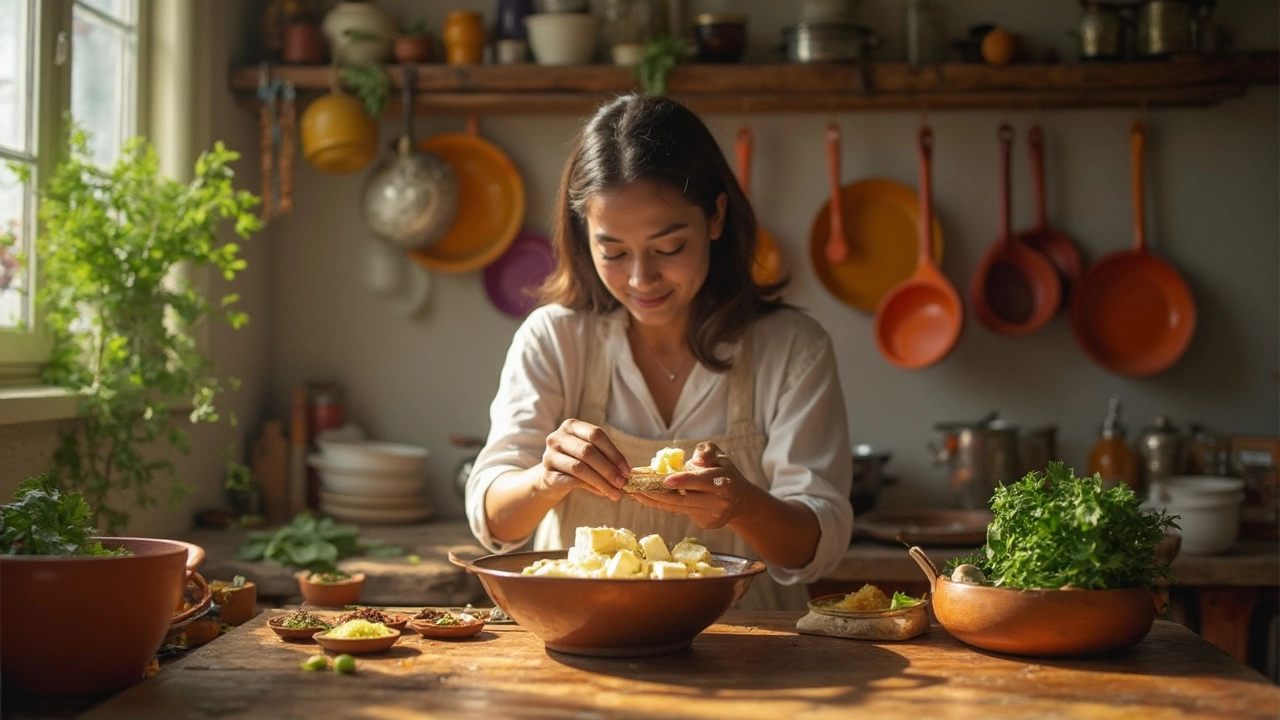
Cooking Paneer: Simple Ways to Make Soft, Flavorful Indian Cheese Dishes
When you think of paneer, a fresh, unaged Indian cheese made by curdling milk with lemon juice or vinegar. Also known as Indian cottage cheese, it’s the backbone of dozens of vegetarian dishes across India—from creamy paneer butter masala to spicy paneer tikka. Unlike Western cheeses, paneer doesn’t melt, which makes it perfect for grilling, frying, or simmering in rich sauces without falling apart. But here’s the thing: most people mess it up. They buy it hard, cook it too long, or skip the soak—and end up with rubbery, tasteless cubes. That’s not paneer. That’s disappointment.
Good paneer starts with how you handle it before cooking. If you want it soft, don’t just toss it into the pan. Drain it well, then soak it in warm water for 10 to 15 minutes. This brings back moisture, so it stays tender even after frying or simmering. And don’t skip the marinate. Even a quick 20-minute soak in yogurt, turmeric, and a pinch of chili powder makes a huge difference. It’s not just flavor—it’s texture. Indian vegetarian cooking, a broad category that relies heavily on plant-based proteins like lentils, chickpeas, and paneer thrives on this kind of detail. Paneer isn’t just a substitute for meat—it’s a star on its own, especially when you treat it right.
People often ask, "Is paneer the same as cottage cheese?" Not really. Cottage cheese is usually salted and has a grainier texture. Paneer is plain, firm, and holds its shape. That’s why it works in tandoori chicken, a dish traditionally cooked in a clay oven with spices and yogurt marinade—you can skewer it and grill it just like meat. And if you’ve ever tried making paneer at home, you know it’s easier than you think. Just heat milk, add lemon juice, strain it, press it, and you’ve got fresh cheese in under an hour. No fancy equipment. No waiting. Just good, honest food.
What you’ll find below isn’t just recipes. It’s the real talk from Indian kitchens—how to avoid dry paneer, which spices bring out its best, how to use it in snacks, curries, and even breakfasts. You’ll learn why some cooks fry it first, others skip it, and how to fix paneer that’s gone wrong. No fluff. No guesswork. Just the tricks that actually work.