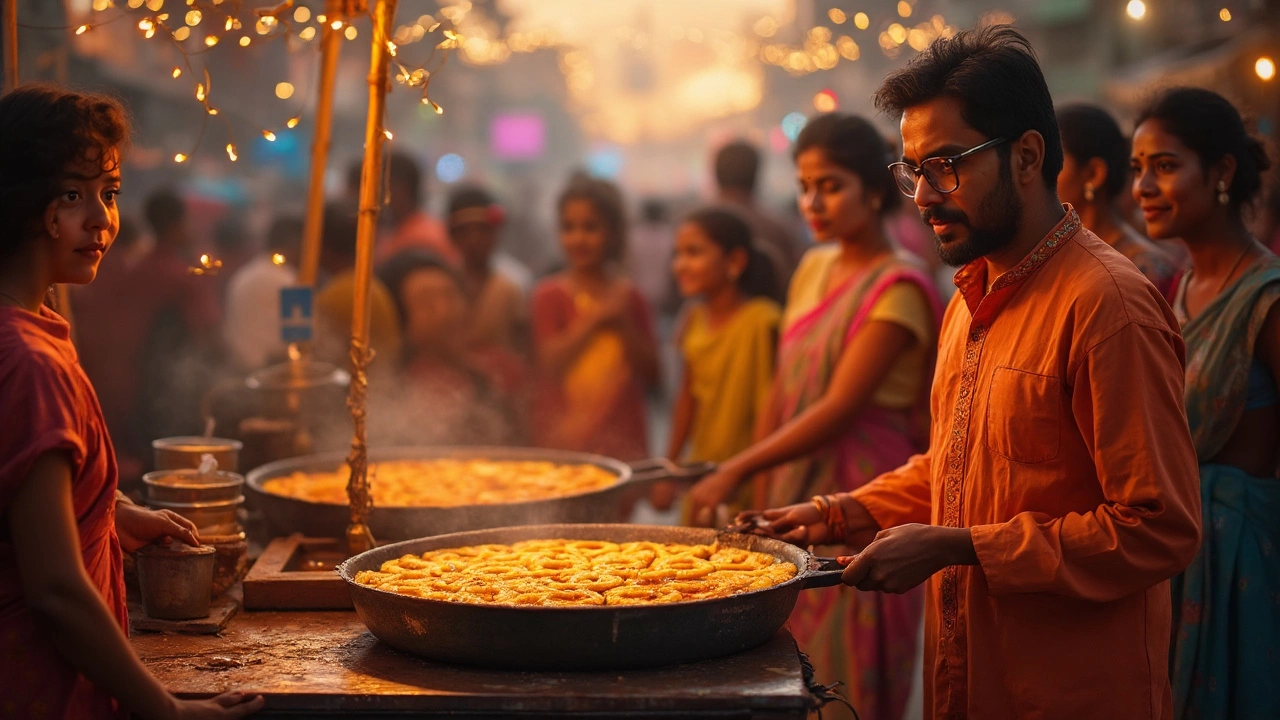
Desserts: Indian Sweet Treats That Define Tradition and Taste
When you think of desserts, sweet endings to meals that bring comfort, celebration, and deep cultural meaning. Also known as Indian sweets, these treats aren’t just sugar—they’re memories made edible. In India, desserts aren’t an afterthought. They’re the heartbeat of festivals, the reward after a long day, and the first thing offered to guests. You won’t find a wedding, Diwali, or even a simple family dinner without them.
Take jalebi, a deep-fried, syrup-soaked spiral that’s crispy on the outside and sticky-sweet inside. It’s the most widely loved dessert across India, sold by street vendors at dawn and served at midnight parties. Then there’s gulab jamun, soft milk-solid dumplings soaked in rose-scented syrup. It’s the dessert that makes people close their eyes and sigh. And mysore pak, a rich, buttery fudge made from gram flour, sugar, and ghee, melts in your mouth like a golden cloud. These aren’t just recipes—they’re passed down through generations, with every grandmother having her own secret tweak.
What makes Indian desserts different? It’s the spices. Cardamom isn’t just a flavor—it’s a signature. Saffron doesn’t just color—it elevates. Even the sugar isn’t plain; it’s often cooked into syrup with lemon juice to keep it from crystallizing. You won’t find these in a typical Western bakery. They’re made with patience, tradition, and a deep understanding of texture and timing.
And while some might think these sweets are too heavy, they’re often balanced with cooling elements—like a sprinkle of rosewater, a hint of saffron, or served with a side of yogurt. They’re not just sugar bombs. They’re thoughtful, layered, and designed to linger on the tongue, not just the plate.
Below, you’ll find real stories and insights from Indian kitchens—why jalebi is the unofficial national sweet, how to spot the best gulab jamun, and what makes mysore pak so hard to master. No fluff. No guesswork. Just the truth from people who make these sweets every day.