Oct, 9 2025, 0 Comments
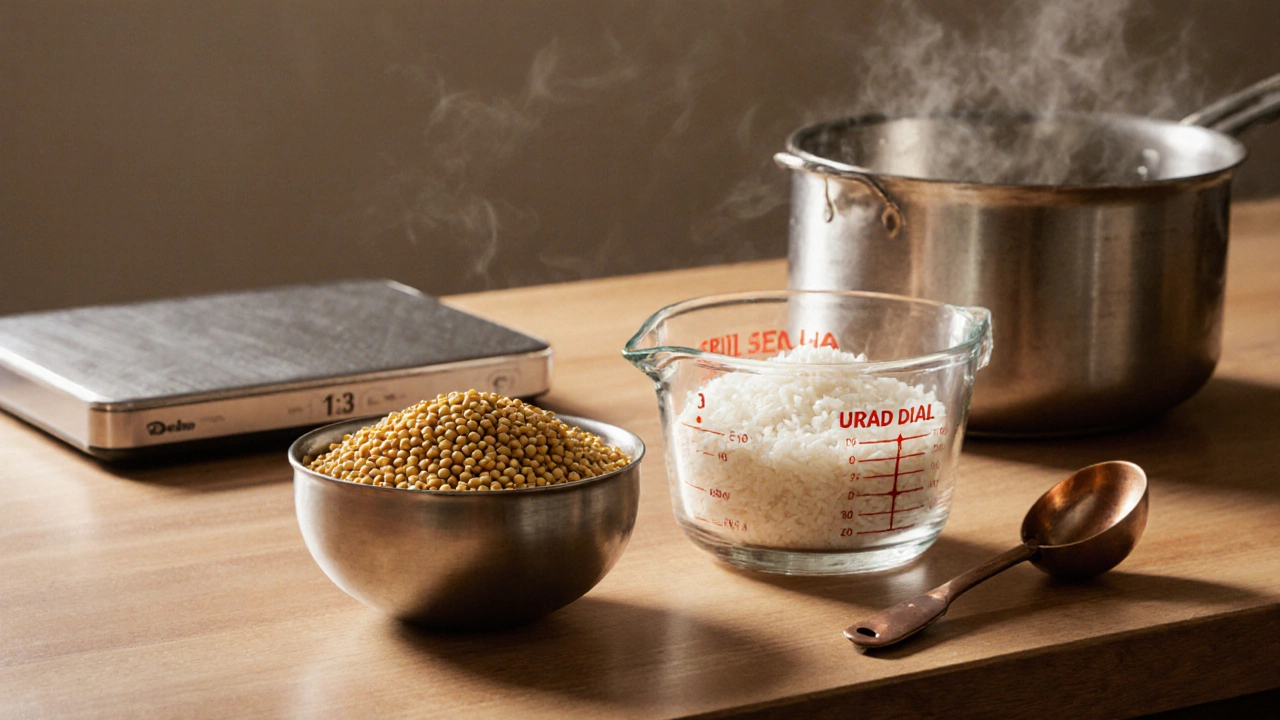
Ideal Urad Dal to Rice Ratio for Perfect Dosa, Idli & More
Learn the perfect urad dal to rice ratio for dosa, idli, and other batters, with step‑by‑step instructions, tips, and troubleshooting for flawless results.
Read MoreWhen you’re making dosa batter, a fermented mix of rice and lentils used to make crispy South Indian pancakes. Also known as dosa batter mixture, it’s the foundation of one of India’s most loved breakfast foods. The secret isn’t just in the ingredients — it’s in the dosa batter ratio. Too much rice, and your dosas won’t puff. Too much urad dal, and they turn gummy. The sweet spot? A 3:1 ratio of rice to urad dal. That’s three parts soaked rice to one part soaked black gram. It’s simple, but get it wrong, and you’ll end up with flat, tough dosas instead of light, bubbly ones.
This ratio works because rice gives structure and crispness, while urad dal brings the airiness through fermentation. But the ratio alone isn’t enough. You need time — at least 8 to 12 hours of fermentation in a warm spot. Cold kitchens? Put the batter near a heater or in an oven with the light on. The batter should double in volume and smell slightly sour — that’s your cue it’s ready. Some people add a pinch of salt before fermenting. Others add fenugreek seeds to the urad dal soak. Both help with fermentation, but they’re optional. What’s not optional? The baking soda, a leavening agent used to boost rise in dosa batter. Also known as sodium bicarbonate, it’s not a substitute for fermentation — it’s a quick helper. Add just 1/4 teaspoon per cup of batter after fermentation. Too much, and your dosas taste bitter. Too little, and they won’t puff up nicely.
Water matters too. Use chilled, filtered water to grind the batter. Warm water kills the natural yeast. And don’t over-grind the urad dal — it should be smooth but not watery. The batter should be thick enough to hold its shape when you lift the spoon. If it’s too runny, your dosas will spread too thin and burn. If it’s too thick, they’ll be dense. And if you’re wondering why your dosas stick to the pan? It’s not the pan — it’s the batter temperature. Always let the batter rest for 20 minutes after mixing in baking soda. That lets the gas settle and gives you even bubbles.
There’s no magic formula that works for everyone. Humidity, altitude, water hardness — they all tweak the outcome. That’s why Indian households tweak the ratio slightly each season. In monsoon, they add a little more rice. In winter, they let it ferment longer. The key is to watch the batter, not just the clock. You’ll know it’s right when it smells like bread dough and looks like a bubbly, frothy cloud.
Below, you’ll find real recipes, fixes for common mistakes, and tips from home cooks who’ve made thousands of dosas. Whether you’re struggling with flat dosas, bitter taste, or uneven cooking — there’s a post here that solves it. No fluff. Just what works.
Oct, 9 2025, 0 Comments
Learn the perfect urad dal to rice ratio for dosa, idli, and other batters, with step‑by‑step instructions, tips, and troubleshooting for flawless results.
Read More