Garam Masala Ingredients: What’s Really in This Indian Spice Blend
When you think of garam masala, a warm, aromatic spice blend central to Indian cooking. Also known as hot spice mix, it’s the secret behind the deep, layered flavor in curries, dals, and even Indian-style pizzas. It’s not just one spice—it’s a harmony of whole spices toasted and ground, and every household in India has its own version. There’s no single recipe, but the core ingredients stay the same: cardamom, cinnamon, cloves, black pepper, cumin, and coriander. These aren’t random picks—they’re chosen for how they balance heat, sweetness, and earthiness to lift a dish without overpowering it.
What makes garam masala different from other spice mixes is when and how it’s used. Unlike turmeric or chili powder that go in early to cook through, garam masala is added near the end. That’s because its volatile oils—like the ones in cardamom and cloves—vanish if you cook them too long. Add it too early, and you lose the magic. Add it right before serving, and you get that fresh, fragrant punch that makes you take a second bite. It’s not just flavor—it’s timing. And that’s why even professional chefs in India keep their garam masala in a sealed jar, away from light and heat.
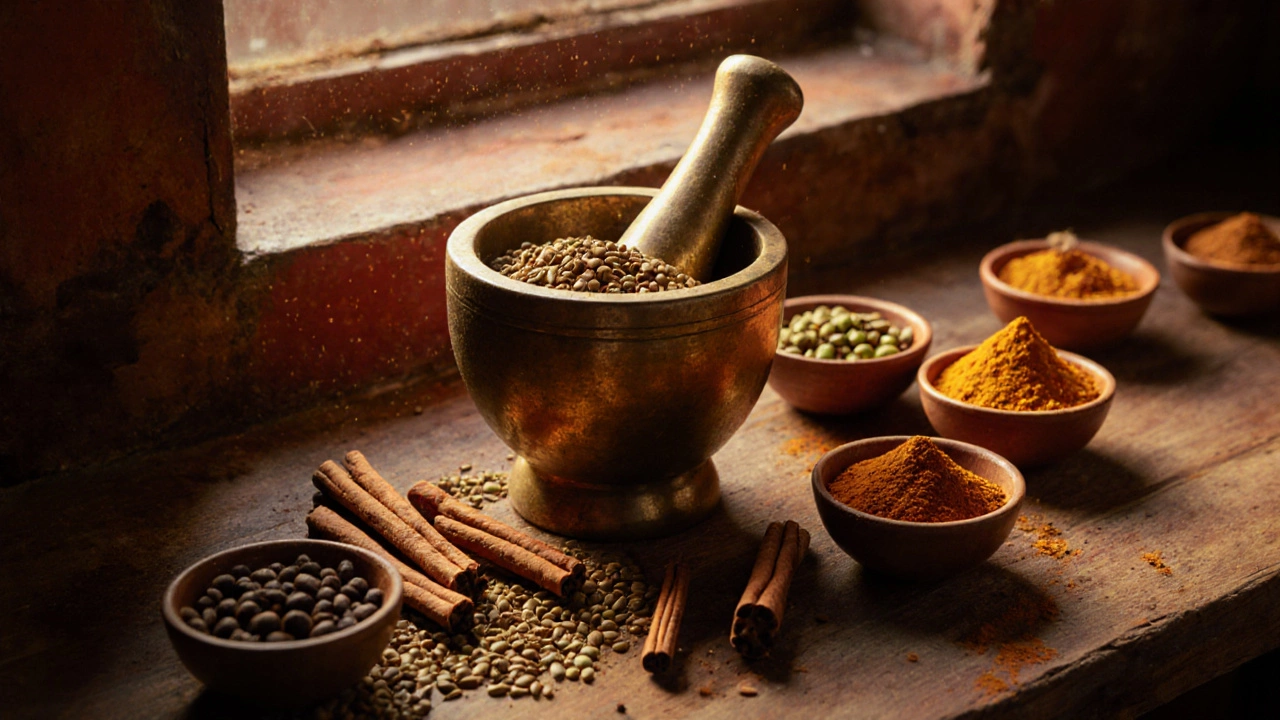
Some blends include nutmeg, mace, or bay leaves. Others add fennel seeds or even dried ginger. In the north, you’ll find more cinnamon and cardamom. In the south, black pepper and dried chilies might sneak in. The key isn’t perfection—it’s balance. If you’ve ever tasted a curry that felt flat, it’s probably missing garam masala. Or worse, it got it too early. The best versions are made fresh, just a few tablespoons at a time, and used within weeks. Pre-ground store-bought blends? They’re often stale, losing their punch after just a few months. That’s why home cooks in India still toast their own spices on a dry pan, grind them with a mortar and pestle, and smell the difference before they even add them to the pot.
It’s not just about cooking either. Garam masala ingredients reflect how Indians think about food: warmth for the body, complexity for the soul. That’s why it shows up in everything from biryani to pizza topped with paneer and tandoori sauce. If you’ve ever wondered why your Indian dishes taste different from restaurant versions, the answer often starts with this one blend. Below, you’ll find real recipes, ingredient breakdowns, and tips from home cooks who’ve been making this for decades—no guesswork, no fluff, just what works.