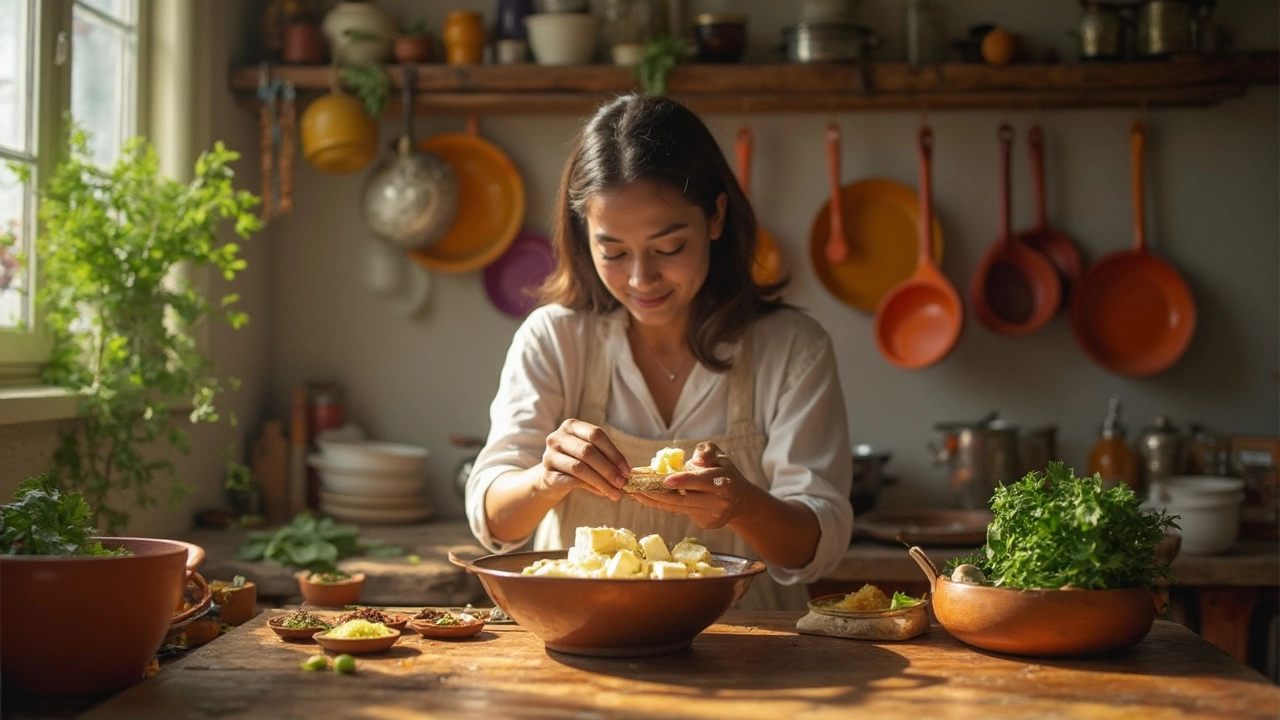
Homemade Paneer Tips: Best Ways to Make Soft, Flavorful Paneer at Home
When you make homemade paneer, a fresh, unaged Indian cheese made by curdling milk with acid. Also known as Indian cottage cheese, it’s the backbone of dozens of beloved dishes like paneer tikka, palak paneer, and paneer butter masala. Unlike Western cheeses, paneer doesn’t melt—it holds its shape, which is exactly why getting the texture right matters so much. Most people fail at making paneer because they use the wrong milk, boil it too fast, or press it too hard. The result? Crumbly, dry, rubbery chunks that fall apart in your curry.
The secret isn’t fancy equipment. It’s control. You need full-fat milk—nothing less. Skim or low-fat milk won’t curdle properly, and what you get will be chalky. Heat the milk slowly, stirring gently until it just starts to steam. Then, add lemon juice or vinegar, one tablespoon at a time, until the milk separates cleanly into solid curds and clear whey. Don’t overdo the acid—it makes paneer taste sour. Once the curds form, drain them in a muslin cloth and press them with something heavy, like a cast-iron pan, for 30 to 45 minutes. Too little pressure, and the paneer stays too soft. Too much, and it turns into a brick. Paneer texture, the key to whether your dish feels rich or disappointing depends entirely on this step.
Another thing most home cooks miss? Soaking. After pressing, drop your paneer block into cold water for 15 minutes. This stops the cooking process, softens the texture, and removes any leftover sourness. If you’re making paneer for grilling or frying, pat it dry, then lightly fry the cubes in oil before adding them to the curry. It locks in moisture and gives a slight crust that holds up against spicy sauces. Indian cheese, a staple in vegetarian kitchens across the country isn’t just a protein—it’s a canvas. It absorbs flavors like a sponge, so if your paneer tastes bland, it’s not the spices. It’s the paneer itself.
You’ll find plenty of recipes online that promise perfect paneer in five minutes. But the real ones—passed down in homes from Punjab to Kerala—take patience. They don’t use store-bought paneer. They make it fresh. And that’s the difference between a good dish and a great one. Below, you’ll find real tips from people who’ve made paneer dozens of times, failed, fixed it, and got it right. No fluff. No guesswork. Just what works.