How to Make Soft Roti: Tips, Tricks, and Why It Gets Hard
When you're trying to make soft roti, a simple, unleavened flatbread staple across India made from whole wheat flour, water, and salt. It's known as chapati, and it's the backbone of countless meals—from dal and curry to sabzi and chutney. But so many people struggle with it. You roll it out, cook it on the tawa, and five minutes later? It’s rock hard. Why? It’s not your skill. It’s usually one of three things: too little water in the dough, wrong heat, or bad storage.
The secret to dough hydration, the exact amount of water mixed into flour to create the right elasticity and softness is simple: use just enough water to make the dough pliable but not sticky. Most people use too little. Try adding water slowly—start with 1 cup flour to 1/3 cup water, then adjust. Knead for at least 5 minutes. You’ll know it’s ready when it feels like your earlobe—soft, springy, and smooth. Let it rest for 20 minutes. That’s not optional. That’s when the gluten relaxes and the starches absorb water fully. Skip this, and your roti will crack and harden fast.
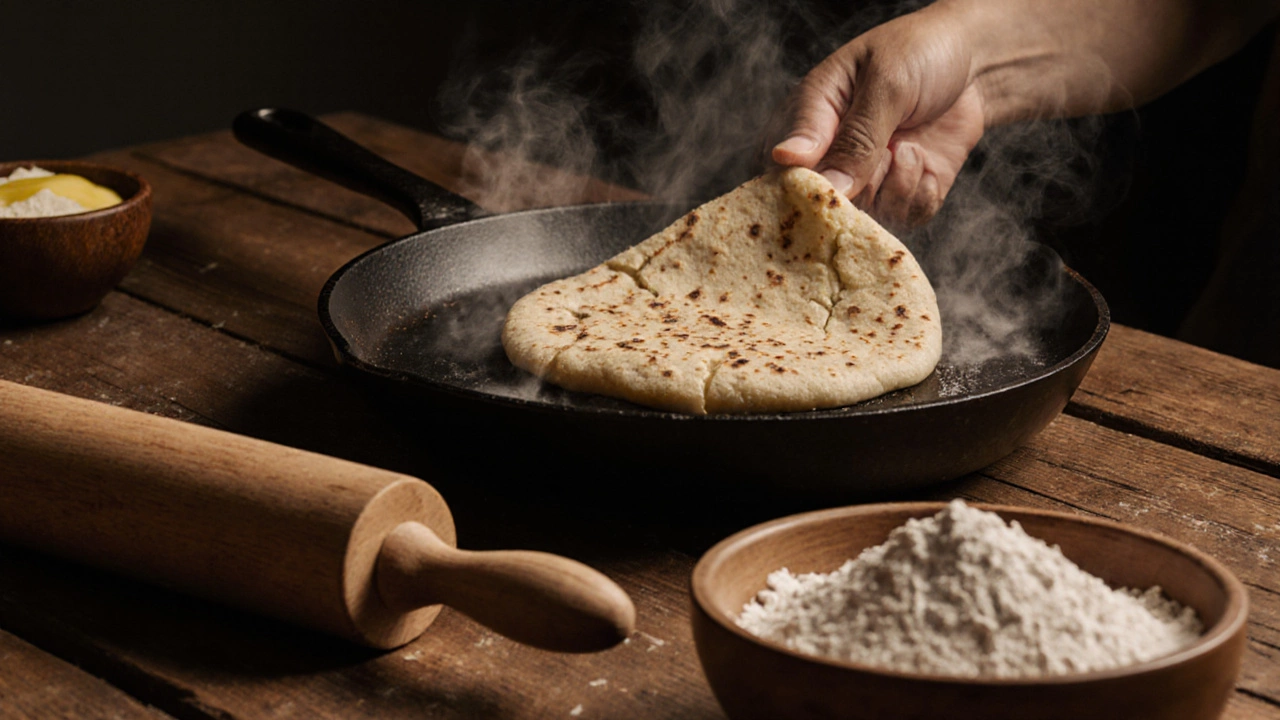
Then there’s the roti cooking temperature, the heat level on the tawa or stove that determines whether the roti puffs up properly and stays tender. Too low? It dries out. Too high? It burns before it puffs. Medium heat is the sweet spot. Press gently with a cloth as it cooks—this helps it puff evenly. Once it puffs, flip it, press again, and cook for 10 seconds on each side. Don’t overcook. The moment it gets those nice brown spots, it’s done.
And here’s the biggest mistake: leaving roti out on the counter. Heat makes it hard. Moisture loss does. After cooking, stack them in a clean, dry cloth inside a sealed container. The steam stays trapped, keeping them soft for hours. If you’re making them ahead, wrap them in foil and reheat on a dry pan for 15 seconds. No microwave. No soggy roti.
You’ll find plenty of advice online about adding milk, ghee, or oil to the dough. Some work. But the real fix isn’t in the ingredients—it’s in the technique. The posts below show you exactly what works, from how much water to use for different flours, to why your roti sticks to the tawa, to the one trick that keeps roti soft all day. These aren’t theories. These are tested methods from Indian homes, tested again and again.