Oct, 9 2025, 0 Comments
Ideal Urad Dal to Rice Ratio for Perfect Dosa, Idli & More
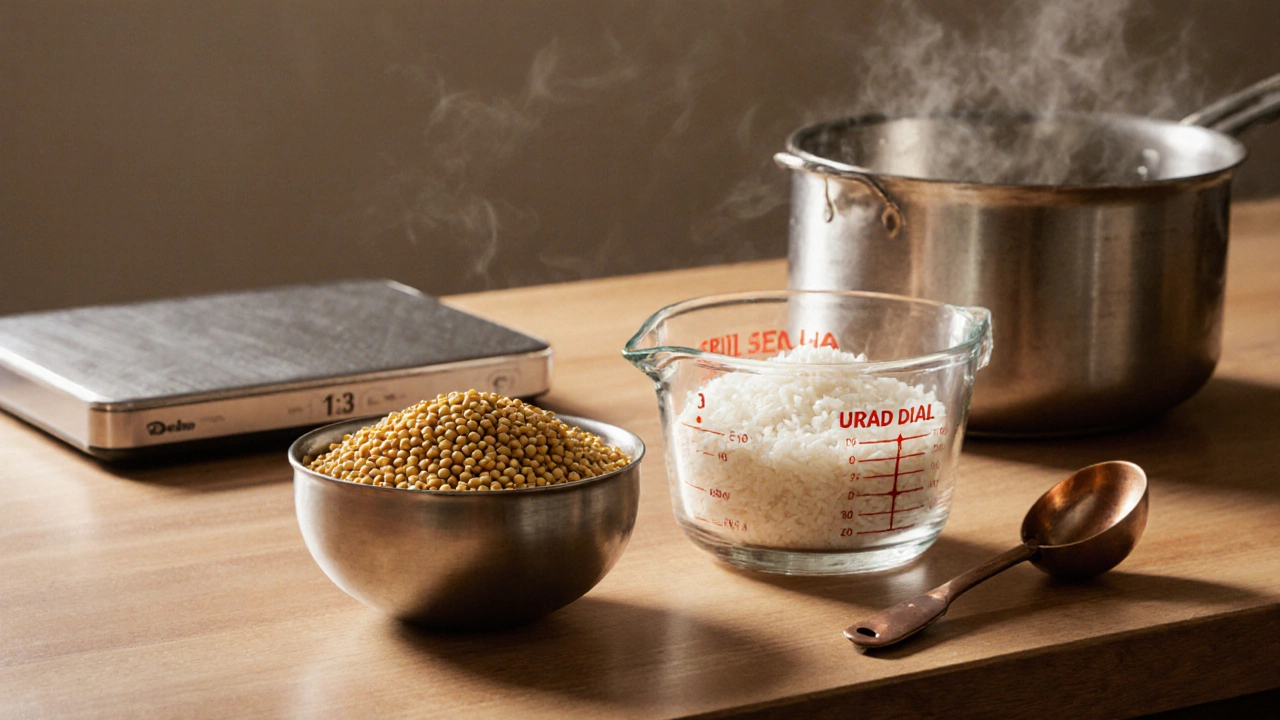
Learn the perfect urad dal to rice ratio for dosa, idli, and other batters, with step‑by‑step instructions, tips, and troubleshooting for flawless results.
Read MoreWhen you make idli batter ratio, the precise mix of rice and urad dal that determines whether your idlis turn out light and fluffy or dense and heavy, you’re not just following a recipe—you’re controlling fermentation, texture, and flavor. The classic idli batter ratio is 3:1 rice to urad dal, but that’s just the starting point. Get this wrong, and even the best fermentation won’t save you. Get it right, and your idlis rise like clouds, soft enough to melt on your tongue.
This ratio isn’t magic—it’s science. Rice gives structure, urad dal adds lift through its protein-rich batter. Too much rice? Your idlis turn hard. Too much dal? They collapse or taste sour. The water you add matters too. It’s not about volume—it’s about consistency. The batter should flow slowly off a spoon, like thick cream. And fermentation? That’s where the real work happens. In warm climates, 8–12 hours is enough. In cooler ones, you might need overnight, or even a warm oven. Some cooks add a pinch of fenugreek seeds to the dal before grinding—it helps with fermentation and gives a subtle aroma.
Related to this is the idli fermentation, the natural process where wild yeast and bacteria break down starches into gases that make the batter rise. It’s the same science behind dosa batter ratio, a similar mix used for crispy South Indian pancakes. But idlis need more airiness, less crispness. That’s why many home cooks soak rice and dal separately, grind them to different textures, then blend gently. Some even use leftover cooked rice to boost fluffiness—a trick passed down through generations.
You’ll find variations across India. In Tamil Nadu, they use parboiled rice for a firmer bite. In Karnataka, some add poha (flattened rice) to speed up fermentation. In Andhra, a dash of salt before fermentation is common. But the core stays the same: rice, dal, water, time. No baking soda. No yeast. Just patience and precision.
And if you’ve ever wondered why your idlis stick to the pan or come out flat—it’s almost always the batter ratio. Too dry? Too wet? Wrong mix? The fix isn’t in the steamer. It’s in the bowl, hours before you even turn on the stove.
Below, you’ll find real recipes, real tips, and real mistakes people make when mixing idli batter—along with how to fix them. No fluff. No guesswork. Just what works, tested in kitchens across India.
Oct, 9 2025, 0 Comments
Learn the perfect urad dal to rice ratio for dosa, idli, and other batters, with step‑by‑step instructions, tips, and troubleshooting for flawless results.
Read More