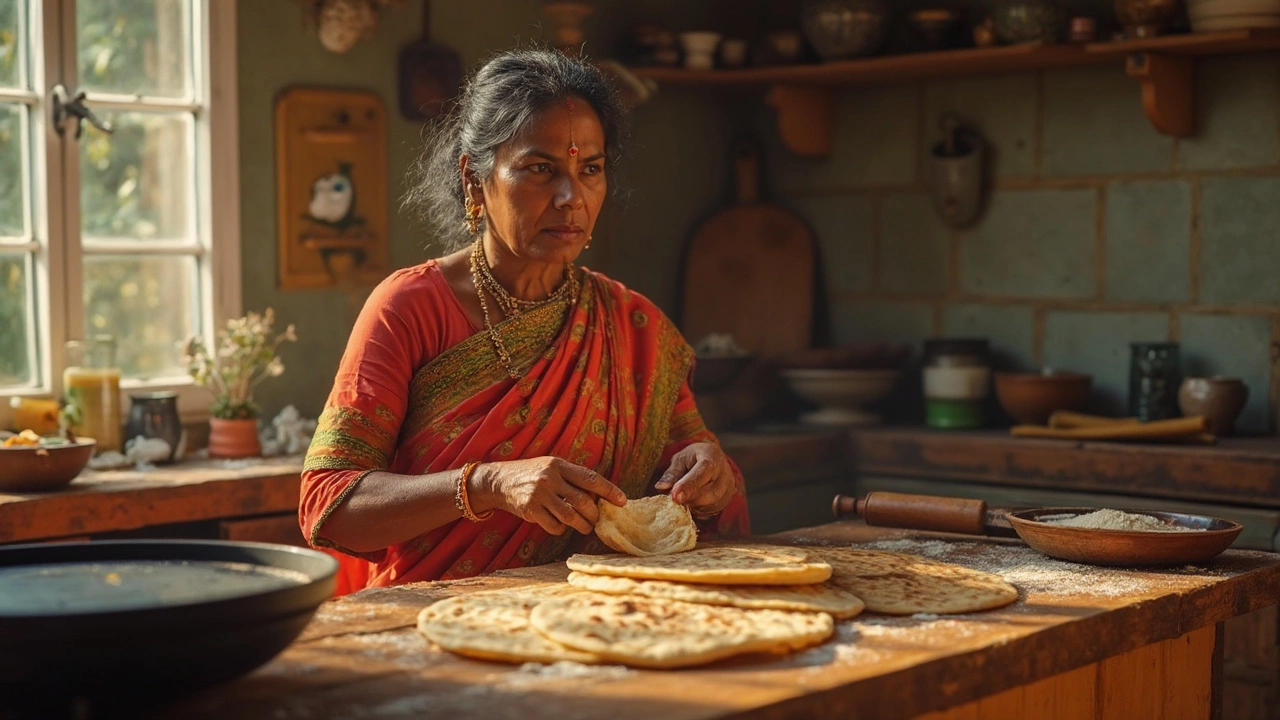
Indian Bread Storage: Keep Roti, Chapati, and Paratha Fresh Longer
When you make Indian bread, soft flatbreads like roti, chapati, and paratha that are staples in homes across India. Also known as Indian flatbread, it's meant to be eaten warm, fresh off the tawa—but what happens when you have leftovers? The problem isn’t just waste. It’s the disappointment of biting into a dry, cracked roti that used to be fluffy and warm. You didn’t fail at cooking. You just didn’t store it right.
Roti storage, the method of preserving freshly made Indian flatbreads to maintain texture and moisture isn’t about fancy containers or expensive gadgets. It’s about temperature, moisture, and airflow. A plastic bag left on the counter? That’s a trap. Condensation turns soft roti into a soggy mess. The fridge? Without proper wrapping, it dries out fast. The trick is layering: put each roti between parchment or wax paper, stack them, then seal in a cloth-lined container or airtight box. Keep it at room temperature for up to 24 hours. For longer? Freeze them. Yes, freeze. No, they won’t taste weird. Just thaw at room temperature and give them a quick press on a hot tawa. They’ll taste like you made them five minutes ago.
Chapati storage follows the same rules as roti—they’re basically the same thing. But paratha storage is different. Parathas have ghee or oil baked in. That fat turns rancid faster. Store parathas in the fridge, not the freezer, and only for 2–3 days max. Reheat them on a dry pan with a tiny drop of ghee—don’t microwave. That turns them rubbery.
Why Your Bread Goes Hard (And How to Stop It)
Roti gets hard because moisture escapes. That’s science. But it’s also about dough hydration, cooking heat, and how fast you stack them after cooking. If you pile hot rotis on top of each other without letting steam escape, they steam themselves into a rubbery texture. Wait 30 seconds after cooking, then separate them with paper. That’s it. No magic. No guesswork. Just timing.
You’ll find posts here that explain how to make soft roti every time, why dosa batter needs the right rice-to-dal ratio, and how to fix tough chicken curry—because if you’re cooking Indian bread, you’re probably cooking other things too. This isn’t just about storage. It’s about making your whole kitchen run smoother. No more wasted food. No more cold, dry bread. Just better meals, made easier.