Indian Milk: What It Is, How It's Used, and Why It Matters in Indian Kitchens
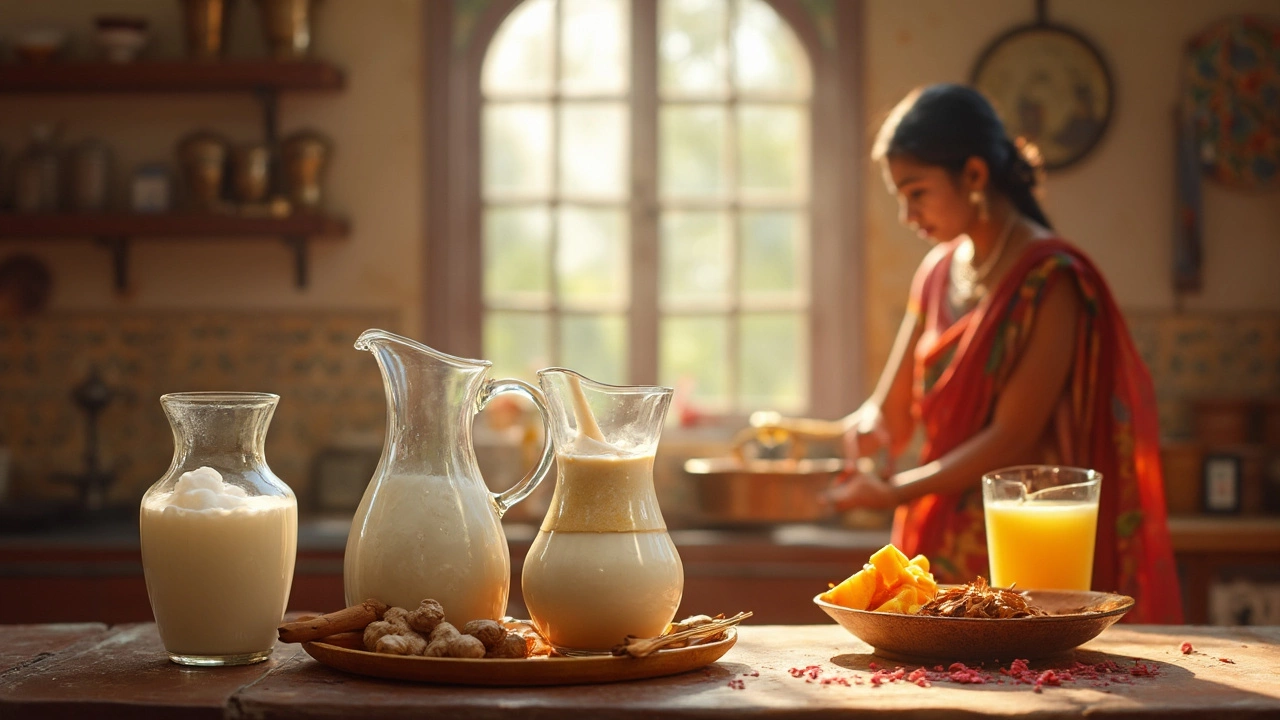
When you think of Indian milk, the full-fat, richly textured cow or buffalo milk commonly used across India’s homes and dairies. Also known as desi milk, it’s thicker, creamier, and higher in fat than the standardized milk you find in Western supermarkets. This isn’t just a difference in branding—it’s the reason why Indian paneer holds its shape, ghee smokes at a higher temperature, and kheer turns velvety without cream. Unlike processed milk, Indian milk often comes straight from local farms, isn’t homogenized, and is boiled daily in households to preserve freshness. That’s why it behaves differently in recipes—it curdles more easily, froths better, and caramelizes into richer flavors when simmered.
This milk isn’t just a drink. It’s the base for paneer cheese, a fresh, non-melting cheese made by curdling milk with lemon juice or vinegar. Also called Indian cottage cheese, paneer is the star of butter paneer, tikka, and even pizza toppings at Pizza Paradise India. Then there’s ghee, clarified butter made by slowly simmering milk fat until the water evaporates and solids brown. It’s the oil of choice for frying samosas, tempering spices, and drizzling over hot rotis because it doesn’t burn and carries flavor deeper into dishes. These aren’t separate ingredients—they’re all born from the same source: Indian milk. You can’t make authentic ghee without it. You can’t get paneer that doesn’t crumble without it. And you can’t replicate the richness of traditional kheer or rabri without it.
Indian milk also plays a quiet role in food safety and tradition. In rural areas, milk is often boiled and cooled overnight in clay pots to naturally ferment into dahi (yogurt). That’s how probiotics entered Indian diets long before the term existed. Even today, many Indian vegetarians rely on milk-based foods for protein—paneer, curd, and milk itself are non-negotiables in daily meals. But here’s the catch: not all milk sold as "Indian milk" is real. Some brands dilute it or add starch. That’s why home cooks still prefer buying from local dairies or trusted vendors. It’s not nostalgia—it’s necessity.
When you see a recipe calling for "milk" in an Indian dish, don’t assume it’s the same as what you buy at the grocery store. The difference matters. Use the wrong milk, and your dosa batter won’t ferment right. Your rasgulla won’t swell. Your chhena won’t bind. That’s why every post in this collection—whether it’s about making soft rotis, perfect paneer, or anti-inflammatory dal—starts with understanding what’s in the pot. Indian milk isn’t just an ingredient. It’s the quiet backbone of flavor, texture, and tradition. Below, you’ll find real guides from real kitchens that show you how to work with it, not just around it.