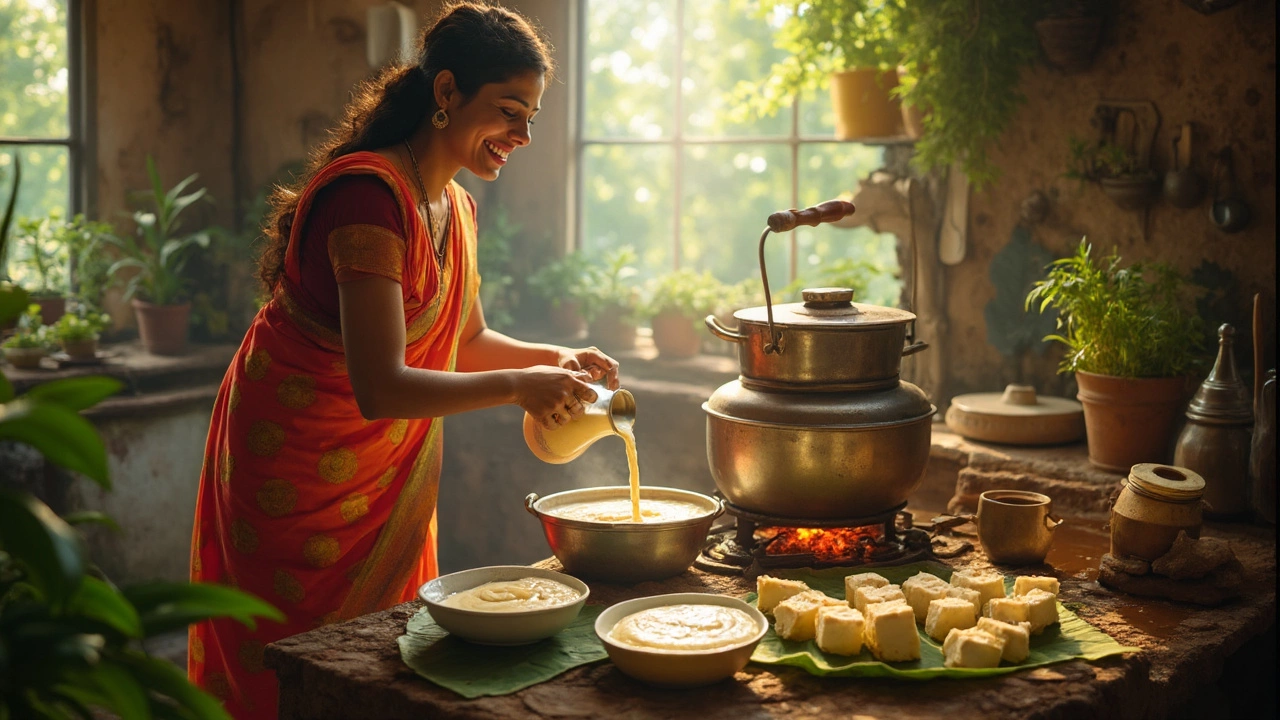
Milk for Paneer: Best Types, Ratios, and Tips for Perfect Homemade Cheese
When you make paneer, a fresh, non-melting Indian cheese made by curdling milk with acid. Also known as Indian cottage cheese, it’s the backbone of dishes like paneer butter masala and palak paneer. But not all milk works the same—your choice of milk decides if your paneer is soft and creamy or dry and crumbly.
The best milk for paneer is full-fat, whole milk. Skim or low-fat milk? Skip it. You’ll end up with hard, rubbery cheese that falls apart in curry. Full-fat milk has the right balance of fat and protein to form a smooth, sliceable curd. Most Indian households use whole cow’s milk, but buffalo milk gives you an even richer, denser paneer—perfect if you want that restaurant-style texture. Avoid ultrapasteurized milk; it won’t curdle properly. Stick to fresh, locally sourced milk if you can. You’ll need about 1 liter of milk to make 200–250 grams of paneer. Add 2–3 tablespoons of lemon juice or vinegar to curdle it. Heat the milk slowly, then stir in the acid off the heat. Let it sit for 10 minutes. Drain in a cloth, press lightly for 30 minutes, and you’ve got perfect paneer.
Some people ask if plant-based milk works. Almond or soy milk? No. Paneer needs casein protein, which only animal milk has. You can’t fake it with oat or coconut milk. And don’t boil the milk too fast—bubbling too hard breaks the proteins and makes the curds grainy. Keep it gentle. If you’re using milk from a store, check the label: no added stabilizers or thickeners. Those mess with curdling. The key is simple: good milk + slow heat + just enough acid = soft paneer every time.
Why This Matters for Indian Cooking
Paneer isn’t just cheese—it’s a staple in homes from Delhi to Chennai. Whether you’re making paneer tikka, mattar paneer, or even paneer stuffed parathas, the texture starts with the milk. If your paneer’s too dry, your curry turns watery. If it’s too soft, it dissolves in the sauce. Getting it right means your dish holds together, soaks up flavor, and feels satisfying in every bite. That’s why cooks in India don’t just grab any milk—they pick the kind that gives them control over the final texture. You don’t need fancy tools. Just a pot, a cloth, and the right milk.
Below, you’ll find real tips from home cooks who’ve tested dozens of milk brands, ratios, and techniques. No guesswork. No fluff. Just what works.