Paan in India: The Chewy Tradition Behind the Flavor
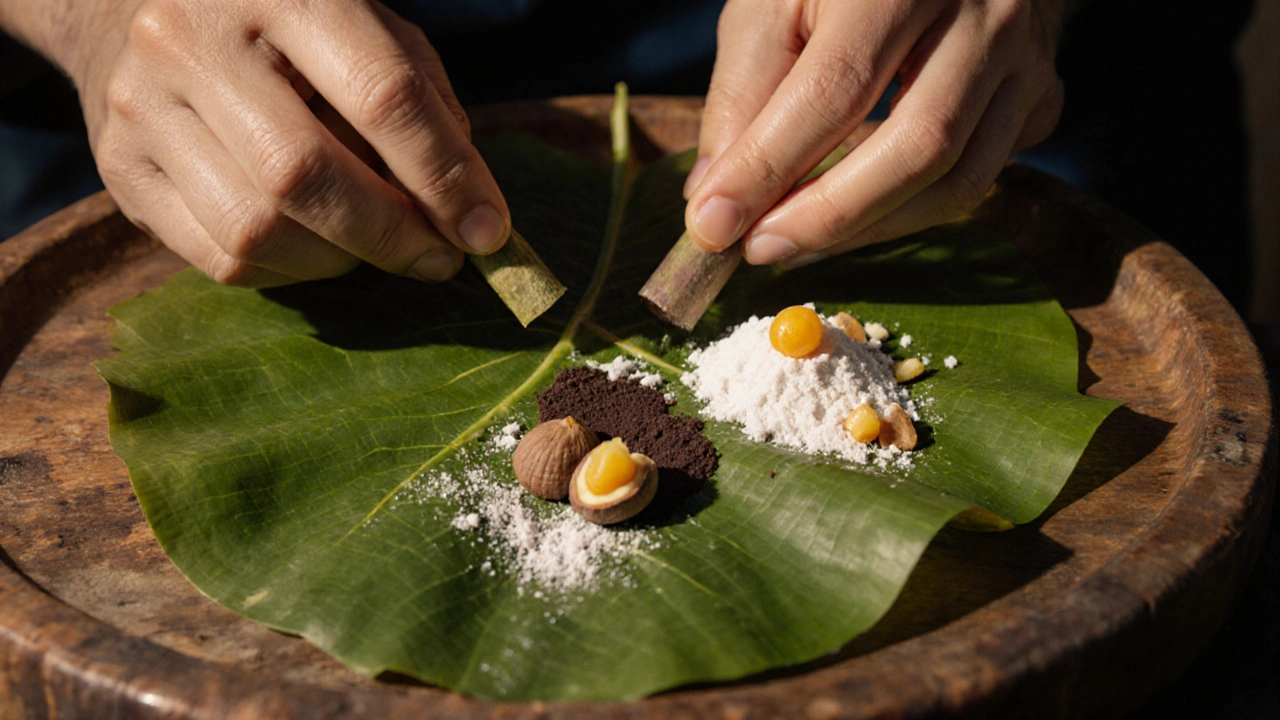
When you think of paan, a traditional Indian preparation of betel leaf wrapped around areca nut and spices, often chewed for its stimulant and digestive effects. Also known as betel quid, it’s not just a snack—it’s a ritual passed down through generations, found at street corners, weddings, and family gatherings across the country. Paan isn’t one thing. It’s a canvas: some are sweet with fennel and rose petals, others spicy with chili and lime, and some loaded with tobacco for that extra kick. The betel leaf, a heart-shaped, aromatic leaf from the Piper betle plant, known for its natural antiseptic and digestive properties wraps it all together, while the areca nut, the seed of the areca palm, chewed for its mild stimulant effect and often paired with slaked lime to enhance flavor and absorption gives it that distinctive bite. You’ll find variations in every state—Kolkata’s sweet paan, Maharashtra’s spicy version, or the royal paan of Lucknow with silver leaf and saffron.
Paan connects to bigger ideas in Indian food culture. It’s not just about taste—it’s about timing. People chew it after meals to aid digestion, offer it to guests as a sign of hospitality, or use it to freshen breath before a big meeting. The same way chutney balances a meal, paan closes it. And just like garam masala isn’t one fixed mix, paan recipes vary by region, family, and even mood. You won’t find paan in a recipe book the way you find dosa batter, but it’s just as essential to daily life. It’s also where tradition meets innovation—today, you’ll see paan-flavored ice cream, paan-infused cocktails, and even paan-inspired pizza toppings, blending old flavors with new formats. That’s the spirit of Pizza Paradise India: taking what’s deeply Indian and making it surprising, delicious, and personal.
Below, you’ll find posts that explore how paan’s bold flavors—sweet, spicy, cooling, and aromatic—show up in unexpected places. From how its spices influence chutneys and curries to why people chew it after biryani, these stories dig into the real, lived experience of paan in Indian kitchens and streets. You’ll learn what makes it work, why it sticks around, and how you can bring its essence into your own cooking—even if you’re not chewing it.