Pan Masala: What It Is, Why It's Used, and How It Connects to Indian Flavors
When you see someone spit red near a street corner in India, they’re likely chewing pan masala, a spiced mixture often used as a mouth freshener and stimulant in Indian households and street corners. Also known as paan masala, it’s not food, but it’s as common as chai—chewed for flavor, ritual, or a quick buzz. Unlike the sweet, leaf-wrapped paan, a traditional preparation that includes betel leaf, areca nut, slaked lime, and sometimes tobacco, pan masala skips the leaf and packs the same punch in a dry, granular form. It’s cheaper, faster, and sold in small packets at every corner shop—from Mumbai train stations to Delhi bazaars.
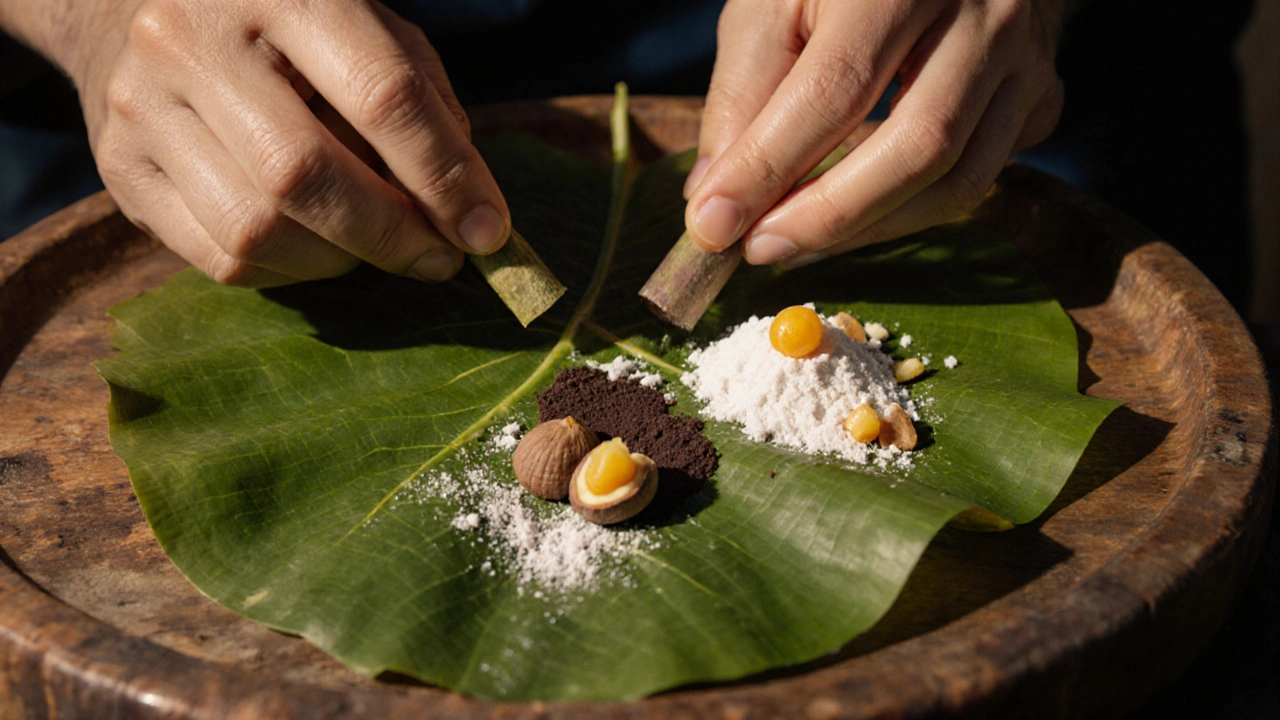
What’s inside? Usually areca nut, the seed of the betel palm, known for its mild stimulant effect and slightly bitter taste, mixed with cardamom, clove, fennel, anise, and sometimes catechu or lime powder. Some brands add tobacco, but many now market themselves as tobacco-free—though the nut remains. It’s not meant to be swallowed. You chew it, let the flavors bloom, then spit out the residue. The red stain on the ground? That’s the betel nut juice. It’s messy, but millions do it daily.
Why? For many, it’s habit. For others, it’s tradition. In rural India, elders offer it to guests like tea. In cities, it’s a post-meal ritual—like mint gum, but stronger. It masks bad breath, aids digestion, and gives a slight energy lift. It’s not a snack, but it’s treated like one. You’ll see auto drivers, shopkeepers, and even students reach for it after lunch. It’s part of the rhythm of everyday life.
But it’s not without controversy. Health experts warn that long-term use can lead to oral cancer, especially when tobacco is added. Many states have banned it, and ads are restricted. Still, it survives—because it’s cheap, accessible, and deeply woven into culture. You won’t find it in a recipe book, but you’ll find it in the hands of people who know what it means to pause, chew, and reset.
On this site, you’ll find posts that touch on Indian flavors, spices, and food rituals—from garam masala blends to chutney temperatures, from dosa batter ratios to hidden non-vegetarian ingredients. Pan masala doesn’t belong in a pizza recipe, but it belongs in the story of Indian eating habits. And if you’ve ever wondered why people chew something that stains their teeth, the answers are here.