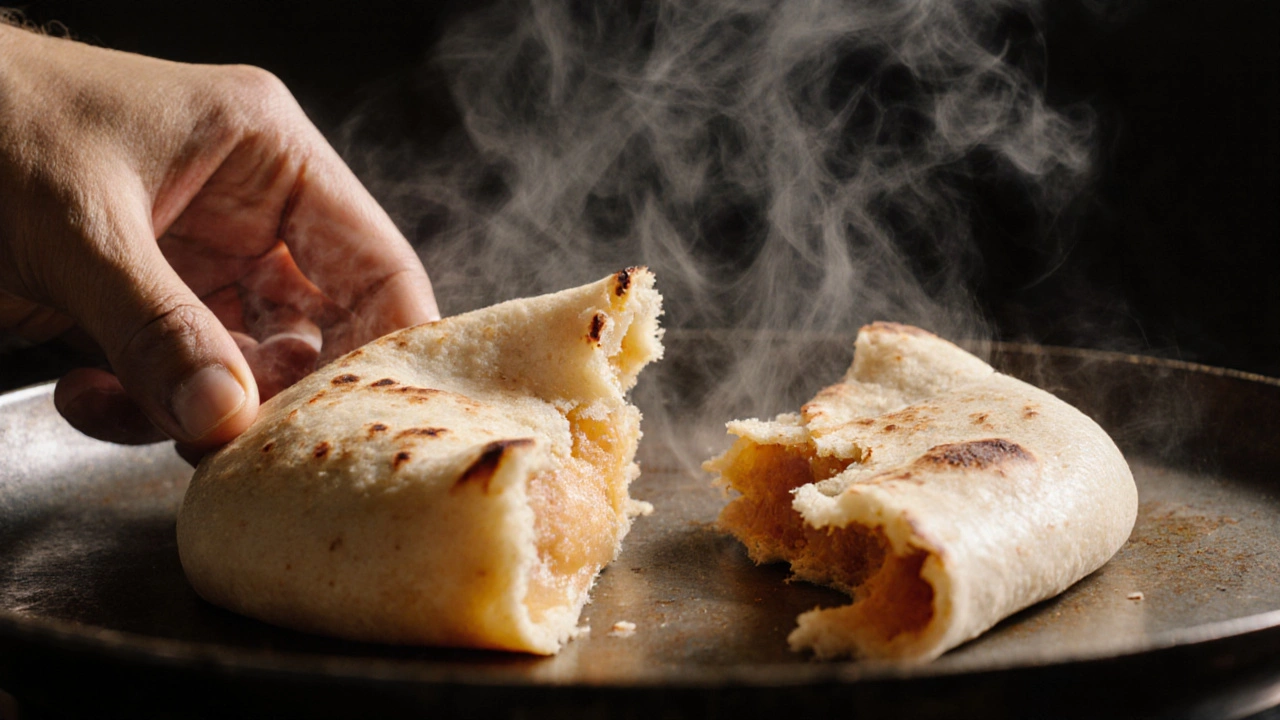
Roti Hard After Cooking: Why It Happens and How to Fix It
When your roti, a traditional Indian flatbread made from whole wheat flour, water, and salt comes out hard after cooking, it’s not because you’re bad at cooking—it’s because of one or two simple mistakes. Roti should be soft, pliable, and slightly puffy. If it’s crisp like a cracker or stiff like cardboard, something in your process is off. The problem isn’t the flour, the water, or even your tawa. It’s usually how you handle the dough, how long you let it rest, or how you roll and cook it.
One big reason rotis turn hard is dough hydration, the amount of water mixed into the flour. Too little water and the dough becomes dry and crumbly. Too much, and it’s sticky and hard to roll. The sweet spot is when the dough feels like your earlobe—soft, but not wet. Many people use the same amount of water every time, but humidity, flour type, and even altitude change how much water you need. Try adding water a tablespoon at a time until the dough feels right. Then, let it rest for at least 30 minutes. This isn’t optional. Resting lets the gluten relax and the flour fully absorb moisture. Skip this, and your rotis will be tough no matter how good your rolling technique is.
Another hidden culprit is rolling pressure, how hard you press down when shaping the roti. If you roll it too thin in the center, it cooks too fast and dries out. If you roll it unevenly, parts burn while others stay raw. Use light, even pressure and rotate the dough as you roll. Keep it slightly thicker around the edges. Also, don’t skip the dry flour when rolling. A light dusting prevents sticking, but too much gets baked into the roti and makes it gritty. And here’s something most don’t tell you: always cook rotis on a medium-hot tawa. High heat burns the outside before the inside cooks through. Medium heat lets steam build inside, puffing the roti naturally and keeping it soft.
Even the way you store rotis matters. Stack them right after cooking and cover with a clean, dry kitchen towel. This traps steam and keeps them soft for hours. If you leave them uncovered, they dry out fast. Some people add a drop of ghee or oil on each roti before stacking—it helps, but only if the dough and cooking are already right. The real fix isn’t butter or oil. It’s the dough, the rest, and the heat.
You’ll find dozens of roti recipes online, but the truth is, the best rotis come from small, consistent tweaks—not fancy ingredients. The posts below show exactly what works in real Indian homes—how much water to use, how long to rest the dough, how to roll without tearing, and why your roti sticks to the tawa. No fluff. No theory. Just what actually fixes hard rotis, step by step.