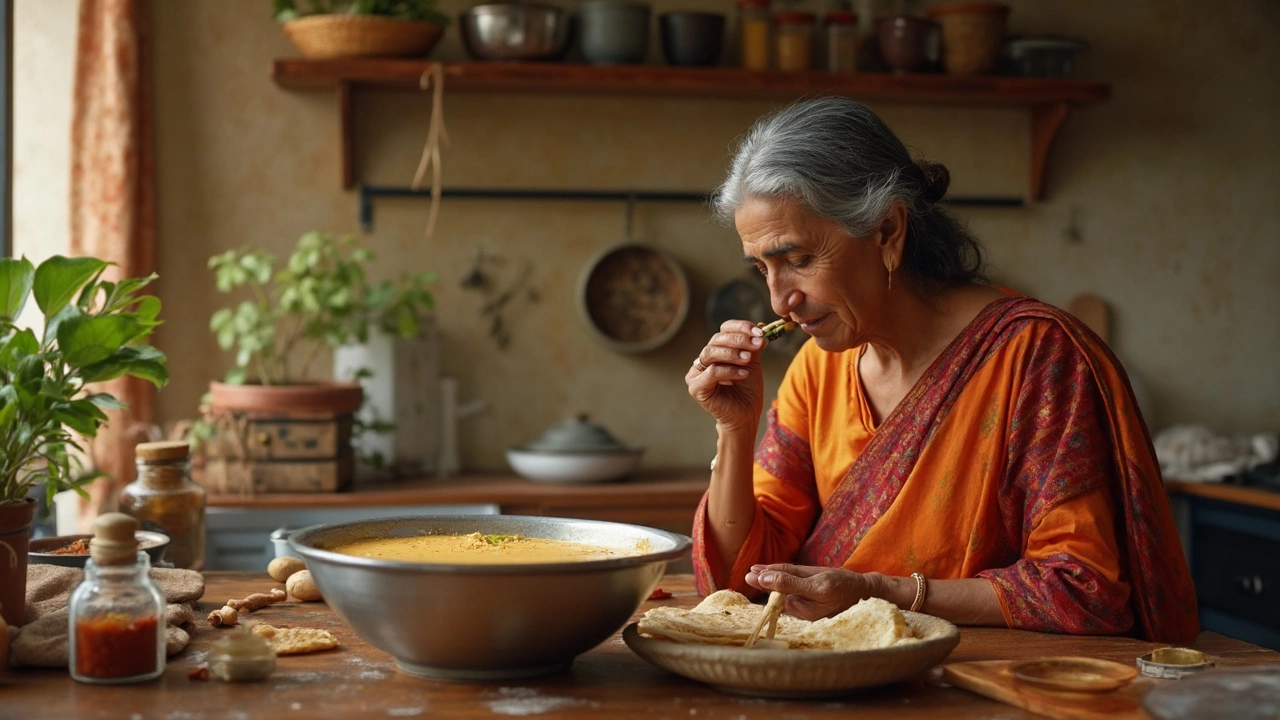
Sour Dosa: What Makes It Tangy, Crispy, and Perfectly Fermented
When you bite into a sour dosa, a thin, fermented rice and lentil crepe from South India that’s crispy on the outside and soft inside. Also known as fermented dosa, it’s not just a breakfast—it’s a science experiment you eat. The sourness isn’t an accident. It’s the sound of good bacteria doing their job, turning starches into lactic acid, giving the batter that signature tang you can’t fake with vinegar.
The magic starts with urad dal, a type of black lentil that’s soaked, ground, and mixed with rice to form the base of dosa batter. Too little urad dal and your dosa won’t puff up. Too much and it turns gummy. The ideal ratio—usually 1 part urad dal to 3 parts rice—creates the perfect balance of air and structure. Then comes time: 8 to 12 hours of fermentation in a warm kitchen. Cold weather? That’s when you turn on the oven light or wrap the bowl in a towel. No heat, no sourness, no crisp edges.
And then there’s baking soda, a quick fix some cooks use when fermentation falls short. But here’s the truth: adding baking soda doesn’t make your dosa sour—it just makes it rise. Overdo it and you’ll taste metal. Underdo it and your dosa stays flat. The real trick? Let the batter do the work. If it smells pleasantly sour, looks bubbly, and has doubled in size, you don’t need anything else.
People think sour dosa is just about taste, but it’s also about texture. That crunch? It comes from the right batter thickness, a hot griddle, and a drizzle of oil. The tang? It’s your gut’s reward for patience. Skip fermentation and you’re just eating flat rice pancakes. Get it right and you’ve got something that pairs perfectly with coconut chutney, sambar, or even a spicy tomato-onion topping.
You’ll find posts here that break down exactly how much baking soda to use (spoiler: sometimes none), why your dosa batter doesn’t ferment in winter, and what happens when you swap rice for millet. There’s also advice on fixing sour batter that’s too acidic, how to store it for later, and why some kitchens swear by leftover rice in the mix. This isn’t just a recipe collection—it’s a guide to understanding the rhythm of fermentation, the role of each ingredient, and why sour dosa isn’t just food, it’s culture in a thin, crispy layer.