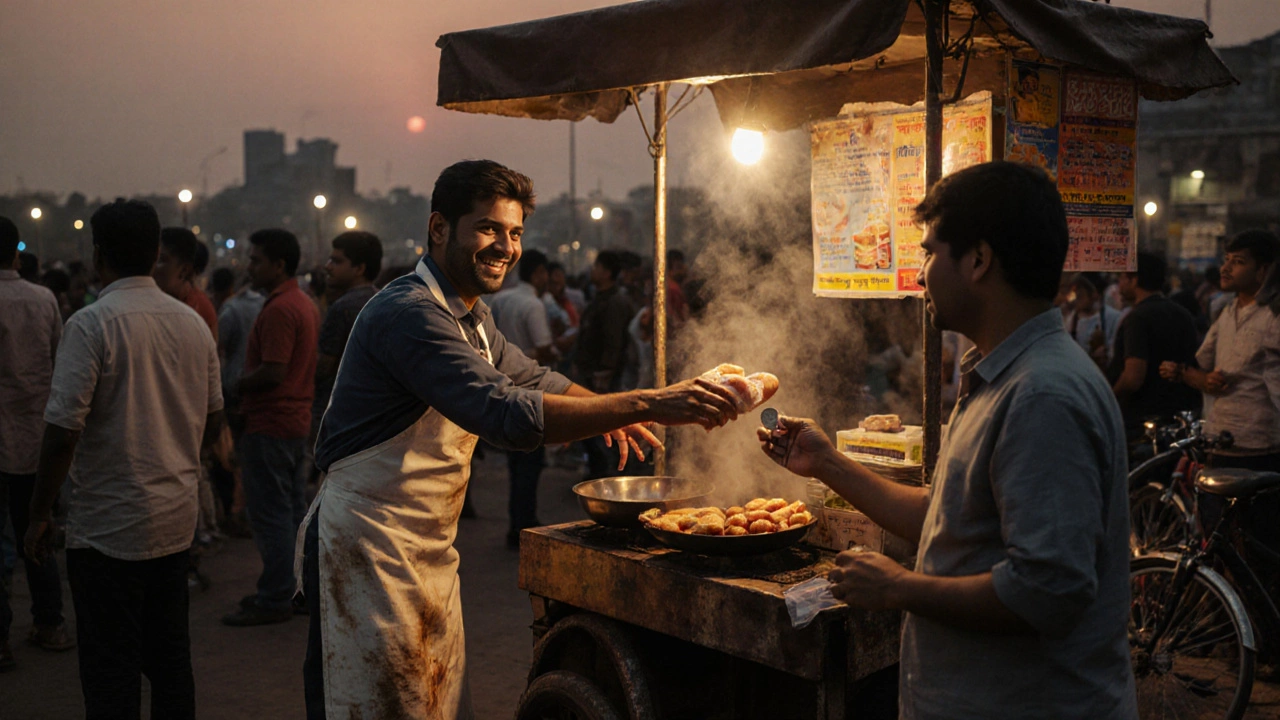
Street Food Culture in India: Bold Flavors, Local Secrets, and Real Recipes
When you think of street food culture, the lively, chaotic, and mouthwatering world of food sold on sidewalks, carts, and open-air stalls across India. Also known as urban snacking, it’s not just about eating—it’s about rhythm, tradition, and community. In India, street food isn’t a trend. It’s the heartbeat of daily life. From dawn till late night, the smell of frying batter, roasting spices, and sweet syrup fills the air. You don’t need a fancy restaurant. Just a plastic chair, a paper plate, and a vendor who’s been making the same dish for 30 years.
This culture thrives on simplicity and soul. Take dosa, a fermented rice and lentil crepe crispy on the edges, soft inside, and always served with coconut chutney and sambar. Also known as South Indian pancake, it’s the ultimate street breakfast. Or chutney, the tangy, spicy, sweet condiment that turns any snack into something unforgettable. Also known as Indian relish, it’s not just a side—it’s the flavor engine behind everything from samosas to idlis. And then there’s paan, the betel leaf-wrapped chew that ends meals, cleanses the palate, and carries centuries of ritual. Also known as Indian digestive, it’s as much a cultural ritual as it is a snack. These aren’t random dishes. They’re the pillars of a system where taste, texture, and timing matter more than presentation.
What makes Indian street food different? It’s not the spice levels or the heat—it’s the trust. You eat what the vendor eats. You trust their hands, their ingredients, their rhythm. That’s why a dosa batter made with the right urad dal to rice ratio stays fluffy, why chutney is served cold or warm depending on the season, and why paan comes with a side of history. This culture doesn’t need Michelin stars. It thrives on repetition, memory, and flavor that sticks to your tongue long after you’ve walked away.
Behind every bite is a story. The woman who grinds her own spices for chutney. The man who ferments dosa batter for 12 hours, no matter the weather. The boy who sells paan with a wink and a warning: "Don’t swallow the areca nut." These aren’t just vendors. They’re keepers of tradition. And in a world of fast food chains, this is the real fast food—made fresh, served fast, and meant to be remembered.
Below, you’ll find real guides on how to make these dishes at home, what to avoid, and why some things just taste better on the street. Whether you’re curious about dosa batter, confused about chutney temperature, or wondering if paan is safe, the answers are here—no fluff, no filters, just the truth from Indian kitchens.