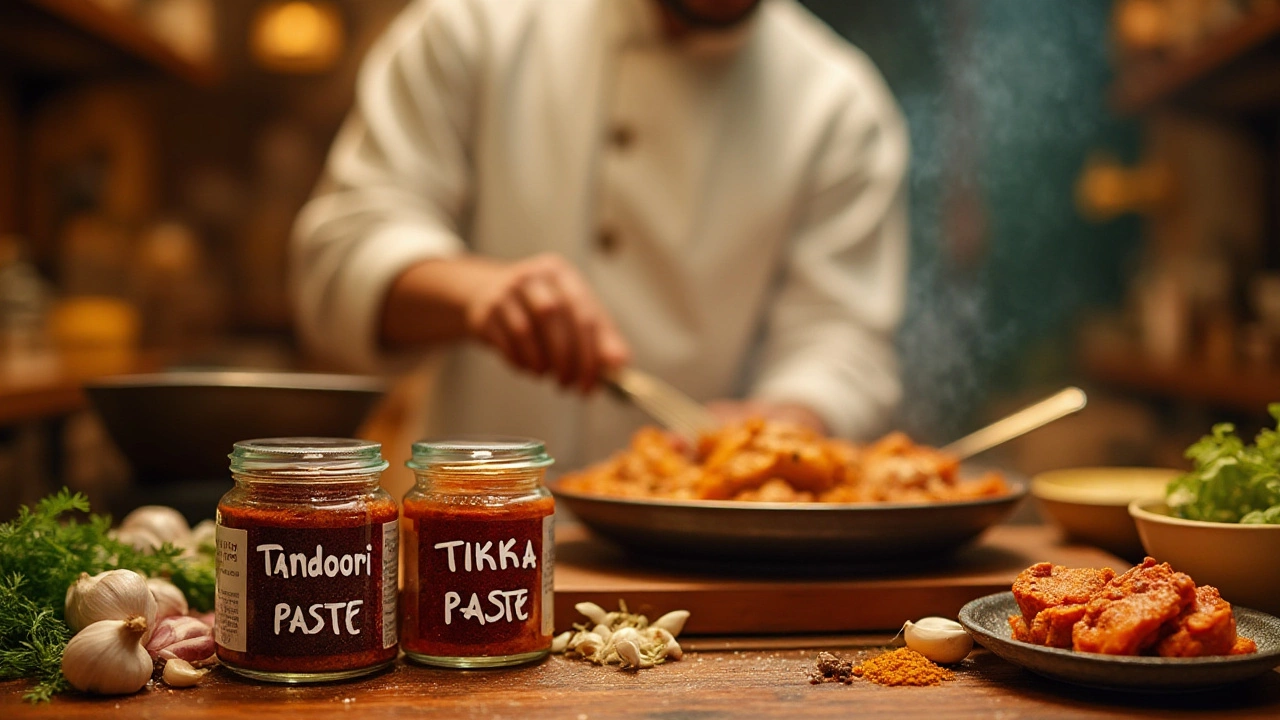
Tandoori Paste: What It Is, How It Works, and Why It’s Essential for Indian-Style Pizza
When you think of tandoori paste, a bold, yogurt-based marinade packed with spices like cumin, coriander, garlic, and smoked paprika, used to flavor meats and vegetables in Indian tandoor ovens. Also known as tandoori marinade, it’s the secret behind that deep red color and smoky-sour bite you love in tandoori chicken. But it’s not just for chicken. This paste is the secret weapon in Indian-inspired pizzas at Pizza Paradise — turning plain dough into something smoky, spicy, and unforgettable.
Tandoori paste doesn’t just flavor food — it transforms it. The yogurt in the paste tenderizes meat, while the spices cling to every surface and caramelize under high heat. You’ll find it in posts here that break down the difference between tikka sauce, a thicker, creamier version often used for skewered pieces and true tandoori sauce, a thinner, more acidic blend designed for longer marinating and direct flame cooking. It’s also tied to the oils used in tandoori cooking — like mustard or sunflower oil — that help carry the spice and prevent sticking. You won’t find this paste in a jar at your local supermarket. It’s made fresh, every time, with ground spices you probably already have in your pantry: red chili powder, garam masala, ginger, and sometimes a touch of amchur for tang.
What makes tandoori paste so powerful for pizza? It’s the fusion. Think of it as the Indian twist on barbecue sauce — but with more depth, more heat, and way more character. When you spread it on pizza dough, it doesn’t just sit there. It bakes into the crust, giving it a charred edge and a savory punch. Top it with paneer, bell peppers, and red onions, and you’ve got something that tastes like a tandoori grill crossed with a Neapolitan oven. It works with chicken, shrimp, even mushrooms. And if you’re vegetarian? Skip the meat, keep the paste. The spices stand on their own.
You’ll see posts here that dig into how to make your own tandoori paste from scratch, why some recipes use food coloring (spoiler: it’s not necessary), and how to adjust the heat without losing flavor. There are guides on pairing it with chutneys, which oils work best for baking it on pizza, and even how to store leftovers without losing the punch. This isn’t just about a sauce — it’s about understanding how Indian flavors behave under heat, how acidity balances spice, and how simple ingredients can create something complex and addictive.
Whether you’re trying to replicate that street-side tandoori chicken at home, or you’re building a pizza that screams India, tandoori paste is your starting point. It’s the bridge between tradition and creativity. And in the posts below, you’ll find real recipes, real mistakes, and real fixes — from people who’ve burned it, over-marinated it, and finally got it right. No fluff. No guesswork. Just what works.