Tikka Paste: What It Is, How It's Made, and Why It's Essential for Indian-Style Pizza
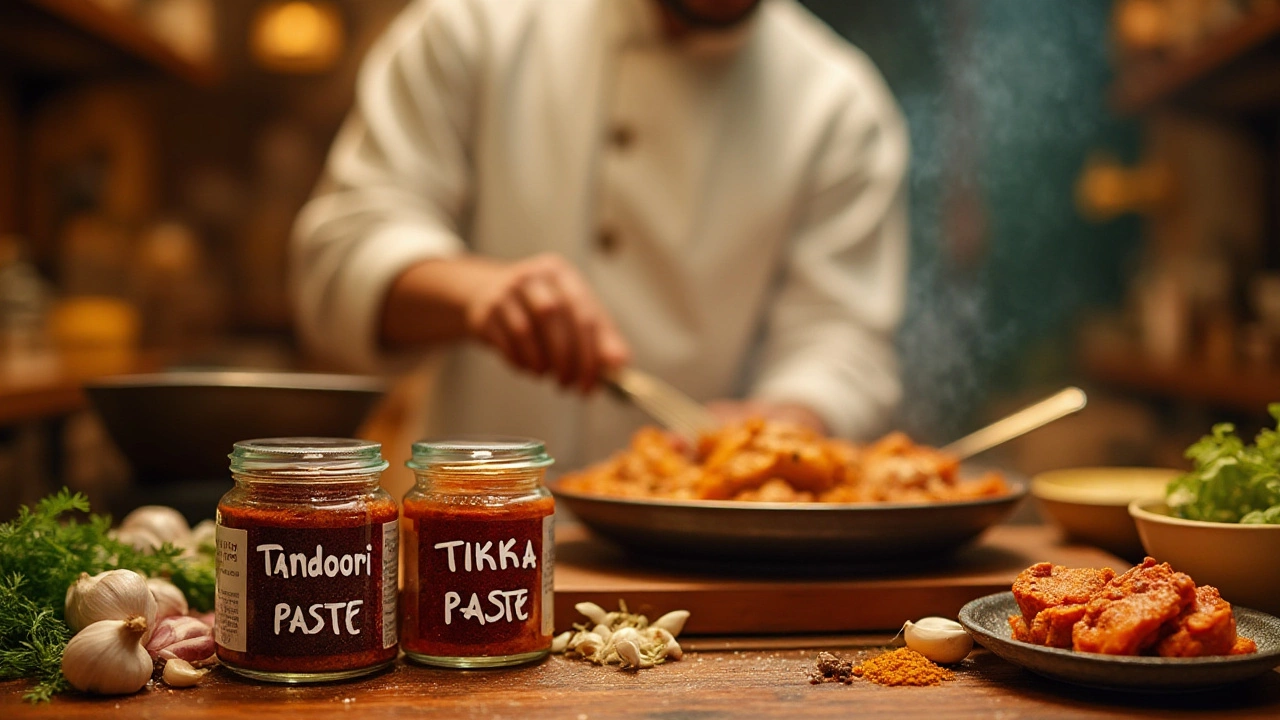
When you think of tikka paste, a thick, aromatic blend of yogurt, spices, and garlic used to marinate chicken or paneer before grilling. Also known as tikka marinade, it’s the secret behind those charred, juicy bites you get at every Indian restaurant. But here’s the thing—most people mix it up with tandoori sauce. They’re not the same. Tikka paste is thicker, richer, and packed with ground spices like cumin, coriander, and smoked paprika. Tandoori sauce leans more on red food coloring and vinegar for that bright red look. Tikka paste? It’s all about depth, heat, and texture.
What makes tikka paste work isn’t just the spices—it’s the yogurt, a natural tenderizer that breaks down proteins without making meat mushy. That’s why it’s perfect for chicken, paneer, or even mushrooms before they hit the grill or oven. The yogurt clings, the spices stick, and the result? A crust that’s slightly crisp on the outside, tender inside, and full of flavor that lingers. You’ll find this same paste in our recipes for tikka pizza, where we swap the skewers for a flatbread base and let the paste do the heavy lifting. It’s not just a topping—it’s the soul of the dish.
And if you’ve ever tried making it from scratch, you know how easy it is to mess up. Too much chili? Burnt taste. Not enough garlic? Flat flavor. Skip the powdered ginger—fresh is non-negotiable. And don’t even think about using store-bought tikka paste unless you’re okay with preservatives and artificial colors. Real tikka paste needs fresh ginger, real garlic, ground cumin, coriander, garam masala, and a splash of lemon juice. That’s it. No sugar. No thickener. Just spices, yogurt, and time. Let it sit overnight. That’s when the magic happens.
This isn’t just about chicken. You’ll see in our posts how tikka paste transforms paneer into something that tastes like it came straight off a tandoor. It turns roasted veggies into bold, smoky bites. Even tofu gets a second life with this paste. It’s the bridge between Indian street food and home pizza nights. And yes, it works on vegetarian and non-vegetarian pizzas alike. The beauty? You don’t need a tandoor. A regular oven, a cast iron pan, or even a grill pan will do.
Our collection dives into exactly how to make tikka paste from scratch, what spices to skip, how to adjust heat levels for different palates, and why some versions include fenugreek leaves while others don’t. You’ll also find comparisons with tandoori sauce, tips on storage, and how to use leftover paste in pasta, rice bowls, or even as a dip. No fluff. No guesswork. Just real, tested methods from Indian kitchens adapted for your kitchen.