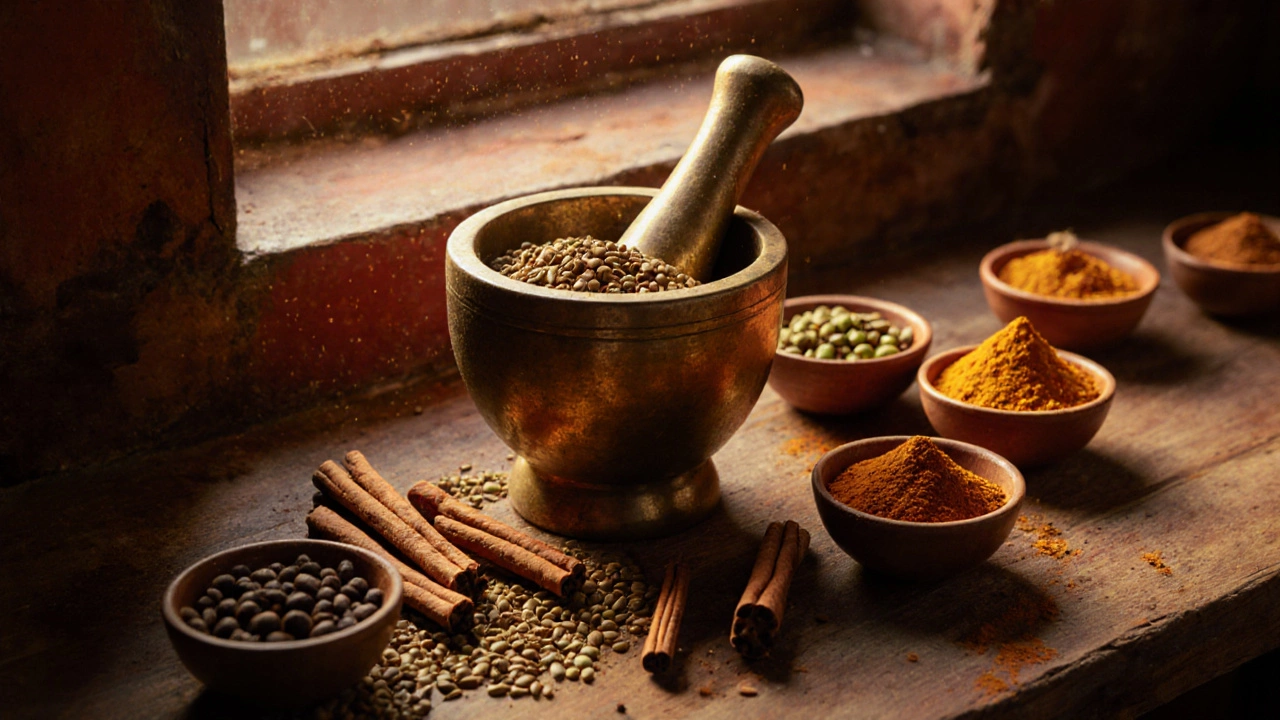
Traditional Indian Spices: Flavor Secrets Behind India’s Best Dishes
When you think of traditional Indian spices, a set of aromatic, earthy, and warming ingredients used for centuries in Indian cooking to build deep, complex flavors. Also known as Indian masalas, these spices don’t just season food—they define it. They’re the reason your dal tastes comforting, your chutney sings, and your pizza crust carries a hint of smoky warmth you can’t find anywhere else.
These spices aren’t random additions. turmeric, a bright yellow root with powerful anti-inflammatory properties, used daily in Indian kitchens for color, flavor, and health turns everything from rice to curries golden. cumin, a warm, nutty seed toasted in oil to unlock its full aroma is the backbone of tandoori marinades and dosa batter. Then there’s coriander, both seed and leaf, offering citrusy brightness that balances heat and richness. And garam masala, a blend of roasted spices like cardamom, cinnamon, and cloves, added at the end to lift the entire dish—it’s the final whisper of magic in every bowl.
These aren’t just ingredients. They’re cultural tools. In Indian homes, spices are measured by instinct, not spoons. A pinch of asafoetida to aid digestion. A dash of fenugreek to cut through grease. A sprinkle of black salt to make a simple snack taste like street food. Even in fusion dishes like Indian-inspired pizza, these spices don’t play backup—they lead. You’ll find them in the sauce, in the crust, even sprinkled on top like a finishing salt.
What you’ll find in the posts below isn’t just recipes. It’s the real talk about how these spices work. Why turmeric isn’t just for color. Why cumin needs to be toasted. Why garam masala loses its punch if you add it too early. You’ll learn how to use them in unexpected ways—like boosting your dosa batter, fixing a bland curry, or making your vegetarian pizza taste like it came straight from a Delhi street stall. No fluff. No theory. Just what works, why it works, and how to make it work in your kitchen.