The Most Popular Street Food in India: A Guide to Vada Pav, Pani Puri & More
 Aug, 11 2026
Indian Street Food Matchmaker
How do you handle spice?
Choose the option that best describes your spice preference:
Mild & Gentle
I prefer subtle flavors and can't handle too much heat
Moderate Heat
I enjoy some kick but don't want it overwhelming
Spicy Lover
The hotter, the better! Bring on the chilies!
Imagine walking through the chaotic, vibrant streets of Mumbai. The air is thick with the smell of cumin, frying oil, and spicy chutneys. You’re hungry, broke, and you have exactly five minutes before your next meeting. What do you eat? If you ask a local, they won’t point you to a fancy restaurant. They’ll hand you a Vada Pav, a spicy potato fritter sandwiched in a soft bun. It’s cheap, it’s fast, and it’s arguably the most popular street food in India.
But India isn’t just one place. It’s a subcontinent with diverse climates, religions, and histories. So, declaring a single "most popular" dish is tricky. Is it the Vada Pav of the West? The Chaat of Delhi? Or the Dosa of the South? To understand what truly dominates Indian street food culture, we need to look beyond just taste. We have to look at volume, accessibility, and cultural impact.
The Undisputed King: Vada Pav
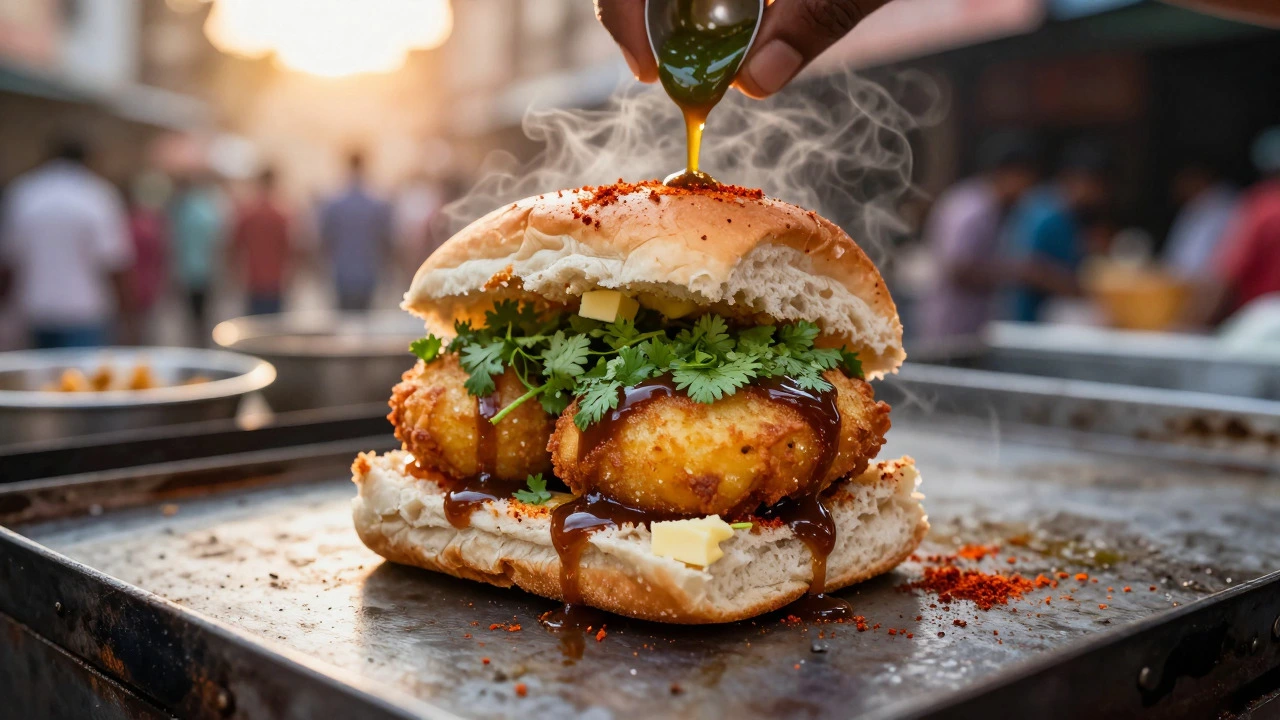
If there is a national anthem of Indian street food, it’s the sizzle of the Vada Pav on a flat griddle. Originating in Mumbai during the 1960s, this snack was created as an affordable meal for factory workers who needed energy but had little money. Today, it has transcended its humble roots to become a global icon.
Why does it hold the top spot? It’s the perfect storm of convenience and flavor. The core component is a deep-fried spiced potato dumpling (the vada), placed inside a soft bread roll (the pav). It’s served with three distinct condiments: a fiery green chutney made from coriander and green chilies, a tangy tamarind-date chutney, and often a side of dried red chili powder. Some vendors even add a fried garlic clove or a slice of raw onion for extra crunch.
You can find Vada Pav stalls on every corner in Maharashtra. But its popularity has spread nationwide. In cities like Bangalore and Hyderabad, you’ll see queues forming outside premium versions that use gourmet buns and truffle-infused potatoes. Yet, the classic version remains king because it costs less than $0.50. That price point makes it accessible to everyone, from students to CEOs.
The North’s Favorite: Pani Puri and Chaat
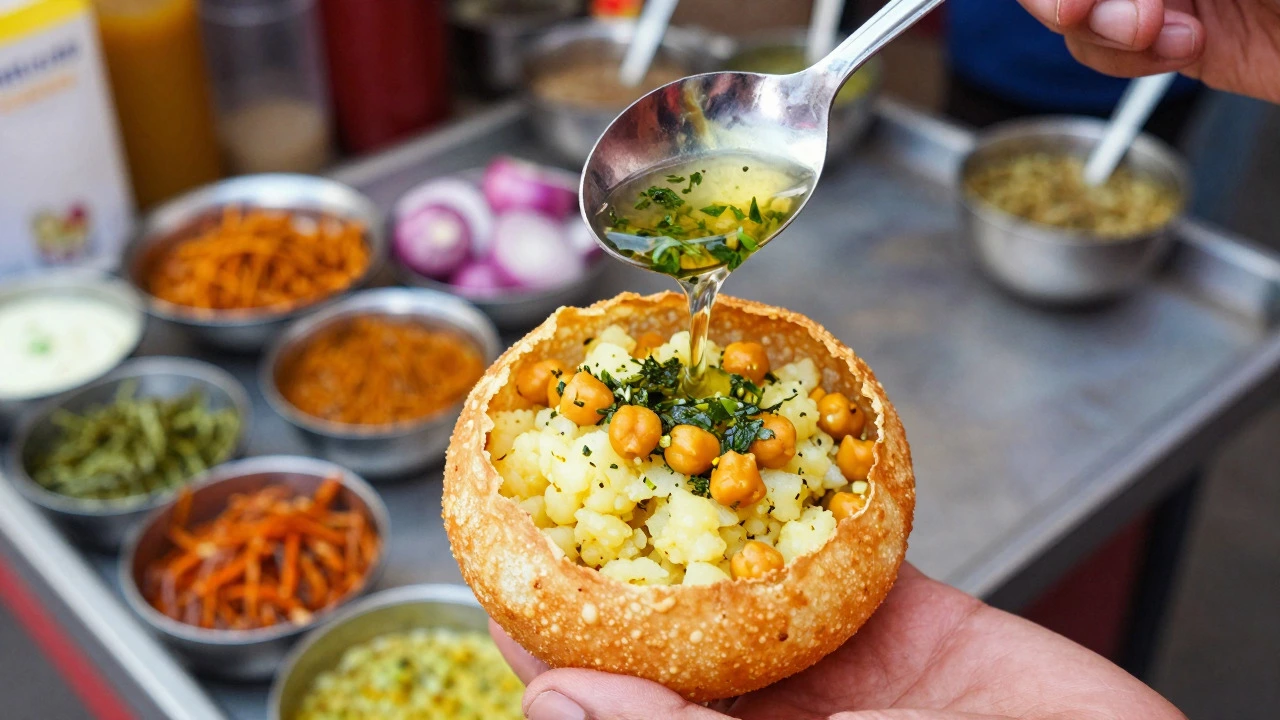
Move north to Delhi, Lucknow, or Kolkata, and the crown shifts slightly. Here, the concept of Pani Puri, also known as Golgappa or Puchka, consisting of hollow crispy shells filled with spiced water and potatoes. reigns supreme. Unlike Vada Pav, which you eat while walking, Pani Puri demands your attention. You don’t chew; you pop the entire shell into your mouth in one bite. The explosion of flavors-sweet, sour, spicy, and savory-is unlike anything else.
Pani Puri is part of a larger family of snacks known as Chaat, a category of savory snacks originating from North India characterized by a mix of sweet, sour, and spicy flavors. Other famous chaat items include Bhel Puri (puffed rice mixed with vegetables and chutneys) and Sev Puri (flat crackers topped with potatoes and crunchy noodles). These dishes are social foods. You rarely eat them alone. They are shared among friends, eaten at weddings, and consumed late at night after parties.
The reason Pani Puri is so popular is its versatility. Every region has its own twist. In Kolkata, it’s called Puchka and uses a lentil-based filling. In Gujarat, it might be sweeter. But the core experience remains the same: a burst of flavor that wakes up your palate. However, hygiene is a major concern here. Because the "pani" (water) is the main ingredient, choosing a reputable vendor is crucial. Many modern chains now offer sealed, hygienic versions to address this fear.
The Southern Powerhouse: Masala Dosa
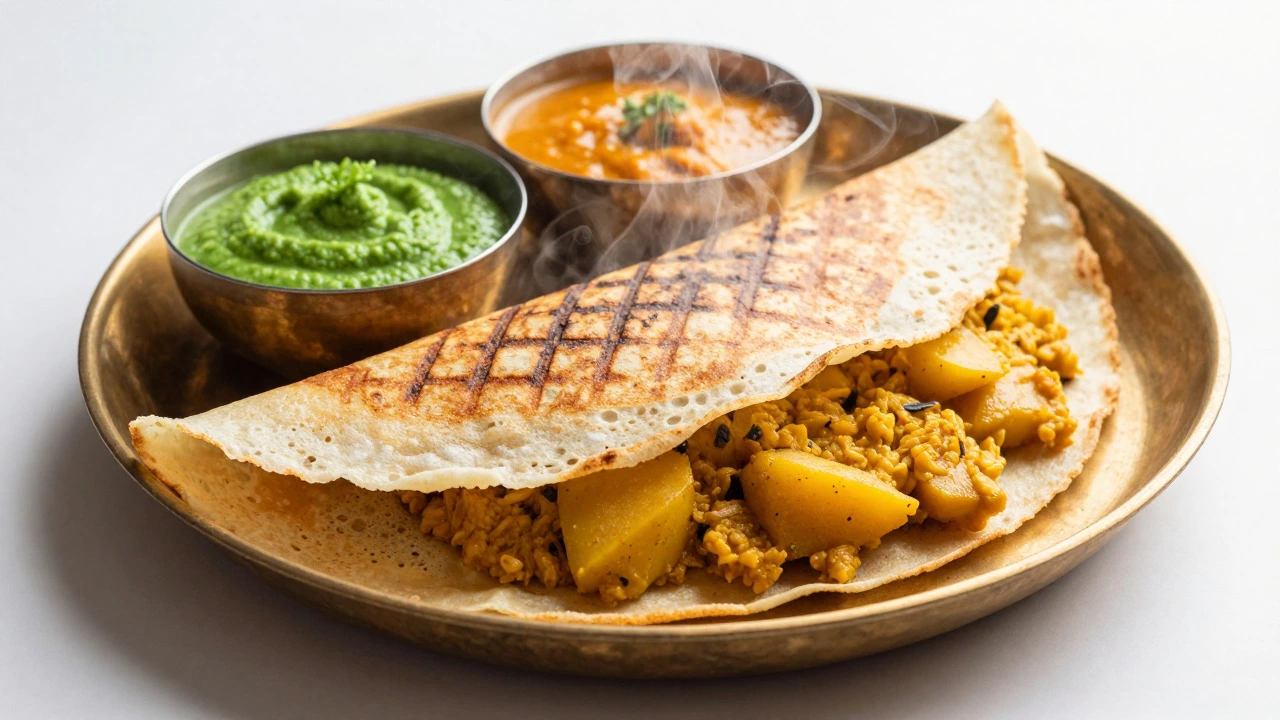
In South India, particularly in Tamil Nadu, Karnataka, and Kerala, the breakfast table looks different. Rice and lentils are the staples, leading to the creation of fermented batters. This results in the Masala Dosa, a thin, crispy crepe made from fermented rice and lentil batter, stuffed with spiced potato filling. While traditionally a breakfast item, Masala Dosa is available throughout the day in many parts of the south and is increasingly common in street-side stalls across the country.
The appeal of Masala Dosa lies in its texture and health profile. Unlike the deep-fried options in the north and west, Dosa is pan-fried with minimal oil. The fermentation process makes it easier to digest and rich in probiotics. The crispiness of the outer layer contrasts with the soft, spiced potato masala inside. It’s usually served with coconut chutney and sambar (a lentil-based vegetable stew).
As Indians migrate to other parts of the country for work, they bring their food preferences with them. You’ll find high-quality Dosa centers in Mumbai, Delhi, and Pune. For vegetarians, who make up a significant portion of the population, Masala Dosa offers a hearty, satisfying meal that doesn’t rely on heavy frying. Its rise in popularity is also driven by the growing health-conscious trend, where people seek lighter, yet filling, street food options.
The Universal Snack: Samosa
If Vada Pav is the king of Mumbai and Pani Puri is the queen of Delhi, then the Samosa, a triangular pastry pocket filled with spiced potatoes, peas, and sometimes meat, deep-fried until golden brown. is the ambassador of India. You can find Samosas everywhere. From rural villages to metropolitan skyscrapers, this snack is ubiquitous. It’s not just street food; it’s party food, tea-time food, and festival food.
The Samosa’s structure is simple but effective. A wheat flour crust encases a mixture of boiled potatoes, onions, peas, and a blend of spices like cumin, coriander, and amchur (dry mango powder). It’s deep-fried to perfection, resulting in a flaky, crispy exterior. The best Samosas are eaten hot, dipped in tamarind chutney or mint-coriander sauce.
What sets Samosa apart is its adaptability. In Pakistan and Bangladesh, it’s equally popular. In Western countries, it’s often found in Indian grocery stores and restaurants. Variations include Keema Samosa (filled with minced meat), Paneer Samosa (filled with cottage cheese), and even Chocolate Samosa for dessert lovers. Its longevity in the market proves its universal appeal. It’s safe, familiar, and deeply comforting.
| Food Item | Primary Region | Key Ingredients | Avg. Price (INR) | Best Time to Eat |
|---|---|---|---|---|
| Vada Pav | Maharashtra (West) | Potato, Bread, Chutneys | ₹10 - ₹20 | Anytime, especially lunch/snack |
| Pani Puri | North India | Crispy Shells, Spiced Water, Potatoes | ₹20 - ₹40 (for 10-12 pieces) | Evening/Snack |
| Masala Dosa | South India | Rice-Lentil Batter, Potato Filling | ₹30 - ₹60 | Breakfast/Lunch |
| Samosa | All India | Wheat Crust, Potato-Pea Filling | ₹10 - ₹20 | Tea time/Festivals |
Regional Gems You Can't Ignore
While the big four dominate the conversation, several regional specialties deserve mention. In Bengal, Kathi Roll, a wrap made with paratha bread, filled with kebab meat, eggs, and vegetables. is a staple. Created in the 1970s, it combines Chinese and Bengali culinary traditions. The egg-soaked paratha wrapped around spiced chicken or fish creates a messy but delicious handheld meal.
In Rajasthan, Pyaz Kachori, a deep-fried pastry filled with spiced onions and lentils. is a must-try. It’s heavier and richer than a Samosa, often enjoyed with a cup of sweet chai. In Goa, you’ll find Pork Vindaloo Buns, soft buns filled with spicy pork vindaloo curry, reflecting the Portuguese influence in the cuisine.
These regional variations highlight the diversity of Indian street food. They aren’t just alternatives; they represent local histories and agricultural products. Trying these gives you a deeper understanding of the culture beyond the mainstream hits.
Hygiene and Safety: What You Need to Know
One of the biggest concerns for tourists and even locals is hygiene. Street food is prepared outdoors, exposed to dust, traffic fumes, and varying levels of sanitation. How do you eat safely?
- Observe the Crowd: If a stall has a long line of locals, it’s usually a good sign. High turnover means the food is fresh and hasn’t been sitting out for hours.
- Watch the Preparation: Look for vendors who wear gloves or use tongs. Avoid places where money changes hands directly over the food.
- Choose Hot and Fresh: Deep-fried items like Samosas and Vada Pav are safer because the high heat kills bacteria. Avoid pre-cut fruits or salads unless you trust the water source.
- Peelable is Best: Items like bananas or oranges are naturally protected by their skin. For cooked food, ensure it’s piping hot.
- Drink Bottled Water: If you’re eating Pani Puri, ask if they use filtered or bottled water for the "pani." Many reputable stalls now advertise this.
Don’t let fear stop you from enjoying street food. Millions of people eat it daily without issues. Just use common sense and listen to your gut (literally).
The Evolution of Indian Street Food
Street food in India is no longer just about survival or quick bites. It’s becoming a culinary art form. In recent years, we’ve seen the rise of "premium street food" outlets. Brands like Haldiram’s and Bikaji have standardized recipes and packaged traditional snacks for wider distribution. Meanwhile, new-age startups are creating fusion versions-think Tiramisu Pani Puri or Truffle Vada Pav.
This evolution is driven by urbanization and changing consumer habits. Young professionals want the nostalgia of street food but with better hygiene and presentation. Social media plays a huge role here. Instagram-worthy presentations have turned humble snacks into viral sensations. This has pushed traditional vendors to innovate and improve quality.
However, the soul of Indian street food remains unchanged. It’s still about community, affordability, and bold flavors. Whether you’re eating a ₹10 Vada Pav from a roadside cart or a ₹200 Gourmet Dosa from a trendy cafe, the essence is the same: pure, unadulterated joy in every bite.
Is Vada Pav vegetarian?
Yes, traditional Vada Pav is completely vegetarian. It consists of a spiced potato fritter, bread, and chutneys. However, some modern variations may include paneer or even meat fillings, so always check if you have dietary restrictions.
What is the difference between Pani Puri and Golgappa?
They are essentially the same dish. "Pani Puri" is the term commonly used in North India, while "Golgappa" is more prevalent in West India (like Maharashtra). In East India (Kolkata), it is known as "Puchka." The preparation and ingredients remain largely similar, though regional spice blends may vary.
Can I eat Indian street food if I have a sensitive stomach?
It depends on your sensitivity. Start with hot, freshly cooked items like Samosas or Dosas. Avoid raw salads, unpeeled fruits, and drinks with ice. Stick to busy stalls with high customer turnover. Gradually introduce spicier foods to allow your system to adjust.
Which street food is the healthiest option?
Masala Dosa is generally considered healthier because it is fermented and pan-fried with less oil compared to deep-fried options. Idli (steamed rice cakes) and Uttapam (topped dosa) are also excellent healthy choices. Bhel Puri can be healthy if it’s not overloaded with sev (fried noodles) and chutneys.
Where can I find authentic Indian street food outside India?
Major cities with large Indian diasporas, such as London, New York, Dubai, and Singapore, have excellent Indian street food festivals and specialized restaurants. Look for brands like Haldiram’s for packaged snacks, or search for "Indian Chaat" or "Vada Pav" specific eateries in urban areas.
