What Cancels Bitter Taste? Simple Fixes for Bitter Chutneys and Sauces
 Dec, 1 2025
Ever made a chutney that tasted like medicine instead of flavor? You chopped fresh green chilies, added raw tamarind, maybe even some bitter gourd or neem flowers-and now it’s too bitter to touch. It’s not your fault. Bitterness isn’t always a mistake; it’s part of many traditional Indian flavors. But when it overpowers everything else, you need to fix it fast. The good news? You don’t need fancy ingredients or a culinary degree. You just need to know what cancels bitter taste.
Why does bitterness happen in chutneys?
Bitterness comes from compounds like alkaloids and polyphenols. In chutneys, they show up in ingredients like:- Raw green chilies (especially the seeds and membranes)
- Tamarind pulp (if it’s too sour and unripe)
- Bitter gourd (karela)
- Neem flowers or leaves
- Over-toasted coconut or coriander seeds
- Old or oxidized turmeric
What cancels bitter taste? The 5 proven fixes
There’s no single magic solution. But five kitchen staples work every time. You’ve probably used them without realizing it.1. Sugar or jaggery
Sugar doesn’t hide bitterness. It neutralizes it. Your tongue has receptors for sweet and bitter on the same map. When you add sugar, it literally overrides the bitter signal. Start with 1/2 teaspoon of granulated sugar or a small piece of jaggery (about the size of a pea). Blend it in. Taste. Add more if needed. Jaggery works better than white sugar in chutneys because it adds depth, not just sweetness. It’s what makes Kerala’s coconut chutney so rich.2. Acid-lemon juice or vinegar
This one seems backwards. Bitter and sour are both sharp, right? But here’s the science: acidity changes how your tongue perceives bitterness. Citric acid in lemon juice breaks down bitter compounds and shifts flavor perception. Add 1/2 teaspoon of fresh lemon juice. Don’t dump it in. Stir, wait 30 seconds, then taste. You’ll notice the bitterness softens, and the other flavors pop. Vinegar (apple cider or white) works too, but lemon is more authentic in Indian chutneys.3. Salt
Salt doesn’t make things sweet. It makes bitter taste less noticeable. It’s a flavor modulator. A pinch of salt can turn a harsh green chutney into something vibrant. Try 1/4 teaspoon of fine sea salt. Mix well. Wait. Taste again. If it still bites, add another pinch. Salt also enhances the natural sweetness of tomatoes and coconut, which helps balance bitterness indirectly.4. Roasting or frying
Raw ingredients = raw bitterness. Heat changes everything. Toasting coconut, coriander seeds, or mustard seeds in a dry pan before blending turns bitter notes into nutty, aromatic ones. If your chutney is bitter because of raw garlic or ginger, lightly fry them in a little oil before adding. This mellowed them without losing their punch. Same with green chilies-roast them on a dry skillet until the skin chars slightly. The bitterness drops, and the flavor deepens.5. Creamy or fatty ingredients
Fat coats your tongue. It slows down how quickly bitter compounds hit your receptors. That’s why a spoon of yogurt or coconut milk fixes a bitter mint chutney. Stir in 1-2 tablespoons of plain yogurt, thick coconut milk, or even a spoon of peanut butter (yes, really). It won’t make the chutney taste like dessert. It just rounds out the edges. This trick works wonders in tomato chutney or coriander chutney with too much raw herb.What not to do when fixing bitter chutney
People make the same mistakes over and over.- Don’t add more sugar blindly. If you dump in a tablespoon of sugar, you’ll end up with sweet-and-bitter sludge. Add slowly. Taste after each spoon.
- Don’t throw in water. Water dilutes flavor. It doesn’t fix bitterness. It just makes the chutney watery and bland.
- Don’t assume it’s ruined. Most bitter chutneys can be saved. Even if you’ve added too much tamarind or bitter gourd, the fixes above still work.
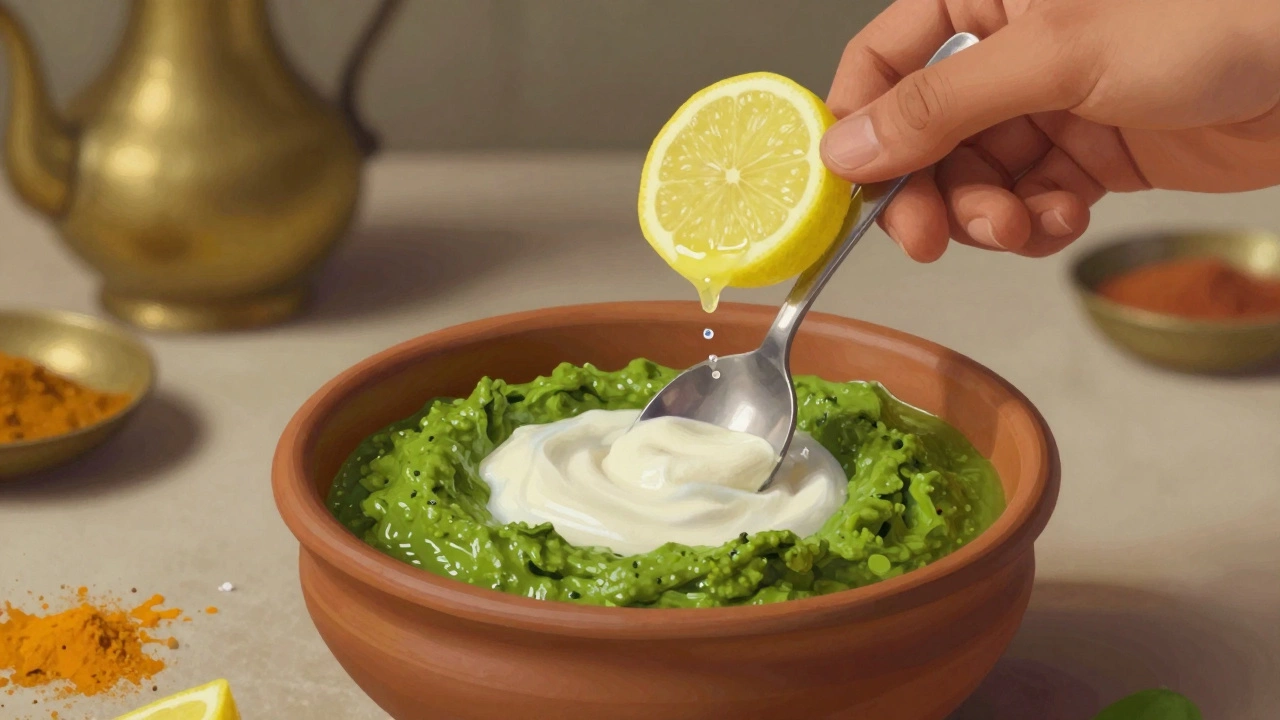
Real-life chutney fixes from Indian kitchens
In homes across India, these are the go-to tricks:- For bitter coriander chutney: Add a pinch of sugar + a squeeze of lemon + a spoon of yogurt. Blend again.
- For bitter green chutney: Roast the chilies and coriander before blending. Add jaggery, not sugar.
- For bitter tamarind chutney: Soak tamarind in warm water first. Discard the fibrous pulp. Use only the smooth pulp. Add jaggery slowly until the sourness turns tangy-sweet.
- For bitter coconut chutney: Lightly roast the coconut until it’s just golden. Don’t let it brown. Add a tiny bit of salt and a teaspoon of grated ginger to balance.
Preventing bitterness before it starts
The best fix is avoiding it altogether.- Use ripe tamarind. It should be soft, sticky, and sweet-smelling-not hard and sour like a green apple.
- Remove seeds and white membranes from green chilies. That’s where most bitterness lives.
- Toast spices lightly. Burnt = bitter. Toasted = fragrant.
- Use fresh turmeric. Old turmeric turns gray and bitter. Fresh is bright orange and earthy.
- Blanch bitter gourd before using. Boil for 2 minutes, then plunge in ice water. It removes 70% of the bitterness.
When bitterness is intentional
Not all bitterness is bad. In fact, some chutneys are built around it. Neem flower chutney in Andhra Pradesh is bitter by design. It’s eaten with dosas during monsoon season to aid digestion. The bitterness is balanced with jaggery and roasted lentils. It’s an acquired taste-but valued. Bitter gourd chutney in Karnataka is served with rice and yogurt. The contrast is the point. So don’t fix every bitter taste. Learn to recognize when it belongs.
Final tip: Taste as you go
This is the one rule that changes everything. Don’t wait until the chutney is done to taste. Taste after each ingredient. After salt. After lemon. After sugar. Your tongue remembers the first flavor it tasted. If you start with a bitter base, your brain will keep expecting bitterness. But if you adjust early, you’re guiding the flavor, not fighting it.Frequently Asked Questions
Can I use honey instead of sugar to fix bitter chutney?
Yes, but use it carefully. Honey has its own strong flavor that can overpower delicate chutneys like mint or coriander. It works best in thicker, fruit-based chutneys like tamarind or date. Start with 1/2 teaspoon and taste before adding more.
Does milk help cancel bitterness in chutney?
Not really. Milk doesn’t blend well with most chutney bases-it can separate or make the texture grainy. Stick to yogurt or coconut milk. They’re traditional, stable, and add creaminess without breaking the texture.
Why does my coconut chutney taste bitter even after roasting?
It’s likely the coconut was too old or stored in a humid place. Fresh coconut should smell sweet and mild. If it smells sour or musty, it’s gone bad. Always use fresh, white coconut meat. If you’re using frozen, make sure it’s not icy or discolored.
Can I fix a bitter tomato chutney after it’s been refrigerated?
Yes. Take it out, let it warm to room temperature, then stir in a pinch of salt and a teaspoon of lemon juice. The cold dulls flavors, so warming it up helps the fix work better. Taste and adjust as needed.
Is bitter taste in chutney dangerous?
No, not if it’s from natural ingredients like tamarind, chilies, or bitter gourd. Bitterness from spoilage (mold, rancid oil, sour smell) is dangerous. But bitterness from spices and herbs is safe-it’s just unpleasant. If the chutney smells off or has mold, throw it out. If it just tastes sharp, you can fix it.
