What is the Famous Junk Food in India? A Guide to Iconic Street Snacks
 Jun, 26 2026
Indian Street Food Explorer
Discover the iconic junk food of India. Select a snack to learn about its ingredients, flavors, and origins.
Forget the greasy burgers and soda from Western fast-food chains. If you ask an Indian what "junk food" means, they won’t point you to a drive-thru. They’ll lead you straight to the chaotic, colorful, and incredibly delicious stalls lining the streets of Mumbai, Delhi, Kolkata, and beyond. In India, junk food isn't just about empty calories; it’s a cultural phenomenon defined by bold spices, crispy textures, and affordable prices.
The concept of Indian street food is a diverse culinary tradition featuring small, flavorful dishes sold by vendors in public spaces. These snacks are often high in oil, salt, and sugar-fitting the technical definition of junk food-but they hold a special place in the hearts (and stomachs) of millions. From the spicy crunch of a chaat to the soft warmth of a freshly made bun, these foods offer a sensory experience that packaged snacks simply cannot match.
The King of Mumbai: Vada Pav
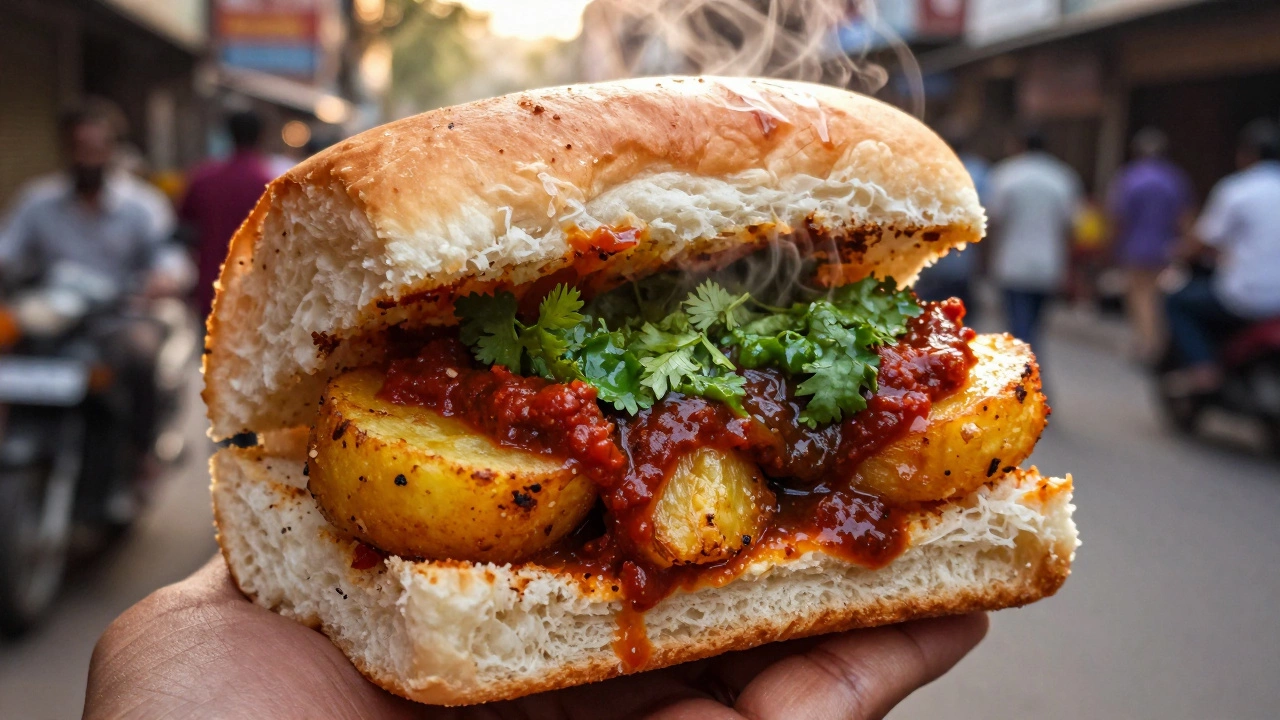
If there is one snack that defines urban Indian junk food, it is undoubtedly the Vada Pav, which is a spicy potato fritter served in a bread bun with chutneys. Originating in Mumbai during the 1960s, this humble dish was created as an affordable meal for factory workers who needed energy but had limited budgets. Today, it is the city's unofficial mascot.
The magic lies in its simplicity. A round ball of spiced mashed potatoes is dipped in gram flour batter and deep-fried until golden and crispy. This vada is then sandwiched between two slices of soft white bread (pav). But the real secret weapon? The condiments. You get three distinct sauces: a fiery red chili paste, a tangy green coriander chutney, and a sweet tamarind sauce. Some vendors also add a fried garlic clove or a dollop of dry coconut chutney for extra texture.
Why does it work so well? It hits every taste bud at once: salty, spicy, sweet, and sour, all wrapped in a comforting carb-heavy package. It’s messy, it’s oily, and it’s absolutely addictive. When you bite into a hot vada pav, the crisp exterior shatters while the steam escapes, delivering a punch of flavor that lingers long after the last bite.
The Chaat Explosion: Samosa and Pani Puri
Chaat is a category of savory snacks originating from North India, characterized by a mix of sweet, spicy, tangy, and crunchy flavors. Within this vast family, two items stand out as the ultimate junk food staples: the Samosa and the Pani Puri.
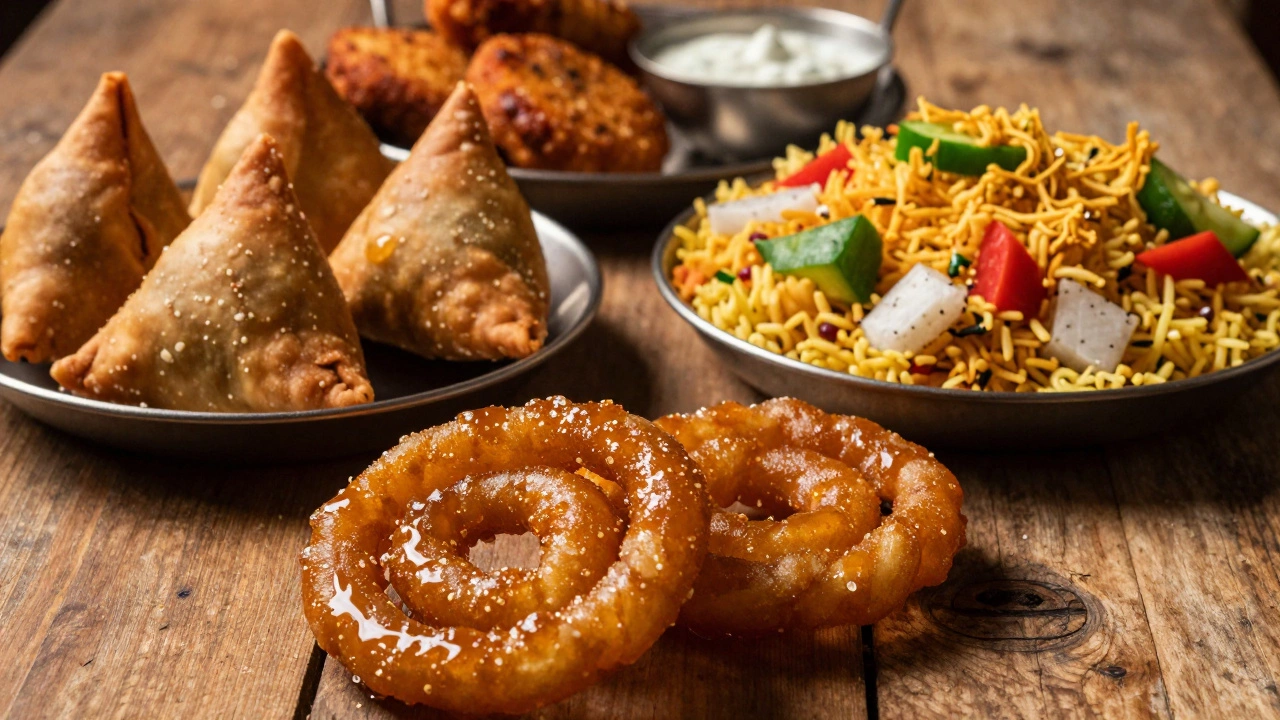
The Samosa is perhaps the most recognized Indian snack globally. It consists of a triangular pastry shell filled with spiced potatoes, peas, and sometimes lentils or minced meat. The dough is layered and flaky, similar to a croissant but much crisper. While eating a samosa plain is common, the true junk food experience involves dipping it in chutney or combining it with other elements to make Samosa Chaat. Here, the samosa is crushed and topped with yogurt, chickpeas, tamarind date chutney, and sev (crispy chickpea noodles). The result is a textural masterpiece that balances creaminess with crunch.
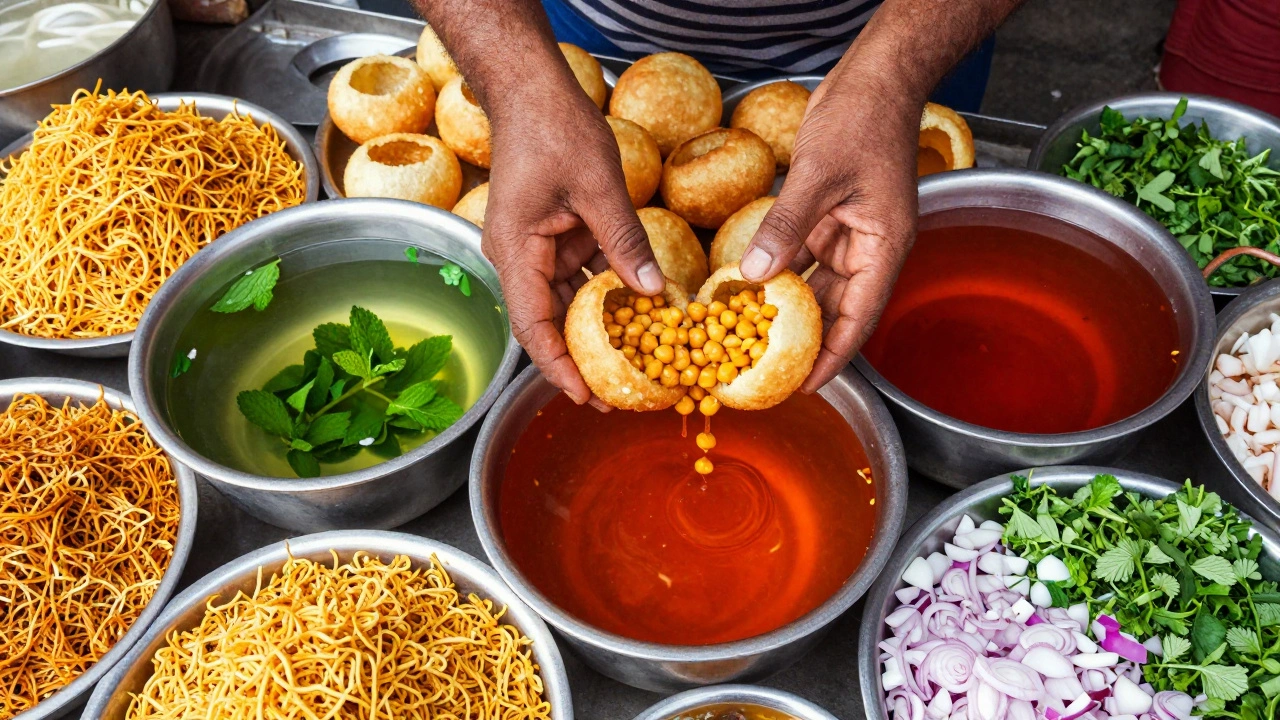
Then there is Pani Puri, known as Golgappa in the south and Puchka in the east. This is not just food; it’s an event. You take a hollow, crispy puri (fried dough ball), poke a hole in the top, fill it with a mixture of spiced chickpeas and potatoes, and then dunk it into flavored water (pani). The water can be sweet and tangy or intensely spicy and herbal, depending on your preference. You must eat the entire puri in one bite before it dissolves. It’s risky-if you wait too long, it turns into mush-but when done right, the explosion of flavors is unmatched.
| Snack Name | Primary Ingredients | Flavor Profile | Region of Origin |
|---|---|---|---|
| Vada Pav | Potato, Bread, Gram Flour | Spicy, Tangy, Savory | Mumbai (Maharashtra) |
| Samosa | Wheat Flour, Potato, Peas | Crispy, Spiced, Mild | North India / Central Asia |
| Pani Puri | Fried Dough, Spiced Water, Chickpeas | Tangy, Sweet, Fiery | All India (varies by region) |
| Bhel Puri | Puffed Rice, Vegetables, Chutney | Crunchy, Salty, Sour | Mumbai (Maharashtra) |
The Crunch Factor: Bhel Puri and Sev Puri
Not all Indian junk food requires frying. Bhel Puri is a savory snack made from puffed rice, vegetables, and chutneys. It looks like a bowl of cereal but tastes like a party. The base is puffed rice, which is light and airy. Vendors toss it with chopped onions, tomatoes, cucumbers, and boiled potatoes. Then comes the seasoning: lemon juice, chili powder, salt, and the essential chutneys.
The key to great bhel is the sev-thin, crispy noodles made from chickpea flour. Without sev, bhel is just seasoned puffed rice. With it, you get that satisfying crunch that contrasts with the soft vegetables. There’s also Sev Puri, where flat, crispy puris act as scoops for a mixture of mashed potatoes, chickpeas, onions, and more sev. It’s lighter than vada pav but equally indulgent due to the hidden oils in the sev and chutneys.
Regional Variations: From Cutlets to Jalebis
India’s diversity means junk food varies wildly by region. In South India, particularly Chennai and Hyderabad, the Chicken Cutlet is a deep-fried patty made from minced chicken mixed with vegetables and spices. Unlike Western cutlets, these are finely ground and coated in breadcrumbs or rice flour before frying. They are usually served with coconut chutney and black pepper sauce. The texture is dense and moist inside, with a hard, crunchy crust outside.
In the evening markets of Lucknow and Kolkata, you’ll find Kachori. This is a deep-fried bread stuffed with spicy lentils (usually moong dal). It’s heavy, rich, and meant to be eaten slowly. Often paired with aloo sabzi (potato curry) and pickles, kachori is a weekend breakfast or late-night treat that sticks to your ribs.
For those with a sweet tooth, junk food isn’t always savory. Jalebi is a spiral-shaped dessert made from fermented batter, deep-fried, and soaked in sugar syrup. It’s sticky, sweet, and best enjoyed hot off the fryer. Paired with Rabri (a thick semolina porridge), it forms a classic combination that balances sweetness with mild spice.
Health Considerations and Smart Choices
Let’s be honest: most of these foods are high in calories, saturated fats, and sodium. Deep-frying is the primary cooking method for nearly all iconic street snacks. However, enjoying them doesn’t have to derail your health goals if you approach them mindfully.
- Choose Hygiene Over Price: Look for stalls with high turnover. Freshly cooked food is safer than pre-cooked items sitting out. Avoid raw garnishes like onion or cucumber if you’re unsure of the water quality used for washing.
- Balance Your Plate: If you’re having a heavy, oily snack like vada pav, skip the sugary drink. Opt for water or unsweetened tea instead. This helps mitigate the blood sugar spike.
- Share Portions: Many street foods are sold in generous portions. Sharing a plate of chaat with a friend allows you to sample multiple flavors without overeating.
- Look for Grilled Options: In many cities, you can find grilled kebabs or tikkas as street food. These are significantly lower in fat than their fried counterparts.
Remember, moderation is key. Indian street food is part of a larger dietary pattern that includes plenty of vegetables, legumes, and whole grains in home-cooked meals. Occasional indulgence in these treats is unlikely to cause harm if the rest of your diet is balanced.
Why Indian Junk Food Stands Out
Unlike standardized fast food, Indian street food is inherently variable. No two vada pavs are exactly alike because each vendor has their own spice blend and frying technique. This variability keeps the experience fresh and exciting. Additionally, the use of natural preservatives like lemon juice, vinegar, and turmeric adds layers of complexity that artificial flavorings struggle to replicate.
The social aspect is also crucial. Eating street food is rarely a solitary activity. It’s shared among friends, families, and colleagues. The act of breaking bread-or rather, breaking puris-together fosters connection and community. In a fast-paced world, these moments of pause and pleasure are invaluable.
Is Indian street food safe for tourists?
Yes, if you choose wisely. Stick to busy stalls with high customer turnover, ensuring the food is fresh. Avoid raw salads and ice unless you trust the source. Foods that are cooked to order and served hot, like samosas or vada pav, are generally safer than cold items.
What is the difference between chaat and regular snacks?
Chaat refers specifically to a style of snack that combines multiple textures and flavors-sweet, sour, spicy, and crunchy-in one bite. Regular snacks might focus on a single flavor profile, whereas chaat is designed for complexity and contrast.
Can I find vegetarian options in Indian junk food?
Absolutely. The majority of iconic Indian street food is vegetarian. Vada pav, samosa, pani puri, bhel puri, and jalebi are all plant-based. Even non-vegetarian snacks like chicken cutlets are clearly labeled, making it easy for vegetarians to navigate.
How do I pronounce 'Pani Puri'?
It is pronounced "PAH-nee POOR-ee." The stress is on the first syllable of each word. In some regions, it is called Golgappa (GOL-gah-puh) or Puchka (PUKH-kah).
Where can I try authentic Indian junk food outside India?
Look for Indian grocery stores with attached cafes or dedicated street food restaurants in major cities with large Indian diasporas, such as London, New York, Sydney, and Dubai. Authenticity varies, so check reviews for mentions of specific items like vada pav or pani puri.
