What Is the Healthiest Crispy Snack? Top Indian Options That Actually Good for You
 Dec, 4 2025
Healthy Snack Checker
Check Your Snack's Health Score
This tool evaluates your snack against the health criteria from the article. Enter the details below to see if it's truly healthy or needs improvement.
Results
Craving something crunchy? Most crispy snacks are loaded with oil, salt, and hidden sugars-especially the ones sold in bags at the corner store. But what if you could get that satisfying crunch without the guilt? The truth is, India has been making healthy crispy snacks for centuries. You just need to know which ones to pick.
Why Most Crispy Snacks Aren’t Healthy
When you think of crispy snacks, you probably imagine bhujia, sev, or packaged chips. These are often deep-fried in reused oil, drenched in salt, and coated with artificial flavors. A single 50g packet of store-bought sev can have over 300 calories, 18g of fat, and more than 600mg of sodium. That’s nearly a third of your daily sodium limit in one small snack.
Even snacks labeled as ‘traditional’ or ‘homemade’ can be misleading. Many street vendors reuse frying oil dozens of times, which creates harmful trans fats. And while they taste great, repeated heating breaks down the oil into compounds that raise bad cholesterol and trigger inflammation.
So what’s the alternative? You don’t have to give up crunch. You just need to shift to snacks made with better ingredients and smarter cooking methods.
The Healthiest Crispy Snacks from India
India’s snack culture is full of options that are naturally low in sugar, rich in fiber, and made with whole ingredients. Here are the top five that actually support your health.
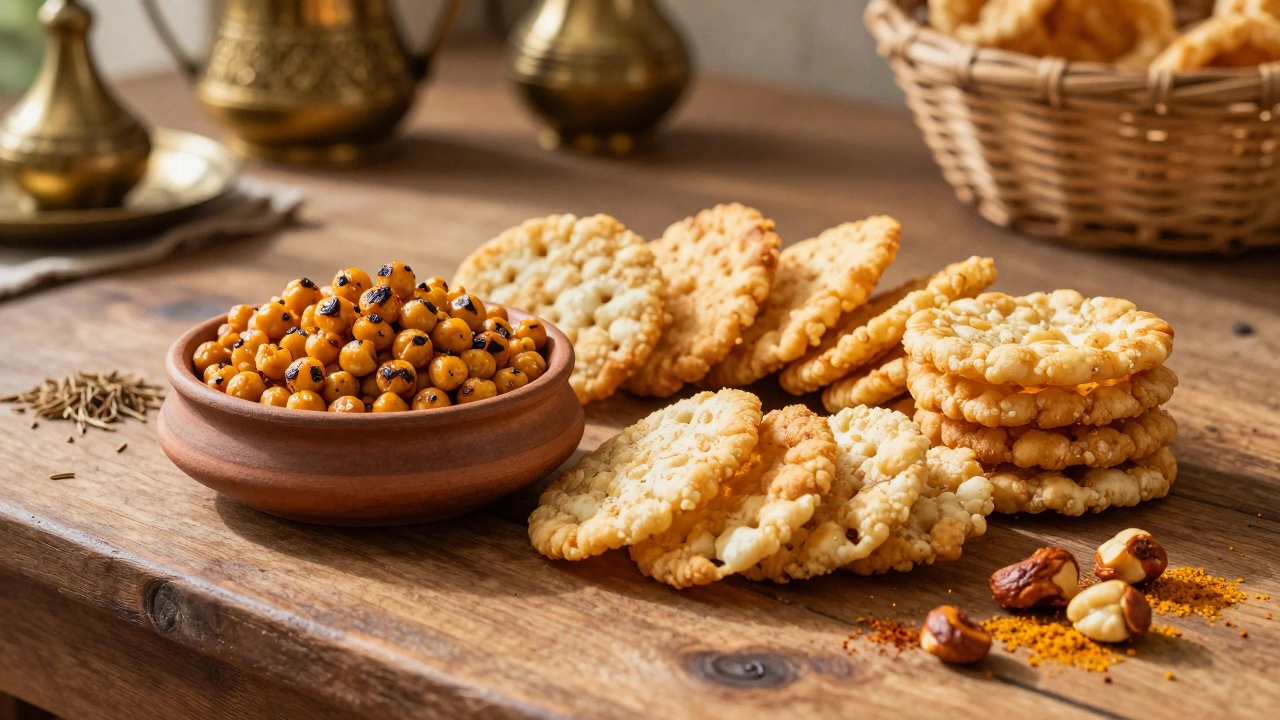
- Roasted Chana (Roasted Chickpeas) - These are protein-packed, high in fiber, and naturally low in fat. A 100g serving has 19g of protein and 13g of fiber. Roast them with a pinch of cumin, black salt, and a drizzle of olive oil instead of deep-frying. They stay crunchy for days and keep you full longer than any chip.
- Baked Suji Crackers - Made from semolina (sooji), water, and a touch of turmeric or ajwain, these are baked, not fried. One cracker has under 40 calories and zero added sugar. They’re perfect with chutney or plain. Many Indian households make these for kids and elders because they’re gentle on digestion.
- Air-Fried Murukku - Traditional murukku is deep-fried, but modern versions use air fryers to cut oil by up to 80%. Use whole grain rice flour, lentil flour, and minimal salt. Add flaxseed for omega-3s. The crunch is just as satisfying, without the greasy aftertaste.
- Roasted Makhana (Fox Nuts) - These are the ultimate healthy crispy snack. Low in calories, high in magnesium and antioxidants, makhana is naturally gluten-free and cholesterol-free. Dry roast them with a little ghee, black pepper, and rock salt. A 30g serving has only 90 calories and 3g of fiber.
- Crispy Baked Lentil Patties - Made from split moong dal or chana dal, mashed and shaped into thin patties, then baked until golden. These are packed with plant protein and digestible carbs. Add chopped spinach or grated carrot for extra nutrients. They’re crunchy on the outside, soft inside, and great for mid-afternoon snacking.
What Makes a Crispy Snack Truly Healthy?
Not all ‘healthy’ snacks are created equal. Here’s what to look for:
- Oil type matters - If it’s fried, it should be in cold-pressed coconut oil, sunflower oil, or rice bran oil. Avoid palm oil and hydrogenated fats.
- Low sodium - Aim for under 200mg per serving. Use rock salt, black salt, or celery powder instead of table salt.
- No added sugar - Even savory snacks often have sugar hidden in spice mixes. Check labels or make your own.
- Whole ingredients - If the ingredient list has more than five items, it’s probably processed. Stick to things you recognize: lentils, grains, spices, nuts.
- Cooking method - Baking, air-frying, or dry-roasting cuts fat by 50-90% compared to deep-frying.
For example, traditional makhana from Bihar is often sold roasted in ghee. But if you buy it pre-packaged, it might be fried in palm oil and sweetened with jaggery syrup. Always check the source or make it yourself.
How to Make Healthy Crispy Snacks at Home
You don’t need fancy equipment. Here’s how to make two simple, healthy crispy snacks in under 30 minutes.
Roasted Chana
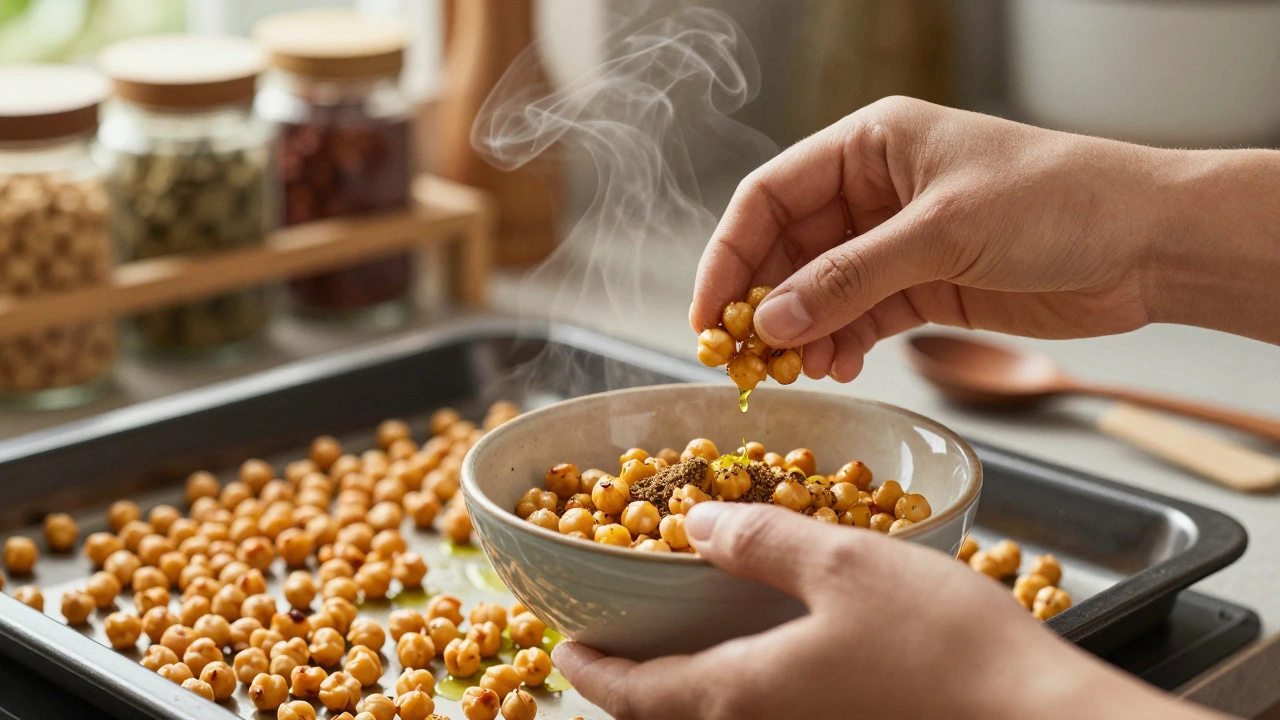
- Soak 1 cup of chana (chickpeas) overnight, then drain.
- Pat them dry with a towel-moisture is the enemy of crunch.
- Toss with 1 tsp olive oil, ½ tsp cumin powder, ¼ tsp black salt, and a pinch of chili.
- Spread on a baking sheet and roast at 200°C for 30-40 minutes, shaking halfway.
- Let cool completely. They’ll crisp up as they cool.
Store in an airtight jar for up to 10 days.
Easy Baked Suji Crackers
- Mix 1 cup semolina, ¼ cup water, ½ tsp ajwain (carom seeds), and a pinch of salt.
- Knead into a stiff dough. Rest for 10 minutes.
- Roll out thinly on parchment paper (under 1mm thick).
- Cut into small squares or diamonds.
- Bake at 180°C for 15-18 minutes until golden and crisp.
These are perfect for kids, diabetics, or anyone watching their weight.
Common Mistakes People Make
Even when people try to eat healthy, they fall into traps:
- Buying ‘whole grain’ chips - Many are still deep-fried and high in sodium. The ‘whole grain’ label doesn’t cancel out the oil.
- Assuming ‘natural’ means healthy - Natural flavors, natural colors, and natural oils can still be highly processed. Read the full ingredient list.
- Overeating ‘healthy’ snacks - Makhana and roasted chana are nutritious, but they’re still calorie-dense. Stick to ¼ cup per serving.
- Using the same oil repeatedly - Even if you’re cooking at home, reusing oil degrades its quality. Replace it after 2-3 uses.
One study from the Indian Journal of Clinical Nutrition found that people who replaced fried snacks with baked or roasted alternatives saw a 15% drop in triglycerides over 8 weeks-without changing anything else in their diet.

When to Avoid Crispy Snacks Altogether
Even the healthiest crispy snacks aren’t ideal for everyone:
- If you have acid reflux, avoid spicy or oily snacks, even baked ones. Stick to plain rice cakes or boiled peanuts.
- If you’re managing kidney disease, limit high-potassium snacks like roasted chana. Opt for baked rice crackers instead.
- If you’re pre-diabetic, avoid any snack with added sugar-even jaggery or dates. Roasted makhana without sweeteners is your best bet.
There’s no one-size-fits-all. Listen to your body. If a snack makes you bloated, sluggish, or thirsty, it’s not right for you-even if it’s labeled ‘healthy’.
Final Thoughts
The healthiest crispy snack isn’t the one with the prettiest packaging or the loudest marketing. It’s the one made with real food, cooked smartly, and eaten in balance. Roasted chana, baked murukku, and makhana aren’t trendy-they’re traditional for a reason. They’ve fed generations without causing weight gain or chronic disease.
You don’t need to give up crunch. You just need to make it count.
Is roasted chana healthier than potato chips?
Yes, roasted chana is far healthier. A 100g serving of roasted chana has 19g of protein, 13g of fiber, and only 5g of fat. The same amount of potato chips has 6g of protein, 1g of fiber, and 35g of fat-mostly from deep-frying. Roasted chana also has no added sugar or artificial flavors.
Can I eat crispy snacks if I’m trying to lose weight?
Yes, but choose wisely. Roasted makhana and baked suji crackers are low-calorie and high-fiber, helping you feel full longer. Stick to 30-50g per day. Avoid anything fried, sugary, or overly salty. Portion control is key-even healthy snacks add up if you eat too much.
Are store-bought healthy snacks really healthy?
Most aren’t. Labels like ‘natural’ or ‘whole grain’ are often marketing tricks. Check the ingredient list: if it has more than 5 ingredients, or if you don’t recognize them, it’s probably processed. Look for snacks with only one or two whole-food ingredients-like makhana, chana, or semolina-with no added sugar or preservatives.
What’s the best oil for making crispy snacks at home?
Cold-pressed coconut oil, sunflower oil, or rice bran oil are best. They have high smoke points and are rich in good fats. Avoid palm oil, soybean oil, or any hydrogenated oil. Even better-skip frying altogether and bake or air-fry instead.
How long do homemade crispy snacks last?
When stored in an airtight container away from moisture, most baked or roasted snacks last 7-10 days. Roasted chana and makhana can last up to 2 weeks if kept dry. If they lose their crunch, pop them in the oven at 150°C for 5 minutes to revive them.
