What Is the Most Common Indian Meal? The Truth About Roti, Rice, and Dal
 May, 21 2026
Build Your Typical Indian Home Meal
Meal Builder
Select ingredients on the left to build your perfect Indian home meal.
Your Daily Thali
Ask ten people from different parts of India what they eat for dinner tonight, and you will likely get ten completely different answers. You might hear about steaming hot Idli with coconut chutney in Chennai, a plate of Thali with multiple curries in Rajasthan, or perhaps a bowl of spicy Biryani in Hyderabad. This diversity is exactly why pinning down "the most common" meal feels like trying to catch smoke. There is no single dish that every Indian eats every day. However, if we look past the specific recipes and focus on the core components, a clear pattern emerges. The true answer isn't a single recipe; it is a combination of staples that form the backbone of Indian home cooking across the country.
The Great Divide: North vs. South Staples
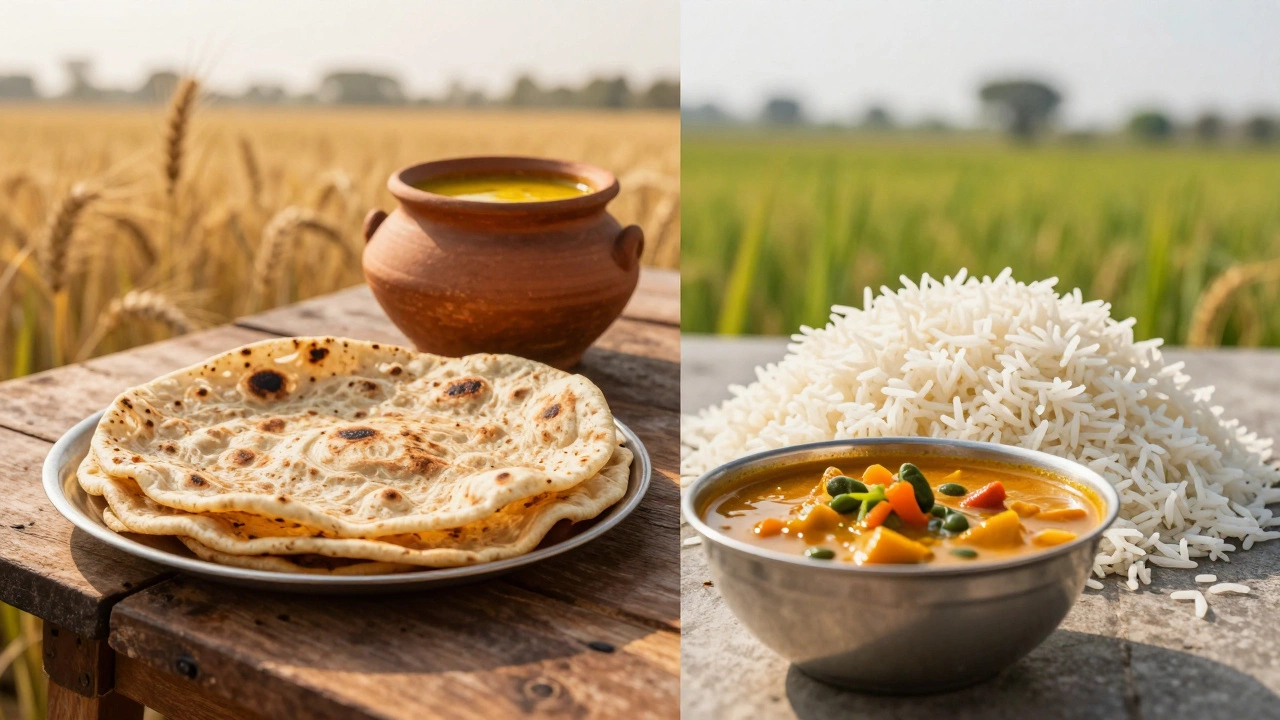
To understand what Indians actually eat, you have to look at geography. The subcontinent is massive, and agricultural conditions dictate the diet. In the northern states, where wheat grows abundantly, the primary carbohydrate source is Roti (or Chapati). It is an unleavened flatbread made from whole wheat flour, water, and sometimes a pinch of salt. It is cooked on a hot griddle called a tawa and often finished directly over an open flame to puff up. In the south, rice is king. The climate supports paddy fields, so meals revolve around white rice, served either plain or as part of a mixed preparation like Pulao.
This divide creates two distinct daily routines. A typical northern household wakes up to parathas (stuffed flatbreads) and yogurt, eats a midday meal of roti with vegetable curry, and has a similar evening meal. In the south, breakfast might be dosa or idli, lunch is rice with sambar (a lentil-based stew), and dinner could be rice with a lighter vegetable stir-fry. While the base changes from wheat to rice, the structure of the meal remains remarkably consistent.
The Universal Glue: Dal and Curry
If roti and rice are the canvas, then Dal is the paint. Dal refers to various forms of split pulses or legumes. Whether it is Toor Dal, Moong Dal, or Masoor Dal, this dish appears on almost every Indian table, regardless of religion, region, or economic status. It is affordable, packed with protein, and incredibly versatile. You can cook it simply with turmeric and cumin for a quick weeknight dinner, or simmer it for hours with ghee and spices for a festive feast.
Dal serves a crucial nutritional role. Since traditional Indian diets are often vegetarian or meat-light, dal provides the necessary protein and fiber. It is rarely eaten alone. Instead, it acts as a sauce or accompaniment to the dry breads or sticky rice. In many homes, the phrase "Dal-Roti" or "Rice-Dal" is synonymous with "lunch" or "dinner." If you visit an Indian family's kitchen, you will almost always find a pot of dal simmering on the stove. It is the comfort food of the nation, bridging the gap between rich, heavy curries and simple, bland grains.
The Role of Sabzi and Regional Variations
No Indian meal is complete without Sabzi, which translates to vegetable dish. This is where the incredible regional diversity shines through. In Punjab, sabzi might mean Sarson ka Saag (mustard greens) during winter. In Kerala, it could be a stir-fry of drumstick leaves and coconut. In Gujarat, vegetables are often cooked with a touch of jaggery for sweetness, while in Andhra Pradesh, the same vegetables might be tempered with red chilies for intense heat.
The beauty of sabzi is its adaptability. Whatever seasonal vegetables are available in the local market end up in the pot. Cabbage, cauliflower, potatoes, eggplant, and okra are the most common ingredients because they are cheap and widely available. This reliance on seasonal produce means that the "most common" meal changes slightly with the seasons. During monsoon season, you see more leafy greens and root vegetables. In summer, light salads and cucumber raita become more prominent alongside the main course.
Accompaniments That Define the Meal
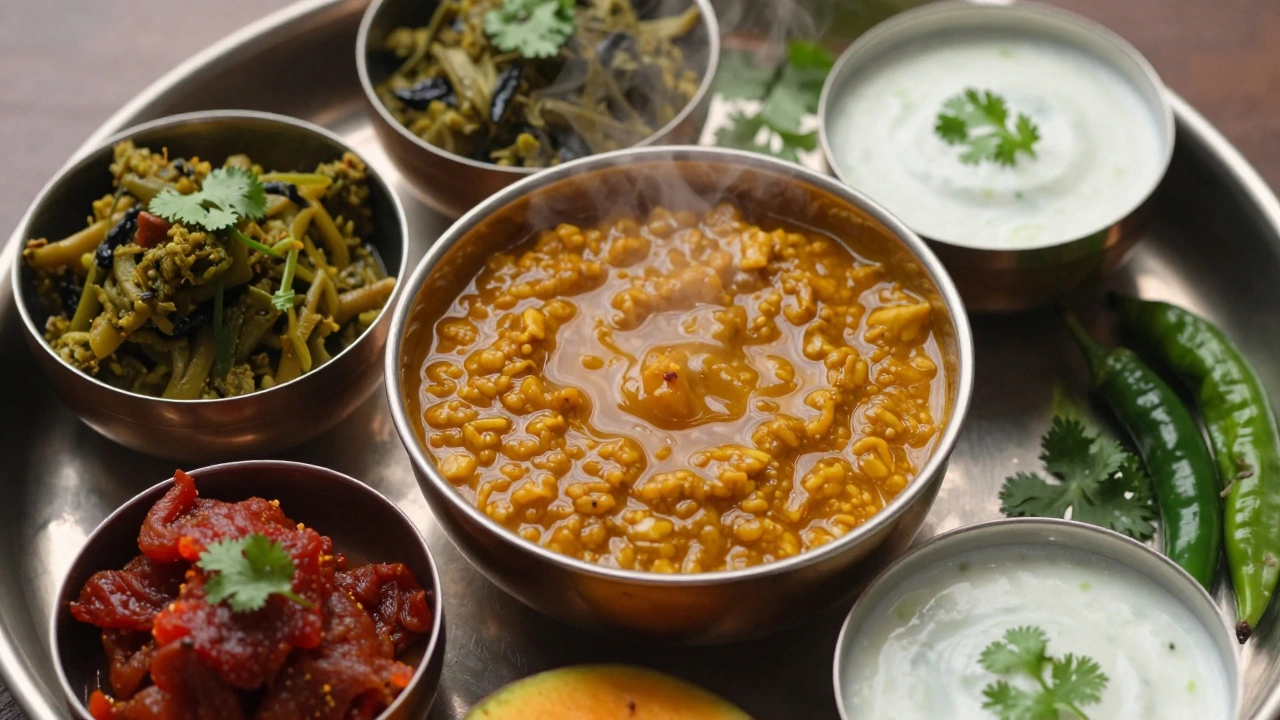
While the main components are grain, pulse, and vegetable, the side dishes define the flavor profile and texture of the meal. Raita is a yogurt-based condiment mixed with grated cucumber, onion, or boondi (fried gram flour drops). It cools down the palate, especially when eating spicy curries. Pickles, known as Achar, provide a sharp, acidic kick. Mango pickle is popular in the east, while lime pickle dominates in the west. These sides are not just garnishes; they are essential for balancing the flavors.
In many households, these accompaniments are prepared in bulk and stored in jars. A small spoonful of pickle or a dollop of raita transforms a simple plate of dal and rice into a satisfying, multi-layered experience. Additionally, fresh cilantro (coriander) and green chilies are often chopped and sprinkled over dishes just before serving, adding a burst of freshness that ties all the elements together.
| Region | Primary Grain | Protein Source | Common Vegetable Prep | Typical Accompaniment |
|---|---|---|---|---|
| North India | Roti (Wheat) | Dal (Lentils) | Dry Stir-fry (Sabzi) | Raita, Pickle |
| South India | Rice | Sambar/Dal | Curry with Coconut | Chutney, Papad |
| West India | Rice/Roti | Dal/Soy Chunks | Sweet-Savory Mix | Puran Poli (Sweet Flatbread) |
| East India | Rice | Fish/Lentils | Mustard Oil Based Curries | Mango Pickle, Shorshe Ilish |
The Modern Shift: Convenience and Fusion
As urbanization increases, the traditional daily meal is evolving. Younger generations living in cities like Mumbai, Bangalore, and Delhi often have less time to prepare elaborate thalis. This has led to a rise in convenience foods. Ready-to-eat dal packets, microwaveable rotis, and pre-cut vegetable mixes are becoming common in supermarkets. Fast food chains offering burgers and pizzas compete with street food stalls selling vadas and pav bhaji.
However, even with these changes, the core preference for home-cooked meals remains strong. Many families adopt a hybrid approach: quick, simplified versions of traditional dishes. For example, instead of making dal from scratch, they might use instant dal masala powder but still cook fresh vegetables. The desire for healthy, familiar flavors outweighs the trendiness of foreign cuisines for the average Indian household. The "most common" meal today is increasingly a streamlined version of the traditional dal-r roti/rice combo, optimized for speed without losing its soul.
Why There Is No Single "Most Common" Dish
It is important to understand that labeling one specific dish as the "most common" misses the point of Indian cuisine. Indian food is defined by its modularity. You can swap out the vegetable, change the spice level, or alter the grain based on availability and preference, yet the meal structure remains recognizable. This flexibility is what makes it sustainable for billions of people. If you were to ask an Indian person to describe their favorite meal, they wouldn't name a single dish like "Butter Chicken" or "Paneer Tikka." They would describe a combination: "I love my mother's dal tadka with soft rotis and a side of kadhi."
This communal and combinatory nature of eating is central to Indian culture. Meals are often shared from large platters, allowing everyone to mix and match portions according to their taste. This style of eating encourages variety and ensures that no single ingredient dominates the entire dietary landscape. Instead, a balance of carbohydrates, proteins, fats, and fibers is achieved through the synergy of multiple small dishes.
How to Recreate a Typical Indian Home Meal
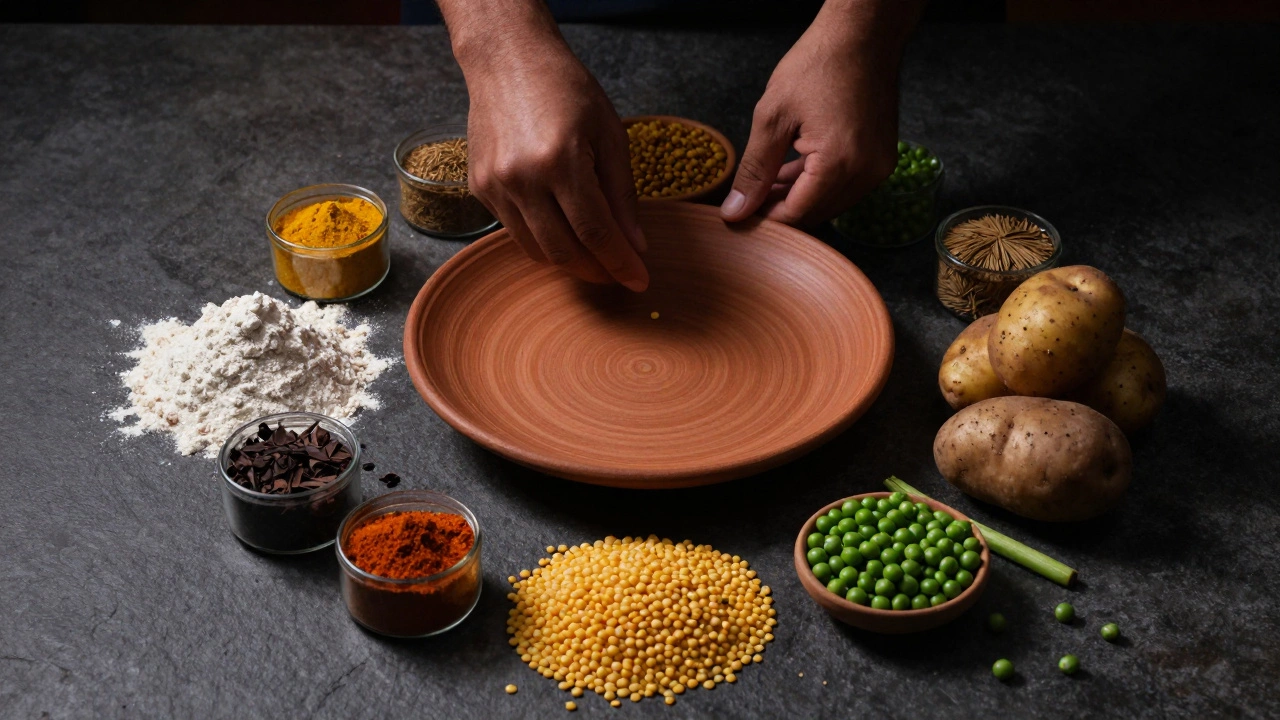
If you want to experience the most common Indian meal yourself, you don't need to master complex techniques. Start with a simple lentil soup. Use yellow moong dal or toor dal. Rinse it thoroughly, pressure cook it with turmeric until soft, and then temper it with mustard seeds, cumin, dried red chilies, and garlic in hot oil or ghee. This is your base.
Next, choose your grain. If you prefer wheat, make simple chapatis using whole wheat flour. Roll them thin and cook on a hot pan until brown spots appear. If you prefer rice, cook long-grain basmati rice until fluffy. Finally, prepare a simple vegetable dish. Sauté diced potatoes and peas with onions, tomatoes, and garam masala. Serve these three components together with a side of yogurt and some pickles. This simple combination represents the heart of Indian home cooking-nutritious, flavorful, and deeply comforting.
Is rice or roti more common in India?
It depends entirely on the region. Roti (wheat flatbread) is the dominant staple in Northern, Western, and Central India. Rice is the primary staple in Southern, Eastern, and Northeastern India. Nationally, both are equally important, but rice consumption is slightly higher due to population density in rice-growing regions.
What do Indians eat for breakfast?
Breakfast varies widely. In the North, common options include Paratha (stuffed flatbread) with yogurt, Poha (flattened rice), or Upma (semolina porridge). In the South, Idli (steamed rice cakes), Dosa (fermented crepes), and Uttapam (topped pancakes) are standard, usually served with sambar and chutney. Urban areas also see a rise in toast, eggs, and cereal.
Is dal considered a curry?
Yes, dal is a type of curry. It is a lentil-based stew or soup that is seasoned with spices. While "curry" is a broad term used internationally to describe spiced sauces, in India, dal specifically refers to dishes made from split pulses. It is distinct from vegetable or meat curries but serves a similar role as a accompaniment to grains.
Do Indians eat meat every day?
No, the majority of Indians are vegetarian or consume meat only occasionally. Due to religious beliefs (Hinduism, Jainism, Buddhism) and economic factors, vegetarian meals are the norm for daily consumption. Non-vegetarian meals featuring chicken, fish, or mutton are typically reserved for weekends, festivals, or special occasions, though this is changing in urban youth demographics.
What is the difference between Thali and regular meals?
A Thali is a traditional meal served on a large circular platter containing small bowls of various dishes. It includes rice, roti, dal, 2-3 vegetable dishes, yogurt, pickle, and often a sweet dessert. A regular home meal might consist of just 2-3 of these components served on individual plates. Thalis are more comprehensive and are commonly found in restaurants or during festivals.
