What Is the Most Eaten Thing in India?
 Feb, 20 2026
Rice Consumption Calculator
Rice in India
India consumes over 100 million metric tons of rice annually - more than the entire rice production of Thailand, Vietnam, and Cambodia combined. With an average consumption of 130 grams per person daily, rice is the undisputed staple food across all regions.
Calculate Rice Consumption
Results
Daily Consumption:
Annual Consumption:
Global Comparison
India's rice consumption equals times the annual rice production of Thailand, Vietnam, and Cambodia combined.
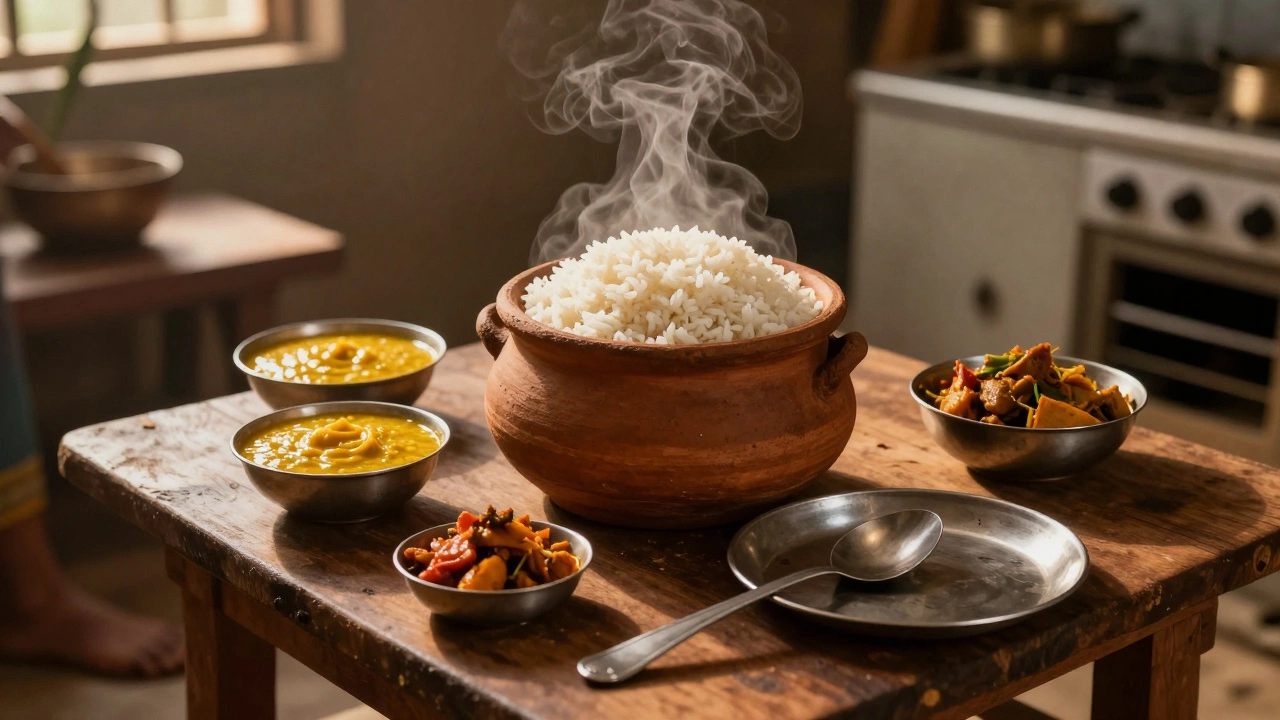
Ask anyone in India what they eat every day, and the answer won’t be spicy curries, buttery naan, or even masala chai. It’s something far simpler, quieter, and more universal: rice.
It’s easy to think of Indian food as all about curry, tandoori, and flatbreads. But if you look at the actual plates on tables across the country-from the rice paddies of Punjab to the coastal kitchens of Kerala-the most common thing on every plate, in every home, in every meal, is rice. Not as a side. Not as an option. But as the foundation. The anchor. The constant.
Over 80% of Indian households eat rice at least once a day. That’s not a guess. It’s from the National Family Health Survey (NFHS-5) in 2021, which tracked food consumption across 640,000 households. Rice isn’t just popular-it’s essential. In rural areas, it’s often the only grain served at breakfast, lunch, and dinner. In cities, it’s paired with dal, vegetables, or curry, but it’s still the base. Even in families that eat roti for lunch, they’ll have rice for dinner. Or vice versa. Rarely do both get skipped.
Rice Isn’t Just One Thing
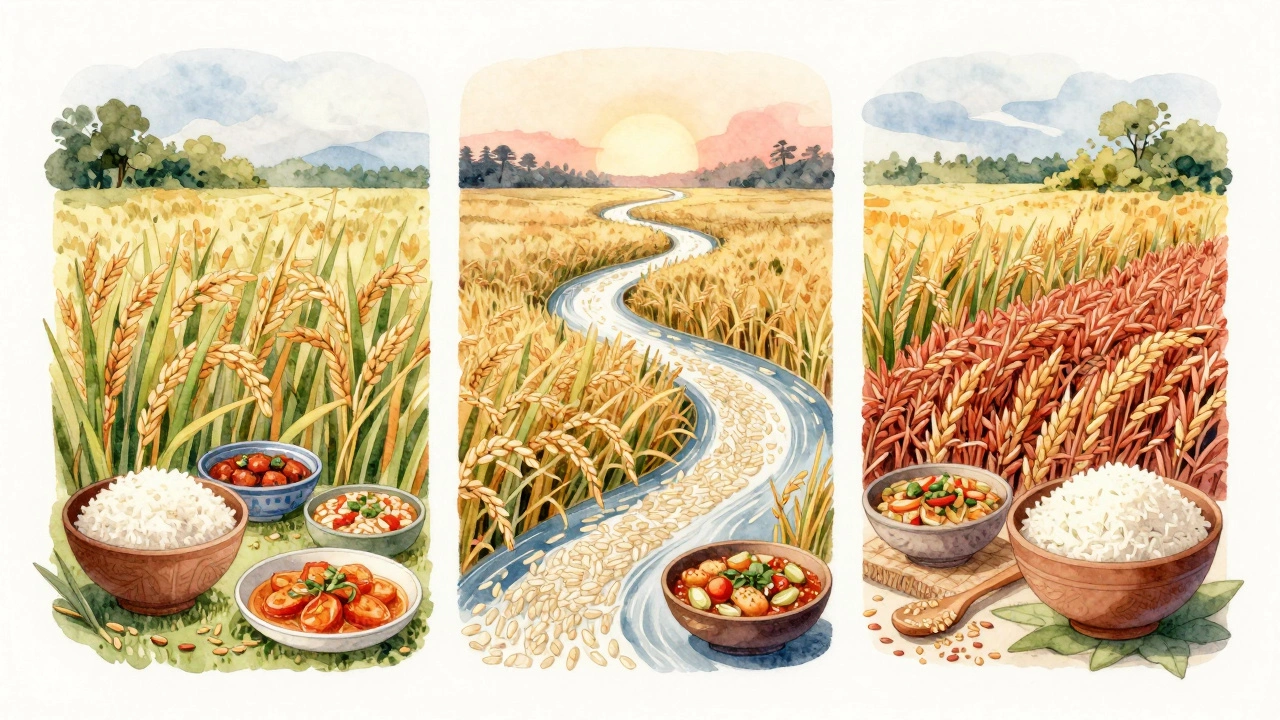
When people say “rice” in India, they don’t mean one kind. There are dozens. Each region has its own favorite. In the north, you’ll find basmati-long, fragrant, and fluffy. It’s what you get in biryani or plain steamed rice with ghee. In the south, it’s short-grain white rice, softer and stickier. It clings together just enough to scoop up sambar or rasam. In Maharashtra, they use hand-pounded red rice. In Odisha, it’s black rice. In Assam, sticky glutinous rice makes up the base for sweet snacks and savory meals alike.
Every type has a purpose. Basmati for special occasions. Short-grain for everyday dal. Red rice for health-conscious families. Glutinous rice for festive treats. But they all share one thing: they’re eaten daily. You won’t find a single household in India where rice doesn’t appear at least five days a week.
Why Rice? It’s Not Just Tradition
It’s not just about culture. It’s about practicality. Rice grows everywhere. From the flooded fields of West Bengal to the terraced hills of Uttarakhand, rice is the crop that feeds the most people. It’s cheaper than wheat in most places. It’s easier to cook in bulk. It stores well. A single sack lasts a family for weeks.
And it’s forgiving. Overcooked? Still edible. Undercooked? Just add water and steam it again. Burnt at the bottom? Scrape off the crispy part-it’s called potato in some regions and is considered a delicacy. Rice doesn’t demand perfection. It just needs to be there.
Compare that to roti. Making roti takes time. You need flour, water, a rolling pin, and a tawa. You have to make each one by hand. Rice? Just rinse, boil, wait. You can cook a whole pot while you’re doing something else. For working parents, students, or people with long shifts, that matters.
What About Roti? Isn’t That More Common?
People often assume wheat bread is the staple because it’s visible in restaurants and TV ads. But roti is more regional. It’s common in the north and central parts of India-places like Punjab, Haryana, and Uttar Pradesh. But in the south, east, and northeast, rice dominates. Tamil Nadu, Kerala, West Bengal, Odisha, Assam, Andhra Pradesh, and Telangana? Rice is king. That’s over half the country’s population.
Even in the north, rice doesn’t disappear. It’s eaten for dinner. Or on weekends. Or during festivals. In many homes, the rule is simple: roti for lunch, rice for dinner. Or rice for breakfast, roti for lunch. But rarely is one completely replaced by the other.
How Much Rice Do Indians Actually Eat?
The average Indian consumes about 130 grams of rice per day. That’s roughly half a cup cooked. Sounds small? Multiply that by 1.4 billion people. India eats over 100 million metric tons of rice every year. That’s more than the entire annual rice production of Thailand, Vietnam, and Cambodia combined.
And it’s not just home cooking. Street vendors sell rice in paper cones. Canteens in factories serve rice with dal. Schools feed children rice with vegetables. Even in luxury hotels, rice appears on the breakfast menu alongside idli and dosa. It’s everywhere.
What Else Comes With It?
Rice doesn’t eat alone. It’s paired with something. Usually dal-lentils cooked with turmeric, cumin, and garlic. Sometimes it’s sambar, a tangy lentil stew with vegetables. Or rasam, a spicy broth. In the east, it’s fish curry. In the west, it’s potato curry. In the south, it’s coconut chutney and pickle.
But the pattern is always the same: a spoonful of rice, a spoonful of curry, a bite of pickle, a sip of buttermilk. The rice is the canvas. Everything else is the color.
It’s Not Just Food. It’s Ritual.
In many households, the first thing you do when you sit down to eat is pour a little rice onto the floor as an offering. In temples, rice is offered to gods. In weddings, rice is thrown. In funerals, it’s scattered. It’s part of life’s milestones. Not because it’s sacred in a religious way-but because it’s the most basic, most reliable thing that keeps people alive.
Even in cities where people eat pizza or pasta on weekends, they come back to rice on Monday. It’s not nostalgia. It’s necessity. It’s comfort. It’s the thing that says, “This is home.”
What About Other Foods?
Yes, people eat roti. Yes, they eat idli, dosa, upma, and poha. But none of those are eaten as universally or as frequently as rice. Dosa is a breakfast food. Poha is quick, but not daily for most. Idli is popular in the south, but not in the north. Roti? It’s common, but not universal.
Rice is the only food that crosses every border, every language, every religion, every income level. A billionaire in Mumbai eats the same type of rice as a farmer in Bihar. The only difference? How it’s cooked. The rice itself? Identical.
So What’s the Most Eaten Thing in India?
It’s not biryani. Not paneer tikka. Not samosa. Not even idli. It’s plain, steamed white rice. Just rice. No frills. No spice. Just the grain.
And that’s the point. It’s not flashy. It doesn’t make headlines. But it’s the one thing that connects every single Indian meal. Every day. In every corner of the country.
