When to Put Oil in Roti Dough: The Right Time for Soft, Fluffy Rotis
 Mar, 10 2026
Roti Oil Timing Calculator
Calculate Oil Amount
Oil Timing Guidance
Enter flour quantity to see calculation
When to add oil: After 2-3 minutes of kneading when dough is smooth and slightly sticky
Add oil after flour and water have formed a rough dough
Ever made roti that turned out hard, dry, or cracked when you tried to roll it out? It’s not your rolling pin’s fault. More often than not, the problem starts with when you add oil to the dough. Many people toss in oil at the very beginning, thinking it’ll make things easier. But that’s exactly where things go wrong.
Why Oil Matters in Roti Dough
Oil isn’t just a flavor booster-it’s a texture game-changer. When added at the right moment, it lubricates the gluten strands in the flour, making the dough more pliable. It also seals in moisture, which keeps rotis soft for hours. Skip it, or add it too early, and you’ll end up with brittle dough that snaps back when rolled.
But here’s the catch: adding oil too soon can actually make the dough greasy and harder to work with. The flour doesn’t absorb it properly. Instead of blending in, the oil sits on top, creating uneven pockets. That leads to inconsistent cooking-some parts puff up, others stay flat and tough.
The Right Time to Add Oil
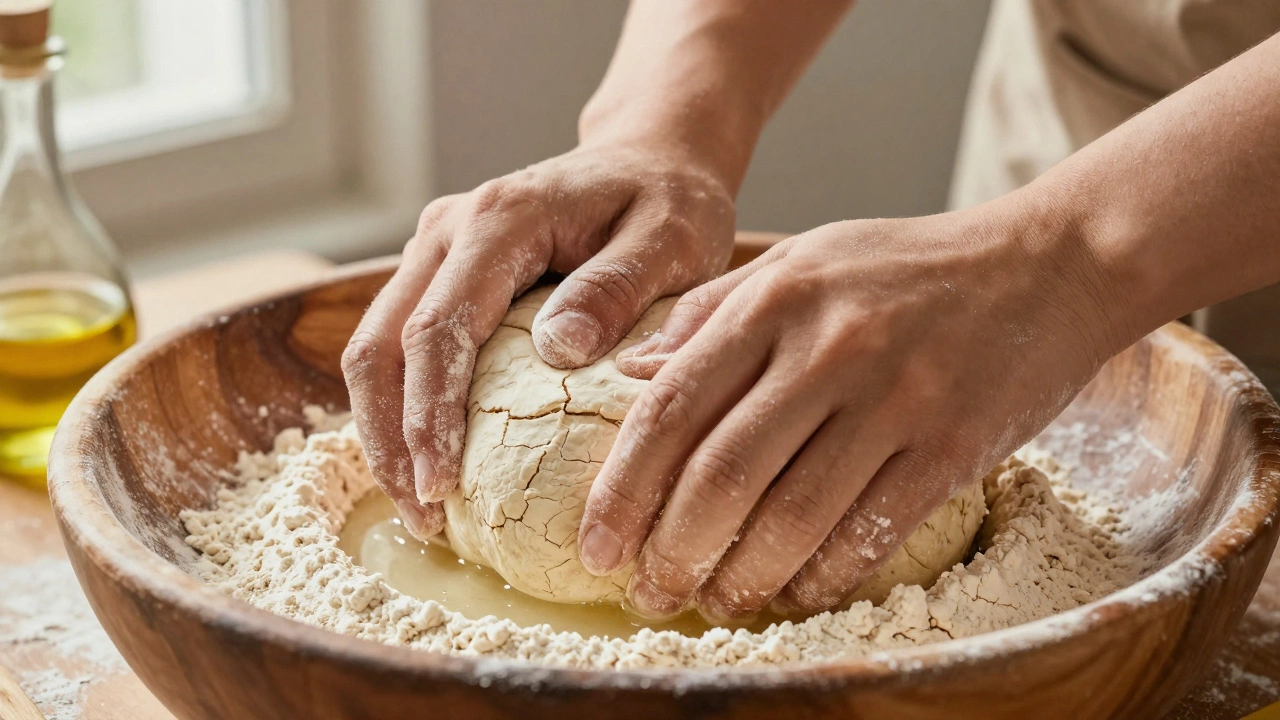
You should add oil after the flour and water have formed a rough dough and you’ve kneaded it for 2-3 minutes. Here’s why:
- First, water hydrates the flour and starts building gluten structure.
- Then, kneading develops that structure enough to hold the oil properly.
- Only after that do you introduce oil, so it coats the gluten strands without disrupting the network.
Think of it like this: flour and water are the foundation. Oil is the finish. Add the finish too early, and the foundation crumbles.
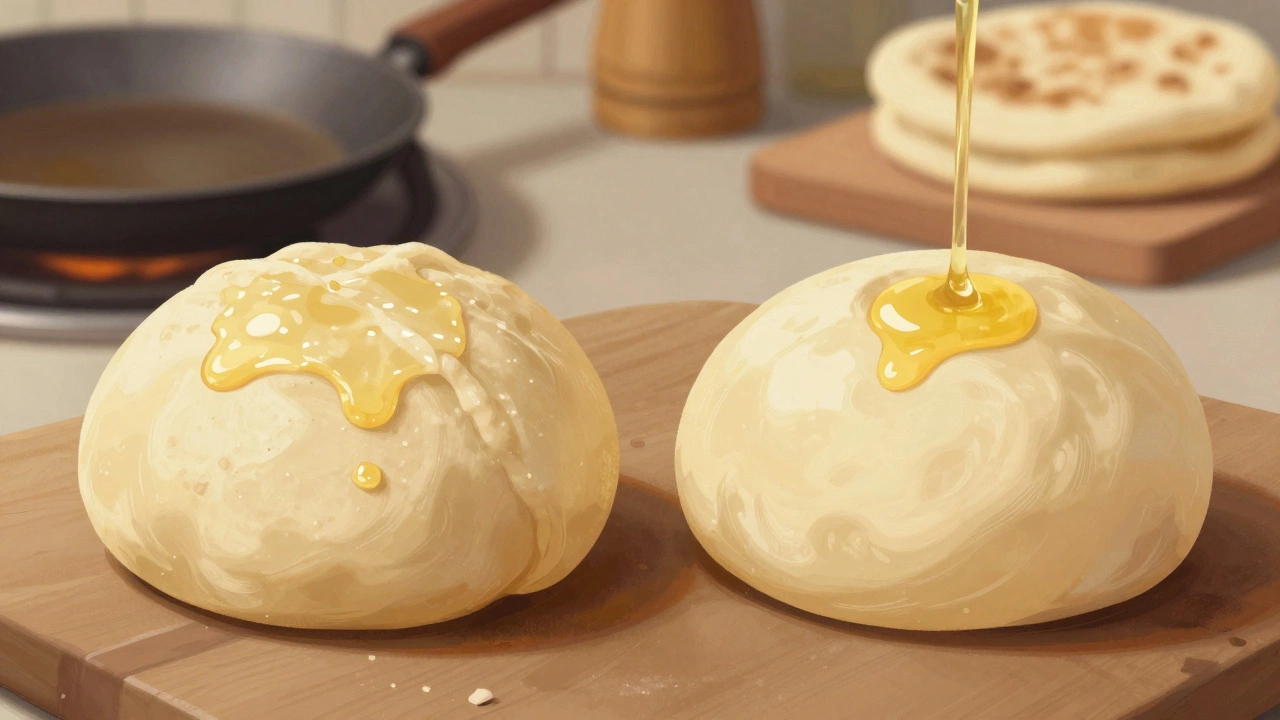
Practical tip: Mix your flour and water first. Knead for a full 2-3 minutes until the dough starts to feel smooth and slightly sticky. Then, take a teaspoon of oil (about 5 ml), drizzle it over the dough, and keep kneading for another 2 minutes. You’ll notice the dough becoming softer, more elastic, and less sticky. That’s your cue it’s ready.
How Much Oil Should You Use?
One tablespoon (15 ml) of oil per 2 cups (250 g) of whole wheat flour is the sweet spot. More than that? You’ll end up with greasy rotis that don’t puff properly. Less than that? The dough stays stiff and cracks under pressure.
Some people swear by ghee instead of oil. That’s fine-it adds flavor and works the same way. But ghee is solid at room temperature, so warm it slightly before adding. Cold ghee will clump and won’t distribute evenly.
Common Mistakes People Make
- Adding oil with the water: This prevents proper hydration. The oil coats the flour particles before they can absorb water, leading to dry, crumbly dough.
- Using too much oil: Rotis become greasy and heavy. They won’t puff up because the fat interferes with steam formation.
- Skipping kneading after adding oil: If you just stir in oil and stop, it won’t integrate. You need to keep kneading for at least 2 minutes after adding it.
- Letting dough sit without resting: Even with the right oil timing, if you don’t cover the dough and let it rest for 20-30 minutes, the gluten won’t relax. That makes rolling harder and rotis tougher.
What Happens If You Add Oil Too Early?
Try this: mix flour, water, and oil together from the start. Knead for 5 minutes. Now let it rest. When you try to roll it out, you’ll notice the dough feels slippery and doesn’t hold its shape. It sticks to the rolling pin, tears easily, and doesn’t puff when cooked.
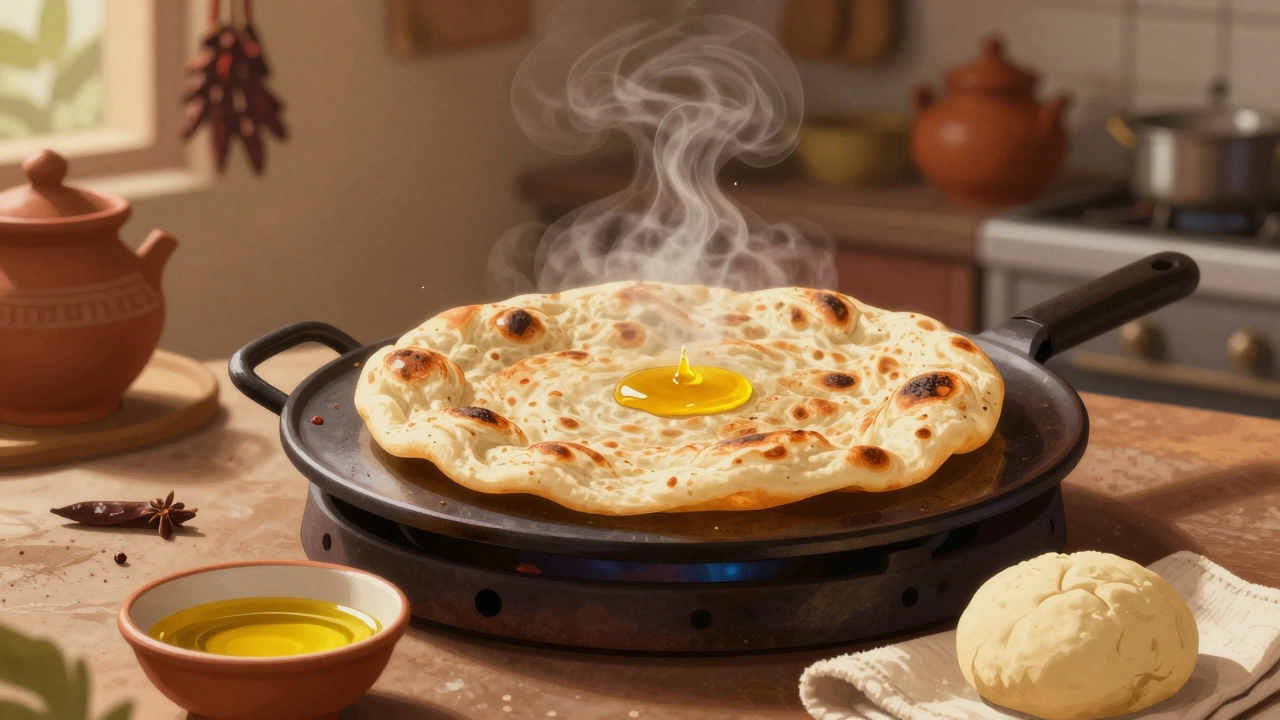
Compare that to dough where oil was added after kneading. The second one rolls out smoothly. It stretches without tearing. It puffs up like a balloon on the tawa. That’s the difference timing makes.
Pro Tips for Perfect Roti Dough Every Time
- Use lukewarm water-not hot, not cold. It helps activate the flour’s natural stickiness without killing the gluten.
- Rest the dough for at least 20 minutes. Cover it with a damp cloth. This lets the flour fully hydrate and the gluten relax.
- Don’t use a mixer. Hand-kneading gives you better control and helps you feel when the dough is ready.
- If your kitchen is dry, spritz the dough lightly with water before resting. Prevents crust formation.
- Roll on a lightly floured surface. Too much flour makes rotis dense.
Oil vs. No Oil: The Real Difference
Some traditional recipes skip oil entirely. They rely on long kneading and resting to develop softness. But here’s what you won’t hear from them: those rotis are best eaten fresh. Within an hour, they start to dry out.
Roti dough with the right amount of oil, added at the right time, stays soft for 6-8 hours-even when stored in a sealed container. That’s why most households in India, Pakistan, and Bangladesh use oil. It’s not a shortcut. It’s a science.
Final Rule of Thumb
Here’s the simplest way to remember: Water first. Knead. Then oil. Then rest.
Follow this order, and your rotis will be soft, fluffy, and perfect every time. No guesswork. No dry edges. No cracking. Just perfect, homemade rotis that taste like they came from a roadside dhaba.
Can I use butter instead of oil in roti dough?
Yes, but melt it first and let it cool slightly. Solid butter won’t mix evenly and can create greasy spots. Use the same amount as oil-1 tablespoon per 2 cups of flour. Butter adds richness and a slight sweetness, which works well for kids or if you’re making rotis to serve with sweet curries.
Why do my rotis crack when I roll them?
Cracking usually means the dough is too dry or hasn’t rested enough. Make sure you’re using enough water-about 3/4 cup per 2 cups of flour. Also, knead for at least 5 minutes total, and rest the dough for 20-30 minutes. If the dough feels stiff, sprinkle a few drops of water over it and knead again before resting.
Should I add oil to whole wheat roti dough the same way as white flour?
Yes, the timing is the same: after initial kneading. But whole wheat flour absorbs more water, so you may need to add an extra tablespoon or two. Don’t skip the oil-it’s even more important here because whole wheat is naturally drier and coarser. Oil helps bind the bran particles and keeps the roti tender.
Can I make roti dough ahead of time?
Absolutely. After kneading and resting, wrap the dough tightly in plastic or put it in an airtight container. It keeps well in the fridge for up to 24 hours. Let it sit at room temperature for 20 minutes before rolling. The oil helps preserve moisture, so refrigerated dough still turns out soft.
What if I forgot to add oil until after rolling out the rotis?
It’s too late for the dough, but you can still salvage the rotis. Brush each cooked roti lightly with oil or melted ghee right after taking it off the tawa. This adds moisture and keeps them soft. It won’t be as good as oil-in-the-dough rotis, but it’ll prevent them from drying out too fast.
