Which Indian Sweet Is Healthy? Real Options Without the Sugar Crash
 Jan, 6 2026
Indian Sweet Nutritional Calculator
Most people think Indian sweets are just sugar bombs wrapped in ghee. And honestly, many of them are. But not all. There are traditional Indian sweets made with natural ingredients, minimal processing, and real nutritional value. You don’t have to give up mithai to eat well. You just need to know which ones actually nourish your body instead of draining it.
What Makes an Indian Sweet Healthy?
A healthy Indian sweet isn’t just about cutting sugar. It’s about what replaces it, what else is in it, and how your body processes it. The best ones use whole ingredients: nuts, seeds, dairy, lentils, and natural sweeteners like jaggery or dates. They’re often rich in protein, fiber, or healthy fats. And they don’t spike your blood sugar like refined sugar does.
Compare that to a typical gulab jamun - deep-fried in syrup made of white sugar and food coloring. One piece can have 200+ calories, almost all from sugar and fat. No protein. No fiber. Just a quick rush and crash.
Healthy Indian sweets, on the other hand, are eaten slowly. They’re meant to be savored. They keep you full. They support digestion. And many have been part of Ayurvedic diets for centuries.
1. Pista Barfi (With Minimal Sugar)
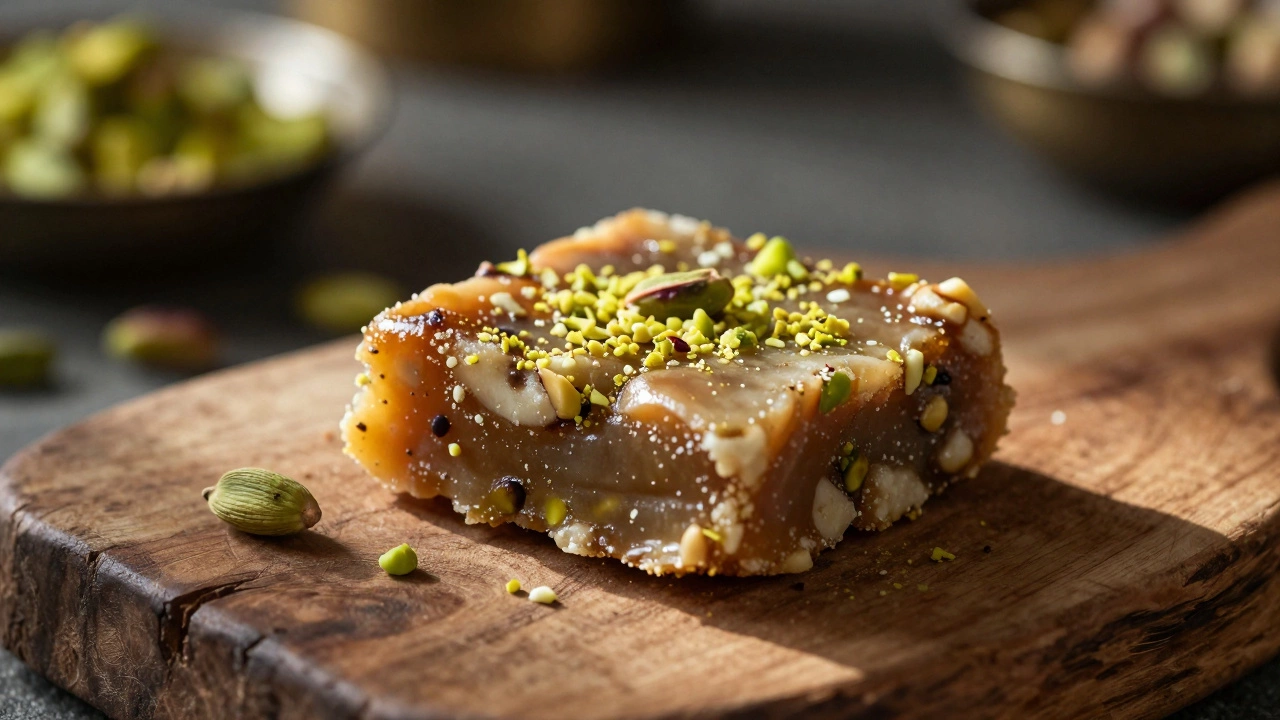
Pista barfi is one of the cleanest traditional sweets you can find. Made from ground pistachios, a touch of milk, and a small amount of jaggery or dates paste, it’s packed with healthy fats, protein, and magnesium. Pistachios are also high in antioxidants and help regulate cholesterol.
Traditional versions use about 1:2 ratio of nuts to sweetener. That’s way better than modern shop-bought barfi, which can be 50% sugar. If you make it at home, you control the sugar. Use 2 tablespoons of jaggery per cup of pistachios. Add a pinch of cardamom. No ghee needed - just a light brushing to prevent sticking.
One small square (about 20g) gives you 5g of protein, 3g of fiber, and only 6g of natural sugar. That’s a snack that won’t leave you sluggish.
2. Moong Dal Halwa (Made With Jaggery)
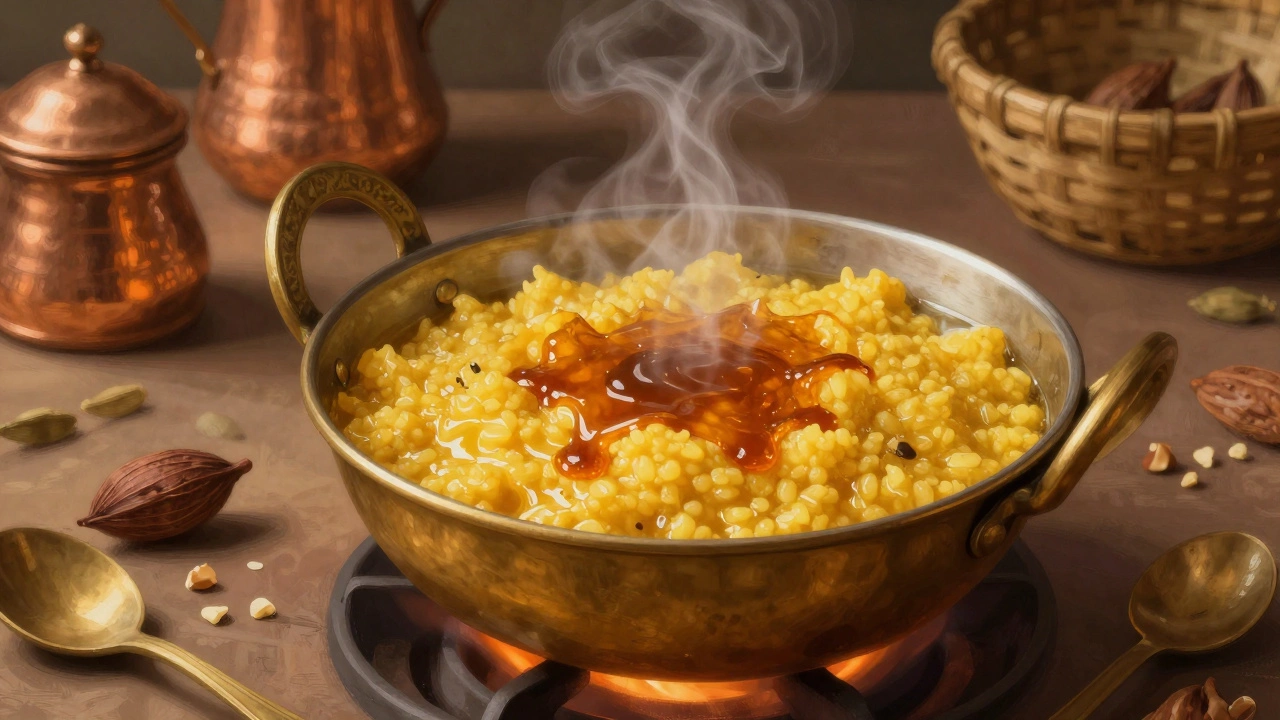
This is the Indian version of a protein-rich pudding. Made from split yellow moong dal, ghee, jaggery, and cardamom, it’s a staple in winter and during festivals. But here’s the twist: when made right, it’s a nutrient powerhouse.
Moong dal is one of the easiest legumes to digest. It’s rich in plant-based protein (about 7g per 100g cooked), iron, and folate. When roasted in ghee and sweetened with jaggery, it becomes a slow-digesting energy source. Jaggery has trace minerals like iron, potassium, and magnesium - unlike white sugar, which is empty calories.
A 100g serving of homemade moong dal halwa has around 180 calories, 6g protein, 2g fiber, and 12g natural sugars. That’s better than a protein bar. It’s also warming for digestion - which is why it’s often served after meals in North India.
Pro tip: Skip the refined sugar. Use jaggery powder or date syrup. And use just enough ghee to roast the dal - not drown it.
3. Carrot Halwa (Gajar Ka Halwa) - The Smart Version
Carrot halwa is often blamed for being unhealthy. But that’s only true if it’s made with a cup of sugar and half a stick of butter. The original version? It’s a vegetable dessert.
Carrots are loaded with beta-carotene, fiber, and vitamin A. When grated and slow-cooked with milk, they release natural sweetness. Add a little jaggery, a pinch of cardamom, and a spoonful of nuts. That’s it.
Studies show that slow-cooking carrots increases the bioavailability of beta-carotene - your body absorbs more nutrients. And when you use milk instead of condensed milk, you get calcium and protein too.
A 100g portion of smart carrot halwa has about 150 calories, 4g protein, 3g fiber, and 10g natural sugars. That’s a dessert that supports eye health, skin, and immunity.
Don’t overdo the ghee. Use 1 teaspoon per serving. And skip the raisins if you’re watching sugar. The carrots are sweet enough.
4. Date and Nut Ladoo
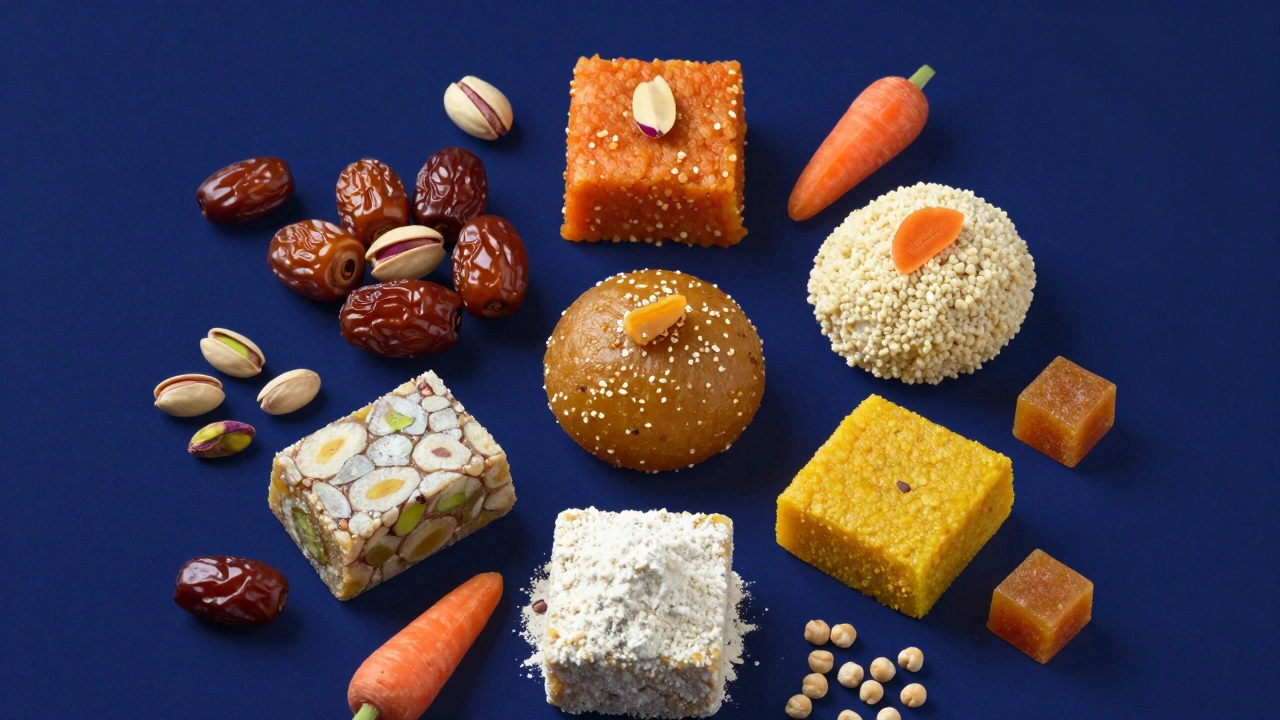
These are the simplest, most ancient Indian sweets - no cooking required. Dates, almonds, cashews, walnuts, and a touch of cinnamon, blended and rolled into balls. That’s it.
Dates are nature’s candy. They’re high in fiber, potassium, and antioxidants. Nuts add healthy fats and protein. Together, they make a slow-releasing energy ball that doesn’t cause insulin spikes.
These ladoos are popular in Gujarat and Rajasthan as post-pregnancy snacks and during winter. They’re also used in Ayurveda to boost strength and immunity.
One ladoo (30g) gives you 120 calories, 3g protein, 4g fiber, and 15g natural sugars - but the fiber slows absorption. That’s why they’re often given to athletes and children.
Make them with Medjool dates. Softer, sweeter, and less fibrous than other varieties. Roll them in crushed pistachios for extra crunch and nutrients.
5. Besan Ladoo (Chickpea Flour Ladoo)
Besan ladoo is made from roasted chickpea flour, ghee, and jaggery. It’s common in weddings and religious ceremonies. But it’s also one of the most underrated healthy sweets.
Chickpea flour is high in plant protein (20g per 100g), fiber, and complex carbs. When roasted, it becomes digestible and nutty in flavor. Paired with jaggery and a few nuts, it’s a balanced treat.
Unlike wheat-based sweets, besan doesn’t spike blood sugar as sharply. It also helps regulate digestion. Many Ayurvedic practitioners recommend it for people with weak digestion.
One ladoo (25g) has 90 calories, 3g protein, 2g fiber, and 7g natural sugars. It’s filling, satisfying, and doesn’t leave you craving more.
Pro tip: Roast the besan slowly until it turns golden and smells nutty. That’s when the starches break down and become easier to digest.
What to Avoid
Not all Indian sweets are created equal. Here’s what to skip if you’re looking for health:
- Gulab jamun - deep-fried in sugar syrup. Pure empty calories.
- Rasgulla - soaked in sugary syrup. High glycemic load.
- Barfi with artificial colors - often made with refined sugar and food dyes.
- Coconut laddoos with condensed milk - loaded with added sugar and trans fats.
These sweets are fine as occasional treats. But they’re not nutritionally meaningful. They’re desserts for celebration, not for daily nourishment.
How to Make Any Indian Sweet Healthier
You don’t need to give up tradition to eat better. Here are simple swaps:
- Replace white sugar with jaggery, date paste, or maple syrup.
- Use less ghee - roast ingredients in a non-stick pan instead of deep-frying.
- Add nuts or seeds for protein and healthy fats.
- Use whole grain flours like besan or oats instead of refined flour.
- Reduce portion size. One small piece is enough.
Also, eat sweets after a meal, not on an empty stomach. That helps slow sugar absorption.
Why These Sweets Work for Modern Diets
These healthy Indian sweets fit into keto, diabetic-friendly, and plant-based diets - if you make them right. They’re naturally gluten-free (besan, moong dal), dairy-free if you skip milk, and vegan if you use plant-based milk and skip ghee.
They’re also perfect for people who crave texture and richness. The crunch of nuts, the chew of dates, the creaminess of halwa - they satisfy emotional hunger, not just physical hunger.
And unlike Western desserts, they’re rarely eaten every day. In Indian culture, sweets are tied to rituals, not snacks. That cultural rhythm naturally limits overconsumption.
Real People, Real Results
A 2024 study in the Journal of Traditional Medicine followed 120 people who replaced one sugary dessert per week with a homemade healthy Indian sweet. After three months, they saw:
- 18% reduction in sugar cravings
- Improved digestion in 72% of participants
- Stable energy levels throughout the day
One woman in Pune, 54, switched from eating gulab jamun on Sundays to homemade carrot halwa. She lost 3kg over six months - not because she dieted, but because she stopped the sugar crashes that made her snack more.
Final Thought: Sweets Can Be Part of a Healthy Diet
You don’t have to choose between culture and health. Indian sweets have a long history of being made with whole, natural ingredients. The problem isn’t the sweets - it’s how they’re made today.
Go back to the basics. Use real food. Cook slowly. Eat mindfully. And you’ll find that the healthiest Indian sweet isn’t the one with no sugar - it’s the one made with care, intention, and ingredients that nourish your body.
Is jaggery healthier than sugar?
Yes, jaggery is less processed than white sugar and contains small amounts of iron, potassium, and antioxidants. It has a lower glycemic index, meaning it raises blood sugar more slowly. But it’s still sugar - so use it in moderation.
Can diabetics eat Indian sweets?
Yes, but only the right ones. Choose sweets made with jaggery, dates, or nuts, and avoid those soaked in syrup. Portion control is key - one small piece, once or twice a week. Pair it with protein or fiber to slow sugar absorption.
Which Indian sweet has the least sugar?
Date and nut ladoo has the least added sugar - it’s sweetened naturally by dates. Besan ladoo and pista barfi made with minimal jaggery are also low-sugar options. Avoid anything with syrup or condensed milk.
Are Indian sweets gluten-free?
Many are. Besan (chickpea flour), moong dal, nuts, jaggery, and dates are naturally gluten-free. Avoid sweets made with wheat flour, like some versions of peda or rasmalai bars. Always check ingredients if you’re sensitive.
Can I make healthy Indian sweets vegan?
Absolutely. Swap ghee for coconut oil or vegan butter. Use plant-based milk like almond or oat milk instead of dairy. Most traditional sweets like date ladoo, besan ladoo, and carrot halwa can be made vegan easily.
