Which Indian Sweet Lasts the Longest? Shelf Life Guide
 Sep, 15 2026
Indian Sweet Shelf Life Guide
Click on any sweet to see its estimated shelf life and storage tips.
Select a sweet above to view details.
You’ve just spent three hours in the kitchen, sweating over a pan of Khoya, trying to get the perfect golden brown for your Gulab Jamun. You plate them up, they look divine, and then... two days later, they’re hard as rocks or covered in mold. It’s frustrating, especially when you want to gift them or save some for next week.
The truth is, not all Indian sweets are created equal when it comes to longevity. Some are designed to be eaten within hours, while others can sit in a jar for months without losing their charm. If you’re looking for that sweet treat that survives the trip back home from India, stays fresh in your Sydney pantry, or simply lasts longer on the festive table, you need to know which ones have the upper hand. Spoiler alert: moisture is the enemy here.
Why Moisture Kills Freshness
To understand which sweet lasts the longest, you first need to understand why sweets go bad. Most spoilage happens because of microbial growth (bacteria and mold) or oxidation. Microbes love water. They thrive in high-moisture environments. That’s why fresh dairy-based sweets like Rasgulla or Sandesh turn sour in a day or two if left out. They are essentially wet sponges for bacteria.
On the flip side, Dry Sweets-those made with minimal water, high sugar content, or ghee-create an environment where microbes struggle to survive. Sugar acts as a preservative by binding with water molecules, making it unavailable for bacterial use. This process, known as osmotic pressure, is why jams and jellies last so long. The same logic applies to traditional Indian confectionery. The drier the sweet, the longer it stays safe and tasty.
The Undisputed Champion: Soan Papdi
If there is one king of shelf stability in the Indian sweet world, it’s Soan Papdi. Also known as Patisa, this flaky, layered delicacy is made primarily from gram flour (besan), sugar syrup, and ghee. Because it contains almost no water once cooked down, it is incredibly resistant to spoilage.
In a sealed container, Soan Papdi can stay crisp and fresh for up to six months. Even after opening, if you keep it in an airtight box away from humidity, it remains edible for weeks. The layers might soften slightly if exposed to air, but it won’t go rancid or moldy quickly. This makes it the perfect candidate for shipping overseas or stocking up during Diwali when you don’t want to worry about daily consumption deadlines.
Runner-Up: Barfi Varieties
Close behind Soan Papdi are the various types of Barfi. However, not all barfis are equal. We need to distinguish between milk-based barfis and nut-based ones.
- Kaju Katli (Cashew Fudge): Made mostly from ground cashews and sugar syrup, Kaju Katli has very low moisture content. Stored properly, it lasts 1-2 months at room temperature. It doesn’t need refrigeration unless your kitchen is extremely hot and humid.
- Milk Barfi: Traditional white barfi made from reduced milk solids (khoya) has a shorter life. It typically lasts 3-5 days in the fridge. If you add nuts or fruit pieces, ensure they are dried fruits; fresh fruit will spoil the whole batch in days.
- Suji Halwa: While technically a pudding, when cooled and set firmly, it can last about a week in the refrigerator. But compared to Kaju Katli? Not even close.
The key differentiator here is the ingredient base. Cashews, almonds, and pistachios are naturally oily and low in water. Milk solids are prone to fermentation. Always choose nut-based barfis for longevity.
Ladoo: The Mixed Bag
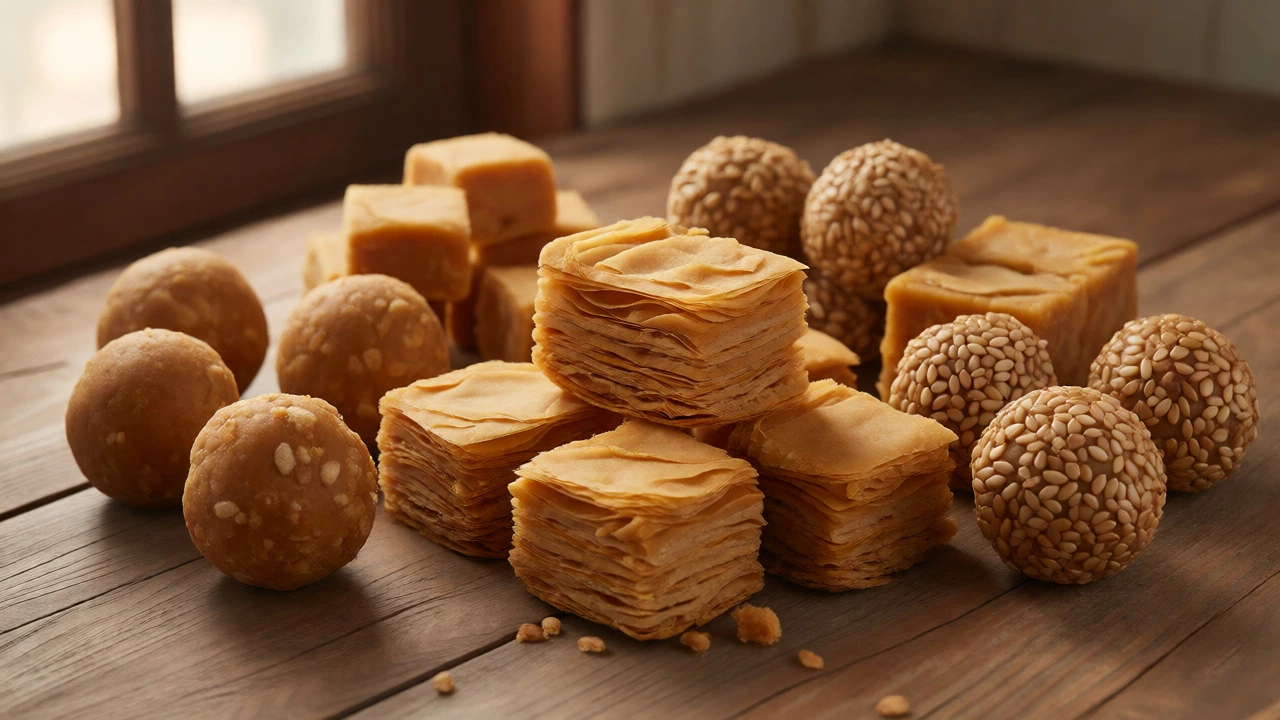
Ladoo is tricky because it depends entirely on the recipe. There are hundreds of variations, and their shelf lives vary wildly.
| Type of Ladoo | Main Ingredients | Room Temp Shelf Life | Fridge Shelf Life |
|---|---|---|---|
| Besan Ladoo | Gram flour, ghee, sugar | 2-3 weeks | 1 month+ |
| Rava Ladoo | Semolina, ghee, sugar | 1-2 weeks | 3 weeks |
| Motichoor Ladoo | Churms (fried chickpea flour droplets), syrup | 1 week | 2 weeks |
| Til Ladoo | Sesame seeds, jaggery/sugar | 1 month+ | N/A (Stable) |
Besan Ladoo is surprisingly durable because the gram flour is roasted thoroughly, removing moisture. The ghee also acts as a barrier against air. Til Ladoo (sesame seed balls) is another long-hauler, often lasting over a month because sesame seeds are oil-rich and stable. Avoid ladoos made with fresh coconut or milk-heavy bases if you want them to last more than a few days.
Short-Lived Favorites: What to Eat Immediately
Some sweets are worth eating before they expire because their texture is part of the experience. Rasmalai, for instance, consists of soft cheese discs soaked in flavored milk. The milk component spoils rapidly. Even in the coldest fridge, Rasmalai starts to lose its integrity after 48 hours. The cheese becomes grainy, and the milk develops a sour note.
Similarly, Jalebi is best enjoyed hot. Once it cools, the syrup crystallizes, and the batter absorbs moisture, becoming soggy within hours. Storing Jalebi in the fridge ruins it completely. If you must store it, keep it at room temperature for no more than a day, and reheat it briefly in a tawa (griddle) to restore crispiness.
Storage Secrets for Maximum Longevity
Even the most durable sweet will fail if stored incorrectly. Here’s how to make sure your Kaju Katli or Besan Ladoo stays fresh for as long as possible.
- Air-Tight Containers: Humidity is the primary killer. Use glass jars with rubber seals or high-quality plastic containers. Never leave sweets in open plates.
- Grease-Proof Paper: Line your containers with butter paper or parchment. This prevents the sweets from sticking together and absorbing odors from the container material.
- Cool, Dark Place: Light and heat accelerate oxidation, causing ghee-based sweets to go rancid. Keep your pantry away from direct sunlight and the stove.
- No Cross-Contamination: Don’t store sweets near strong-smelling foods like onions or garlic. Mithai absorbs odors easily, turning your vanilla-flavored fudge into something savory and weird.
- Refrigeration Nuance: Only refrigerate dairy-heavy sweets. Nut-based and dry sweets should stay at room temperature. Refrigerating Kaju Katli can cause condensation when you take it out, making it sticky and prone to mold.
How to Tell If Your Sweet Has Gone Bad
Since many Indian sweets lack preservatives, relying on your senses is crucial. Here’s what to look for:
- Smell: A sour or fermented smell indicates bacterial growth in dairy-based sweets. A sharp, paint-like odor means the ghee or nuts have gone rancid due to oxidation.
- Texture: If a previously smooth barfi feels gritty or slimy, discard it. Sliminess is a clear sign of microbial activity.
- Visuals: Look for any spots of green, black, or white fuzz. Mold can spread invisibly through porous sweets like cake-like burfis, so if you see one spot, throw the whole batch away.
- Taste: If it tastes bitter (instead of sweet) or fizzy, spit it out. Fermentation produces gas and acids, altering the flavor profile drastically.
DIY Tips to Extend Shelf Life
If you’re making these at home, you can tweak recipes to improve longevity. For example, when making Gulab Jamun, soak them in thinner syrup rather than thick, sugary syrup. Thick syrup can sometimes lead to uneven preservation. For dry sweets, ensure you roast the khoya or besan thoroughly until the raw smell disappears. Any remaining moisture will shorten the shelf life significantly.
Adding natural preservatives like cardamom powder or rose petals isn’t just for flavor; cardamom has mild antimicrobial properties. While it won’t double the shelf life, it helps maintain freshness slightly longer than plain versions.
Frequently Asked Questions
Can I freeze Indian sweets?
Yes, but only specific types. Dry sweets like Besan Ladoo, Kaju Katli, and Soan Papdi freeze well for up to 3 months. Dairy-based sweets like Gulab Jamun (without syrup) can be frozen, but Rasgulla and Rasmalai do not freeze well as the texture becomes rubbery upon thawing. Always wrap individually in cling film before placing in a freezer bag.
Why does my Kaju Katli become sticky?
Kaju Katli becomes sticky due to humidity absorption. Cashew paste is hygroscopic, meaning it pulls moisture from the air. If your kitchen is humid or the container isn't airtight, the surface will become tacky. Store it in a cool, dry place and ensure the container seal is intact.
Do store-bought sweets last longer than homemade ones?
Generally, yes. Commercial manufacturers often use stabilizers, higher fat ratios, and industrial packaging techniques that extend shelf life. Homemade sweets rely purely on ingredients and cooking technique, so they usually have a shorter window of peak freshness.
How long does Mysore Pak last?
Mysore Pak, made from gram flour, ghee, and sugar, is quite stable. At room temperature, it lasts about 1-2 weeks in an airtight container. In the refrigerator, it can last up to a month, though the texture may become harder. It is considered one of the longer-lasting South Indian sweets.
Is it safe to eat expired Indian sweets?
"Expired" is a loose term for traditional sweets. If there is no visible mold, strange smell, or off-taste, it is likely safe but may have lost quality. However, if the sweet contains fresh cream or milk solids and has passed its date, discard it immediately to avoid foodborne illness.
