Which Is the Costliest Indian Sweet? The Truth Behind the Price Tag
 Dec, 1 2025
Kaju Katli Cost Calculator
Calculate the total cost of premium kaju katli using real ingredients like Kashmiri saffron, edible silver leaf, and organic ghee. Based on the article "Which Is the Costliest Indian Sweet? The Truth Behind the Price Tag".
Ingredient Costs
Production Details
Cost Breakdown
Cashew Cost
₹0.00
For 1 kg productSaffron Cost
₹0.00
For 200g servingSilver Leaf Cost
₹0.00
Per pieceGhee Cost
₹0.00
For 1.5 kg productLabor Cost
₹0.00
For 1 kg productTotal Cost
₹0.00
For 200g servingPrice Range: A single 200g serving costs between ₹4,500-₹6,000 in luxury shops due to high-quality ingredients and artisanal labor.
Real luxury kaju katli uses 1.2kg raw cashews, 0.3g saffron, and 1 silver leaf per piece. The artisanal preparation limits production to 3-4kg per day.
When you walk into a sweet shop in Lucknow, Varanasi, or even a high-end mall in Sydney, you’ll see rows of colorful sweets - some priced at ₹50 a kilo, others at ₹5,000. If you’ve ever stared at a box of golden kaju katli and wondered why it costs more than a week’s worth of street food, you’re not alone. The costliest Indian sweet isn’t just about ingredients. It’s about labor, rarity, tradition, and the invisible value of time.
What Makes a Sweet Expensive?
Not all sweets are made equal. A jalebi costs pennies because it’s made from flour, sugar, and oil - all cheap and abundant. But the costliest sweets? They’re built on scarcity. Think cashew nuts imported from Vietnam, pure ghee from grass-fed cows, edible silver leaf hand-applied by artisans, and saffron that costs more per gram than gold.
Take kaju katli, for example. It’s a simple-looking square of cashew paste and sugar. But to make one kilo of premium kaju katli, you need nearly 1.2 kilos of raw cashews. That’s because cashews lose almost 20% of their weight during roasting and grinding. If raw cashews are ₹1,200 per kilo, you’re already spending ₹1,440 just on nuts before adding sugar, ghee, and labor. Add in the fact that skilled sweet makers can only produce 3-4 kilos a day by hand, and the price starts to make sense.
The Crown Jewel: Kaju Katli with Edible Silver and Saffron
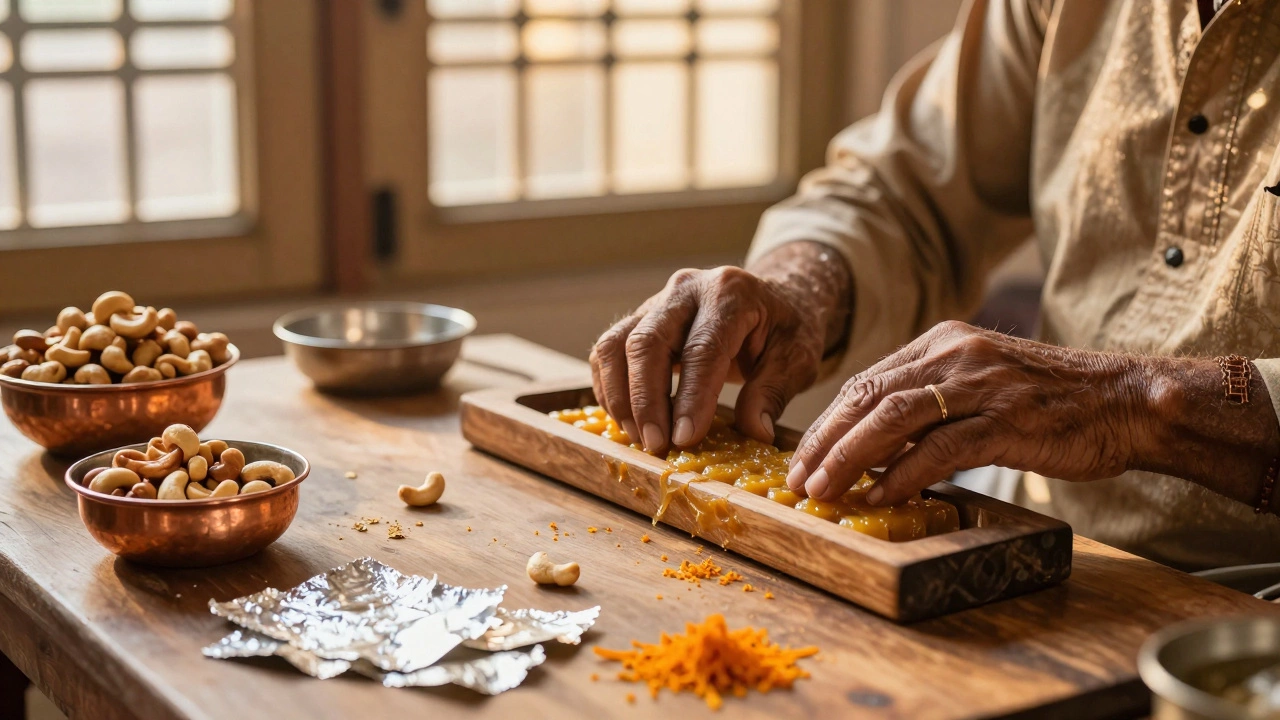
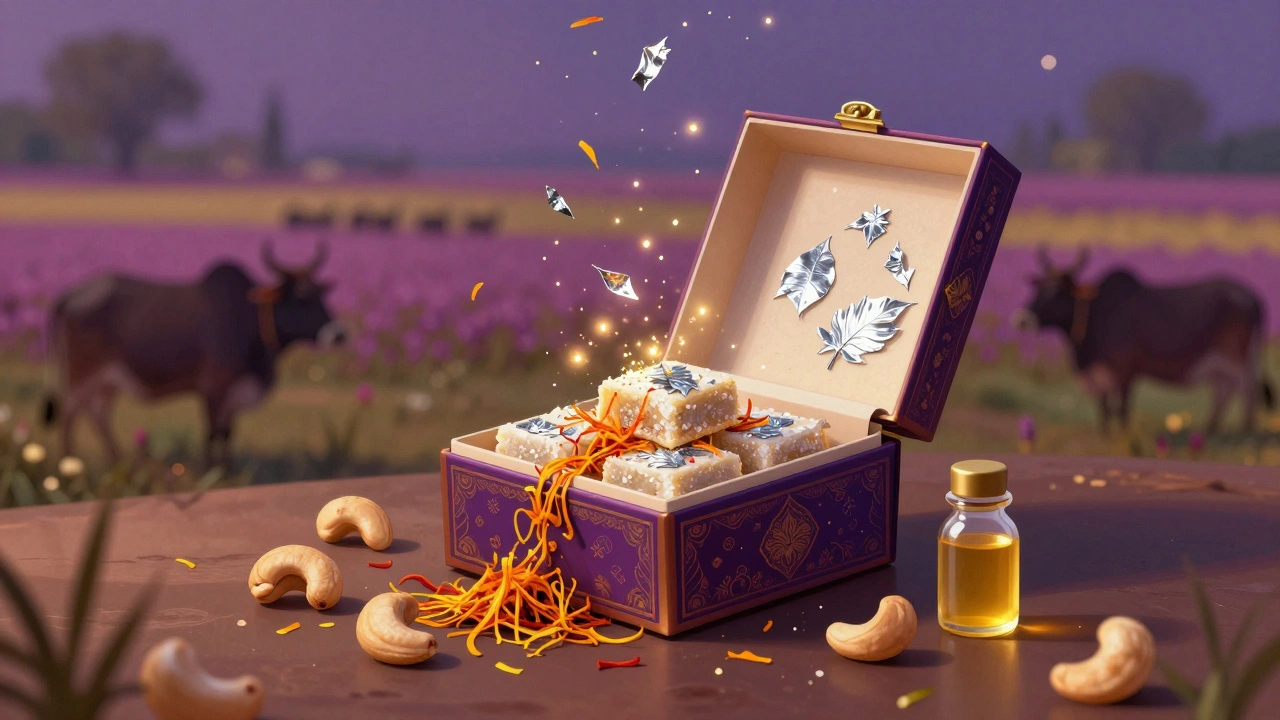
The most expensive Indian sweet you can buy today is a premium version of kaju katli - the kind wrapped in edible silver leaf (vark), infused with Kashmiri saffron, and made with organic, single-origin cashews. These aren’t the ones you find in supermarket boxes. These are made by family-run businesses in Jaipur, Varanasi, or Kolkata that still use copper kadhai, wood-fired stoves, and hand-rolled techniques passed down for generations.
A single 200-gram box of this luxury kaju katli can cost between ₹4,500 and ₹6,000. That’s ₹22,500 to ₹30,000 per kilo. Why? Because the saffron alone can cost ₹100-150 per gram. A box uses 0.3 grams - that’s ₹30-45 just for the spice. The silver leaf? Hand-pounded from pure silver, less than a micron thick. One sheet costs ₹10-15, and each piece gets one. Then there’s the ghee - not the store-bought kind, but clarified butter made from A2 milk from desi cows, slow-churned for 12 hours. One liter of this ghee runs ₹1,800. And you need half a liter for 1.5 kilos of sweets.
Compare that to rasgulla, which sells for ₹180-250 per kilo. Or gulab jamun, at ₹220-300. Even barfi made from milk solids (khoya) rarely crosses ₹800 per kilo. Kaju katli with luxury additives isn’t just a sweet - it’s a luxury good.
Why Not Other Sweets Like Jalebi or Ladoo?
You might think, ‘Why not the elaborate jalebi? Or the giant laddoos made with 200 grams of khoya?’ Those are expensive too - but they’re not rare. Jalebi is made in bulk, fried in oil, soaked in syrup. Anyone with a deep fryer can make it. Laddoos? They’re made from roasted gram flour or coconut, both widely available. Even the famous Motichoor Ladoo, which uses fine semolina pearls, doesn’t require rare ingredients.
The real cost driver isn’t complexity - it’s scarcity. You can grow wheat. You can buy milk. But you can’t grow saffron in large quantities. It takes 150,000 crocus flowers to make one kilo of dried saffron. That’s why Kashmiri saffron is the world’s most expensive spice. And when you use even a pinch of it in a sweet, the price jumps.
The Labor Factor: Handmade vs. Machine-Made
Most sweets today are mass-produced. Machines roll, cut, and package. But the top-tier kaju katli? It’s still shaped by hand. Each piece is rolled between two sheets of parchment paper, pressed with a wooden mold, and cut with a brass blade. One master sweet maker can do 100 pieces in a day. That’s 50 minutes per piece if you count prep, cooking, cooling, and packaging.
Compare that to a factory that produces 5,000 pieces an hour. The handmade version costs 100 times more - not because the ingredients are 100 times better, but because human time is finite. In places like Mathura or Murshidabad, you’ll find elderly artisans who’ve spent 60 years perfecting the texture. Their skills can’t be replicated by robots. That’s why these sweets are sold as heirlooms - not snacks.
Where to Find the Real Deal
If you’re looking for authentic, high-end kaju katli, don’t go to big-brand sweet shops. Look for names like:
- Kesar Da Dhaba (Jaipur) - uses saffron from Pampore, cashews from Karnataka
- Banwari Lal & Sons (Varanasi) - makes sweets with cow ghee from Vrindavan
- Shree Balaji Sweets (Kolkata) - hand-pressed silver leaf, no preservatives
These shops don’t advertise online. You find them through word of mouth, wedding referrals, or temple festivals. Some even require advance orders - weeks in advance. That’s how exclusive they are.
Is It Worth It?
Is a ₹6,000 box of kaju katli worth it? If you’re buying it to impress at a corporate gift exchange or as a wedding favor, yes. It’s a statement. It’s tradition packaged in gold foil. But if you’re buying it to eat every Sunday? No. You’re paying for craftsmanship, not taste.
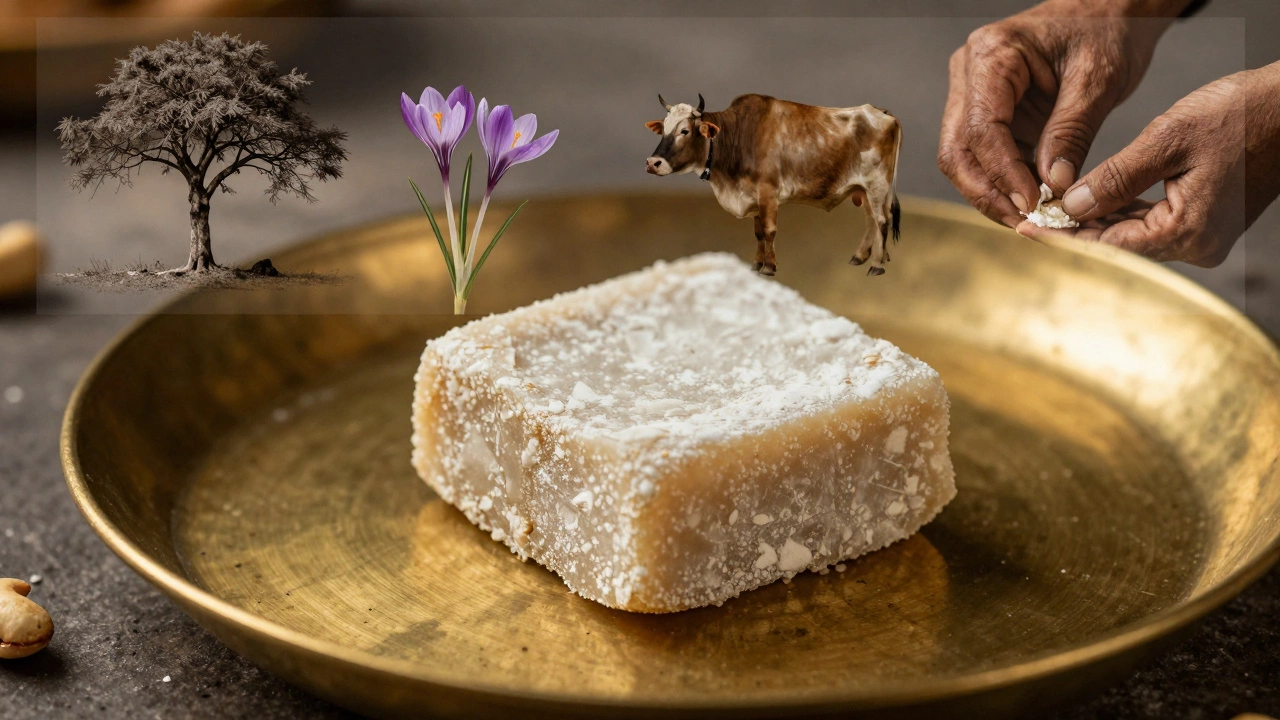
For everyday indulgence, a ₹300 box of regular kaju katli tastes just as good. The difference isn’t in flavor - it’s in story. The expensive version carries the weight of generations. The hands that shaped it. The fields where the saffron bloomed. The cows that gave the milk. That’s what you’re really buying.
What About Other Expensive Indian Sweets?
Kaju katli isn’t the only luxury sweet. Here are a few others that come close:
- Peda with Edible Gold - made in Mathura, using pure milk solids and 24-karat gold leaf. Costs ₹3,500-5,000 per kilo.
- Soan Papdi with Pistachio and Saffron - layered with crushed nuts, hand-pulled. ₹2,800-4,200 per kilo.
- Gulab Jamun with Rosewater and Cardamom Essence - made with khoya aged for 30 days. ₹1,800-2,500 per kilo.
But none of them beat kaju katli in terms of ingredient density. Cashews are heavy. Saffron is rare. Silver is precious. And together, they create a sweet that’s as much art as it is dessert.
How to Spot a Fake Luxury Sweet
Not every expensive sweet is real. Many shops sell kaju katli made with refined flour, artificial colors, and cheap oil - then slap on silver leaf to make it look premium. Here’s how to tell:
- Texture: Real kaju katli melts in your mouth. Fake ones are chewy or gritty.
- Silver: Genuine vark is paper-thin and dissolves. Fake silver is thick, shiny, and doesn’t melt.
- Saffron: Real saffron gives a deep orange hue and a floral aroma. Fake uses coloring agents - it smells like chemicals.
- Price per gram: If it’s under ₹20 per gram, it’s not using real cashews or saffron.
Ask the shopkeeper where the cashews come from. If they hesitate or say ‘imported,’ ask which country. Real sellers know - Karnataka, Andhra, or Vietnam. Fake ones just say ‘best quality.’
Final Thought: Tradition Over Trend
The costliest Indian sweet isn’t expensive because it’s trendy. It’s expensive because it’s a relic. In a world of instant food and mass production, these sweets are a quiet rebellion. They ask you to slow down. To value time. To respect ingredients. To honor hands that have shaped them for centuries.
So next time you see a golden box of kaju katli, don’t just see the price tag. See the saffron fields of Kashmir. The cowherds of Vrindavan. The hands of an old man rolling paste at 5 a.m. That’s what you’re paying for.
Is kaju katli really the most expensive Indian sweet?
Yes, premium kaju katli with edible silver leaf and Kashmiri saffron is currently the most expensive Indian sweet, often priced between ₹4,500 and ₹6,000 per 200 grams. Its cost comes from high-quality cashews, rare saffron, hand-applied silver, and labor-intensive preparation. Other sweets like peda with gold leaf or soan papdi with pistachios are close, but none match the ingredient density and labor cost of top-tier kaju katli.
Why is saffron so expensive in Indian sweets?
Saffron comes from the stigma of the crocus flower, and it takes about 150,000 flowers to produce just one kilogram of dried saffron. The harvesting is done entirely by hand, and the flowers bloom for only a few weeks each year. Kashmiri saffron is the most prized because of its deep color and strong aroma. In sweets, even a tiny amount - 0.3 grams - adds ₹30-45 to the cost, making it one of the biggest price drivers in luxury mithai.
Can I make expensive Indian sweets at home?
You can, but it won’t be the same. Making authentic kaju katli at home requires high-quality cashews, real ghee, and saffron - all expensive. You’ll also need time and patience. The texture is delicate - too much heat and it turns grainy. Most home cooks end up buying the luxury version because the effort doesn’t match the result unless you’ve practiced for years. Still, trying it once is worth it to understand the difference.
Are there cheaper alternatives to luxury kaju katli?
Yes. Regular kaju katli made with standard cashews and no silver or saffron costs ₹250-350 per 200 grams. You can also try badam barfi (almond fudge), which uses cheaper nuts and still has a rich taste. Or go for khoya-based sweets like gulab jamun or peda - they’re flavorful and far more affordable. The luxury version is for gifting or special occasions, not daily snacking.
Do Indian sweets get more expensive every year?
Yes. The cost of cashews, saffron, and ghee has risen steadily over the last decade. Cashew prices have gone up 40% since 2020 due to climate changes in Vietnam and India’s reduced cultivation. Saffron harvests in Kashmir have dropped 25% because of erratic rainfall. And organic ghee is now a niche product. As a result, luxury sweets have become more of a luxury - not just in price, but in availability.
