Why Is Poha Added to Dosa Batter? The Science Behind the Crispy Texture
 Feb, 10 2026
Dosa Poha Calculator
Calculate the ideal poha amount for your dosa batter based on the article's science. For best results, use 1/3 cup poha per 2 cups rice.
Ever wondered why so many South Indian households add poha to their dosa batter? It’s not just a random trick-it’s a centuries-old technique that changes everything about the final result. If you’ve ever made dosa and ended up with a soggy, rubbery disc instead of that crisp, golden-edged masterpiece, chances are you’re missing this key ingredient.
What Exactly Is Poha?
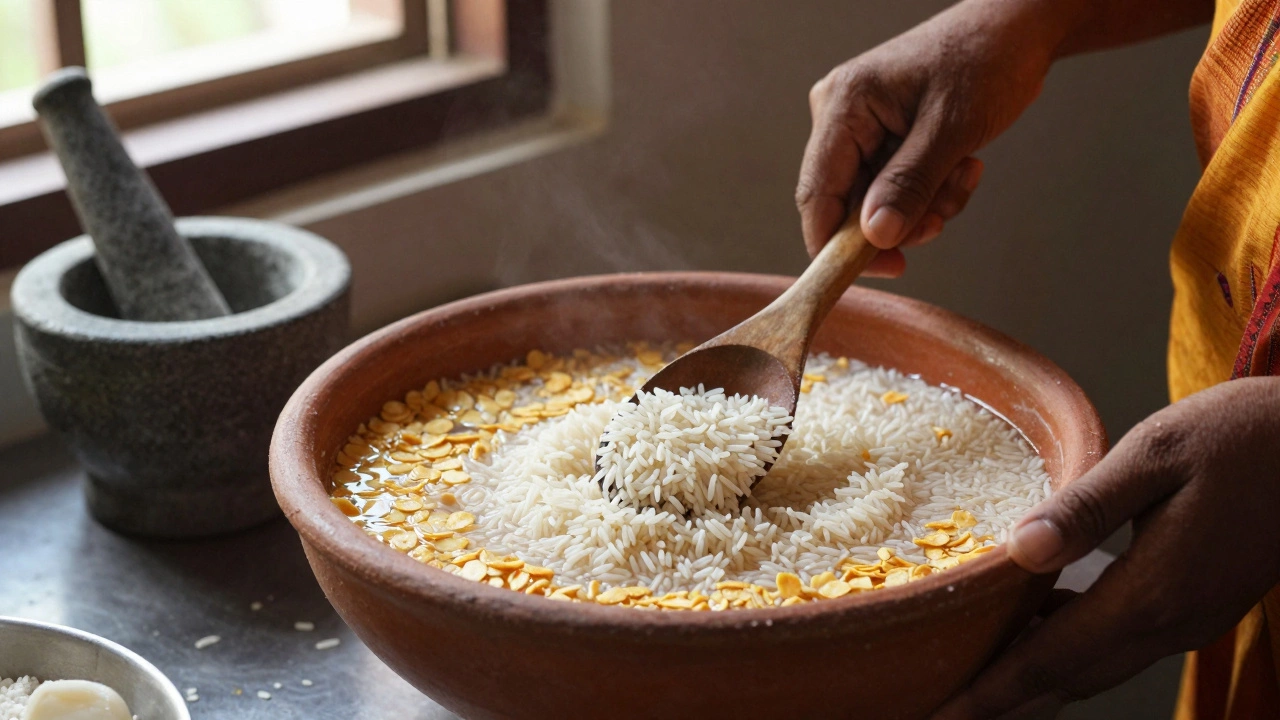
Poha, also called flattened rice, is made by parboiling rice, then flattening it into thin flakes. It’s commonly used in Indian breakfasts like poha upma or as a quick snack. But in dosa batter, it’s not there for flavor-it’s there for function. When soaked and blended into the batter, poha breaks down into a fine, starchy slurry that acts as a natural texture enhancer.
Unlike rice or urad dal, which ferment and create air pockets, poha doesn’t ferment much. Instead, it absorbs water and swells, releasing starch that helps bind the batter and gives it a smoother, more cohesive texture. This is why dosas made with poha spread more easily on the griddle and hold their shape without tearing.
The Fermentation Boost
Traditional dosa batter relies on a long fermentation process-usually 8 to 12 hours-where natural bacteria and yeast break down starches into sugars and release carbon dioxide. This creates the bubbles that make dosa light and airy. But fermentation is tricky. If the temperature is too low, the batter won’t rise. If it’s too hot, it can turn sour too fast.
Adding poha helps stabilize this process. The starch from poha acts like a scaffold, giving the gas bubbles a structure to cling to. This means even if your kitchen is chilly or your fermentation time is shorter than ideal, the dosa still rises decently. You get a better rise, more volume, and a lighter texture without needing perfect conditions.
Crispiness: The Real Secret
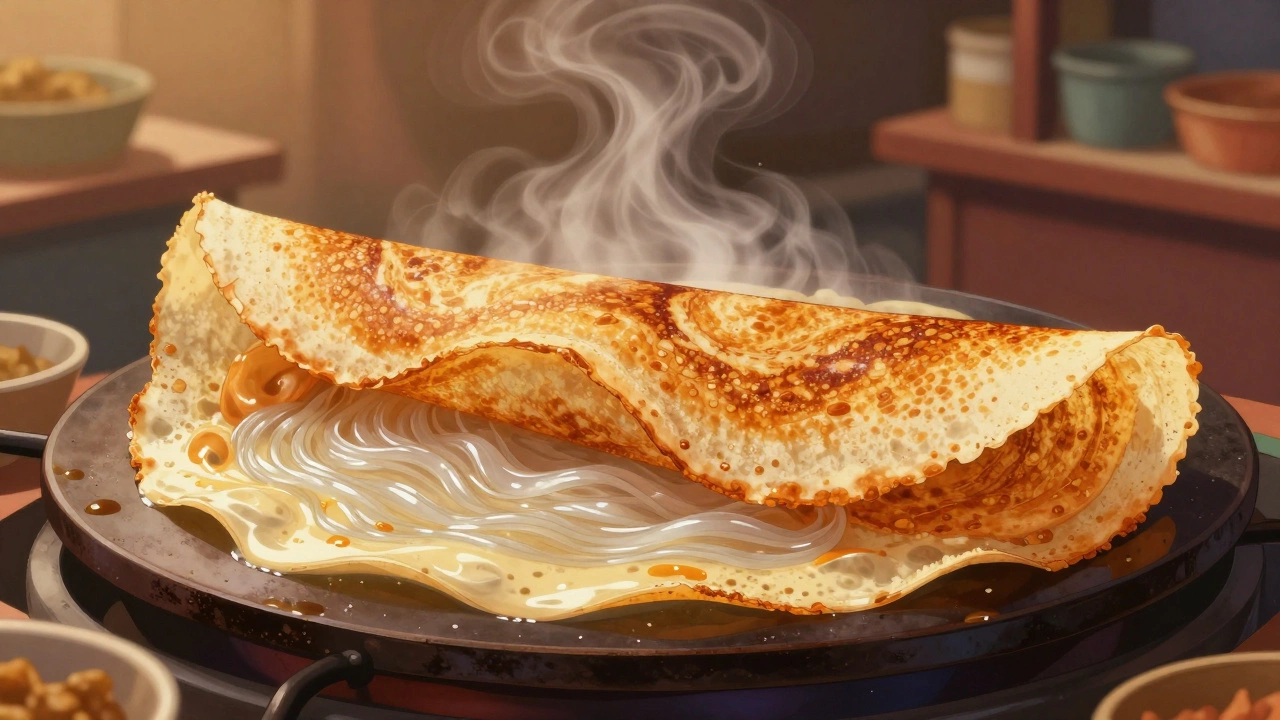
The biggest reason cooks add poha is for crispness. A dosa without poha often ends up chewy, especially in the center. Poha changes that. As the dosa cooks, the starch from the poha gelatinizes quickly under heat, forming a brittle outer layer. This layer doesn’t soften easily, even when you flip the dosa or add fillings like potato masala.
Think of it like the difference between a regular pancake and a crepe. One is soft and flexible; the other snaps when you break it. Poha turns your dosa into that snap-worthy version. Many professional street vendors in Chennai, Bangalore, and Mumbai swear by this method. Some even use a 1:4 ratio of poha to rice in their batter.
How Much Poha Should You Use?
There’s no single rule, but most home cooks use between 1/4 to 1/3 cup of poha for every 2 cups of rice. Too little, and you won’t notice a difference. Too much, and the dosa can become dense or grainy.
Here’s a simple ratio that works reliably:
- 2 cups raw rice (idli rice or parboiled rice)
- 3/4 cup urad dal (split black gram)
- 1/3 cup flattened rice (poha)
- 1 tsp salt
- Water as needed
Soak the rice and poha together for 4 hours. Soak the urad dal separately for the same time. Grind them separately-rice and poha first, then the dal-until smooth. Mix, ferment overnight, and you’ll notice the batter is slightly thicker and shinier than usual. That’s the poha at work.
Why Not Just Use More Urad Dal?
Some people think adding more urad dal will make the batter fluffier. But urad dal adds protein, not starch. Too much can make the batter sticky, heavy, and give it a strong beany smell. Poha, on the other hand, adds starch without altering flavor. It doesn’t overpower the subtle tang of fermentation.
Also, urad dal needs more time to grind into a smooth paste. Poha blends quickly, making the whole process faster. For busy cooks, that’s a big win.
What About Idli or Other Fermented Batters?
You might wonder if poha works in idli batter too. The answer is yes-but it’s not always necessary. Idlis rely more on steam and volume, not crispness. Adding poha to idli batter can make them slightly denser, which some people prefer. But for dosa, where texture is everything, poha is non-negotiable.
Some modern recipes skip poha entirely, using rice flour or cornstarch as substitutes. But these don’t behave the same way. Rice flour adds dryness. Cornstarch can make the dosa brittle in an unpleasant way. Poha’s natural structure-part starch, part fiber-gives the perfect balance.
The Real Test: Compare Side by Side
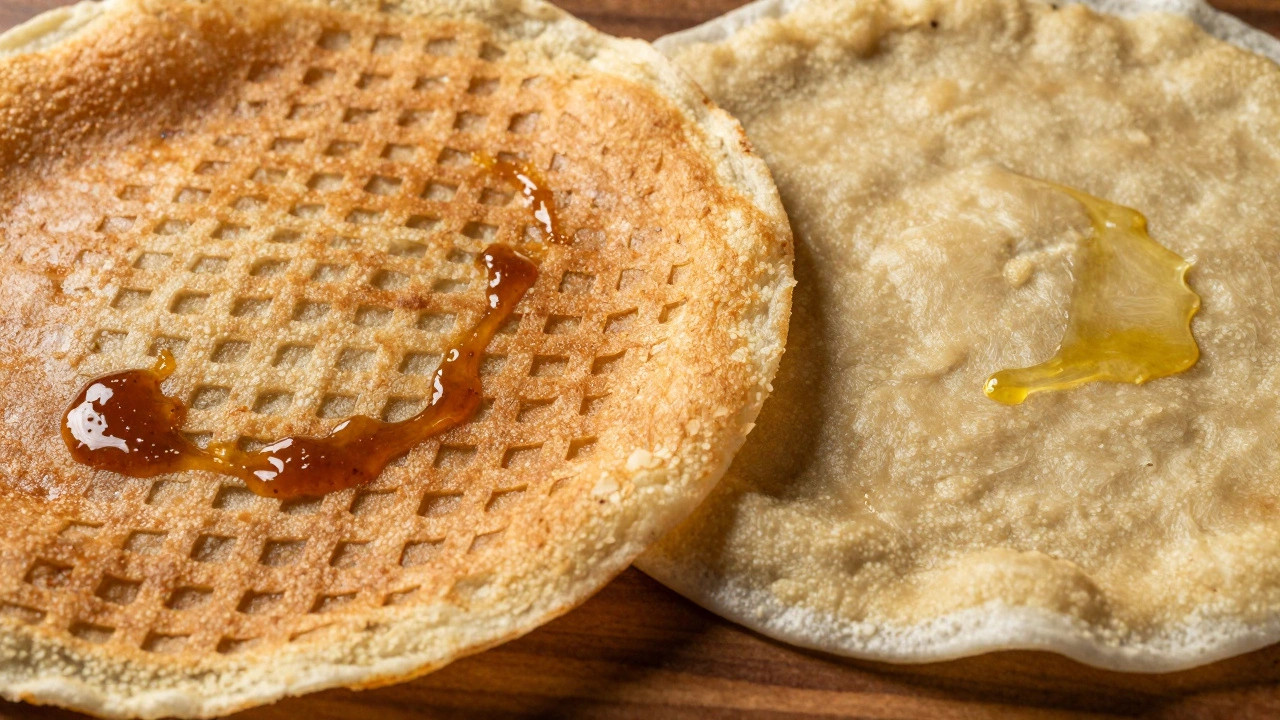
Try this: make two batches of dosa. One with poha, one without. Use the same rice, same dal, same fermentation time. Cook them on the same griddle. The difference is shocking.
The one with poha will:
- Spread thinner and more evenly
- Crisp up faster
- Stay crispy even after adding chutney or filling
- Have a slightly golden hue
The one without will:
- Stick to the pan more
- Be softer in the middle
- Turn rubbery when cooled
- Need more oil to prevent sticking
Once you taste the difference, you won’t go back.
Common Mistakes to Avoid
- Using roasted poha: Roasted poha (like the kind used in snacks) won’t dissolve properly. Always use raw, unroasted flattened rice.
- Soaking for too long: More than 6 hours and poha can turn mushy, making the batter watery.
- Grinding poha with dal: Always grind rice and poha together first, then add the dal separately. Mixing them too early can affect fermentation.
- Skipping fermentation: Poha helps, but it doesn’t replace the need for fermentation. Don’t try to shortcut this step.
Final Thoughts
Poha isn’t magic. But it’s science. It’s the quiet ingredient that turns an okay dosa into a great one. It’s the reason street vendors in South India can make hundreds of dosas a day without a single one turning out soggy. It’s the reason your homemade dosa finally tastes like the ones you remember from your childhood.
If you’ve been struggling with dosa texture, this is the fix you’ve been looking for. No fancy equipment. No expensive ingredients. Just a handful of flattened rice-and the willingness to try something simple that works.
