How Long to Soak Urad Dal for Vada: The Perfect Timing Guide
 Jun, 2 2026
Urad Dal Soaking Time Calculator
You wake up craving that perfect vada-crispy on the outside, soft and fluffy like a cloud on the inside. You grind the batter, fry it, and... it turns out hard as a rock or dissolves in the oil. Sound familiar? The culprit is almost always one thing: soaking time. Getting the soak right for urad dal (black gram) isn't just about following a clock; it's about understanding how the lentil changes texture and chemistry before it ever hits the grinder.
If you've been making dosa batter or idli mix, you know that fermentation does a lot of the heavy lifting. But for vada, especially Medu Vada, we usually skip the long overnight ferment. We rely on the physical separation of water and starch during grinding. That process only works if the dal is soaked correctly. Too short, and your mixer burns out. Too long, and the batter becomes acidic and dense. Let’s break down exactly how much time you need, depending on your kitchen setup and the type of dal you bought.
The Golden Rule: 3 to 4 Hours
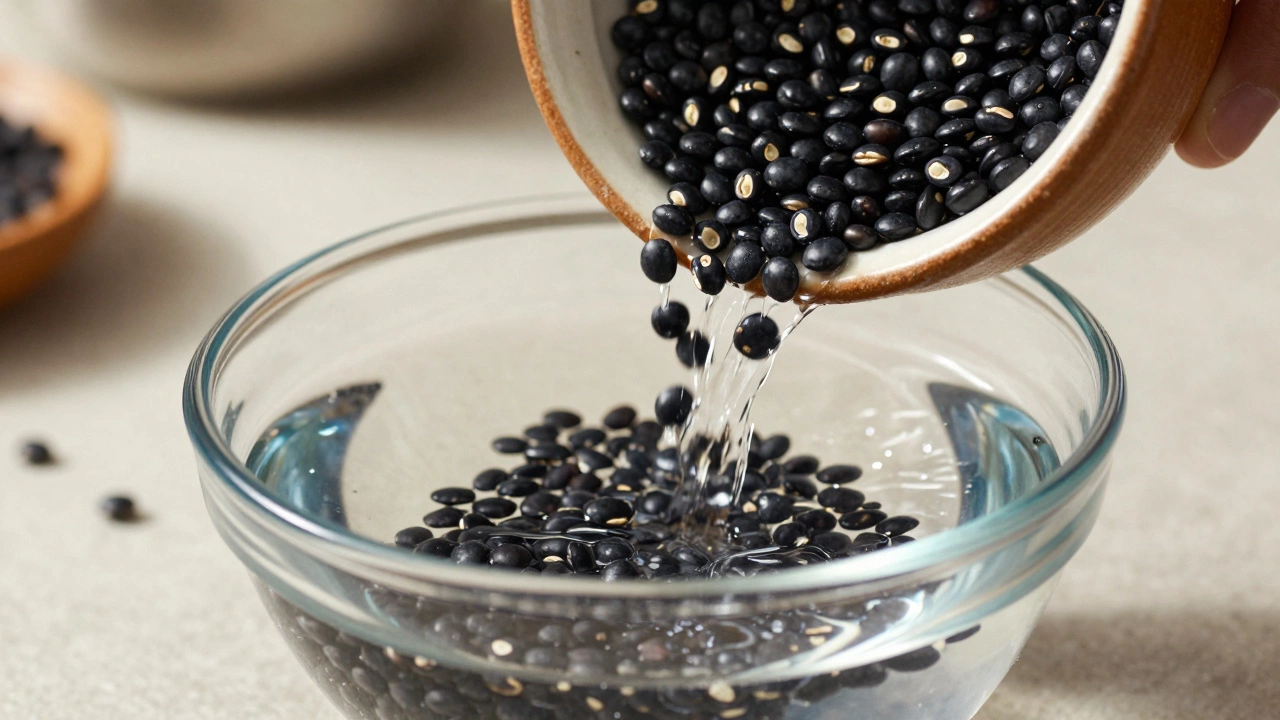
For most home cooks using standard split black gram skins-on (whole urad dal), the sweet spot is between three and four hours. This timeframe allows the hard outer skin to soften enough to be ground into a smooth paste without turning mushy. It also gives the inner cotyledon (the white part) enough time to absorb water so it breaks down easily.
Why not two hours? At two hours, the dal is still quite firm. When you put this in your wet grinder or blender, the friction generates heat. Hot batter doesn't trap air bubbles well. Air bubbles are what make your vada light. If the dal is under-soaked, you end up with a gritty, heavy vada that feels like sandpaper in your mouth.
Why not six hours? Unless you live in a very cold climate, six hours at room temperature starts to activate natural enzymes that can turn the batter slightly sour before you even add salt. While a little tanginess is nice in idli, it can overpower the delicate flavor of a fresh vada. Plus, over-soaked dal releases too much starch, creating a sticky batter that clumps together instead of forming those beautiful lacy rings when dropped into hot oil.
Temperature Matters More Than You Think
Time is relative when it comes to soaking. Water temperature dictates how fast the dal hydrates. Here is how you should adjust your timer based on your environment:
- Hot Weather (Above 25°C / 77°F): Stick to the lower end. Three hours is plenty. In fact, if your kitchen is humid and warm, check the dal after two and a half hours. Warm water speeds up hydration significantly.
- Moderate Weather (18-25°C / 64-77°F): This is the standard zone. Aim for three to four hours. Use room temperature water.
- Cold Weather (Below 18°C / 64°F): You might need up to five or six hours. Cold water slows down the absorption process. If you’re in a chilly apartment, consider using lukewarm water to cut the time back to four hours.
I’ve tested this extensively in Sydney kitchens where winter mornings can be brisk. Using cold tap water in July meant my dal was still hard in the center after three hours. Switching to tepid water fixed the issue immediately. Always touch the dal-it should feel soft but retain its shape. It shouldn’t squish like mashed potato, nor should it bounce back like a rubber ball.
Skin-On vs. Skin-Off: A Critical Distinction
Not all urad dal is created equal. The type of dal you buy drastically changes your soaking strategy. Most traditional vada recipes call for whole black gram with the skin intact. However, some modern recipes or specific regional variations use split skinned urad dal (also known as chana dal style or white urad dal).
| Dal Type | Appearance | Soaking Time | Batter Texture Result |
|---|---|---|---|
| Whole Black Gram (Skin-On) | Black outer layer, white inside | 3 - 4 Hours | Fluffy, holds shape, traditional taste |
| Split Skinned (White) | Pure white, no skin | 1.5 - 2 Hours | Very smooth, lighter color, softer bite |
| Mixed (50/50 Blend) | Half black, half white | 2.5 - 3 Hours | Balanced texture, good crunch |
If you accidentally use skin-off dal and soak it for four hours, you will have a disaster. Skin-less dal absorbs water rapidly. After four hours, it will have disintegrated into a sludge. Grind it, and you’ll get a liquid paste that won’t hold its form in the oil. Always check the package label. If it says "split" or "skinned," reduce your soaking time by nearly half.
The Finger Test: How to Know It’s Ready
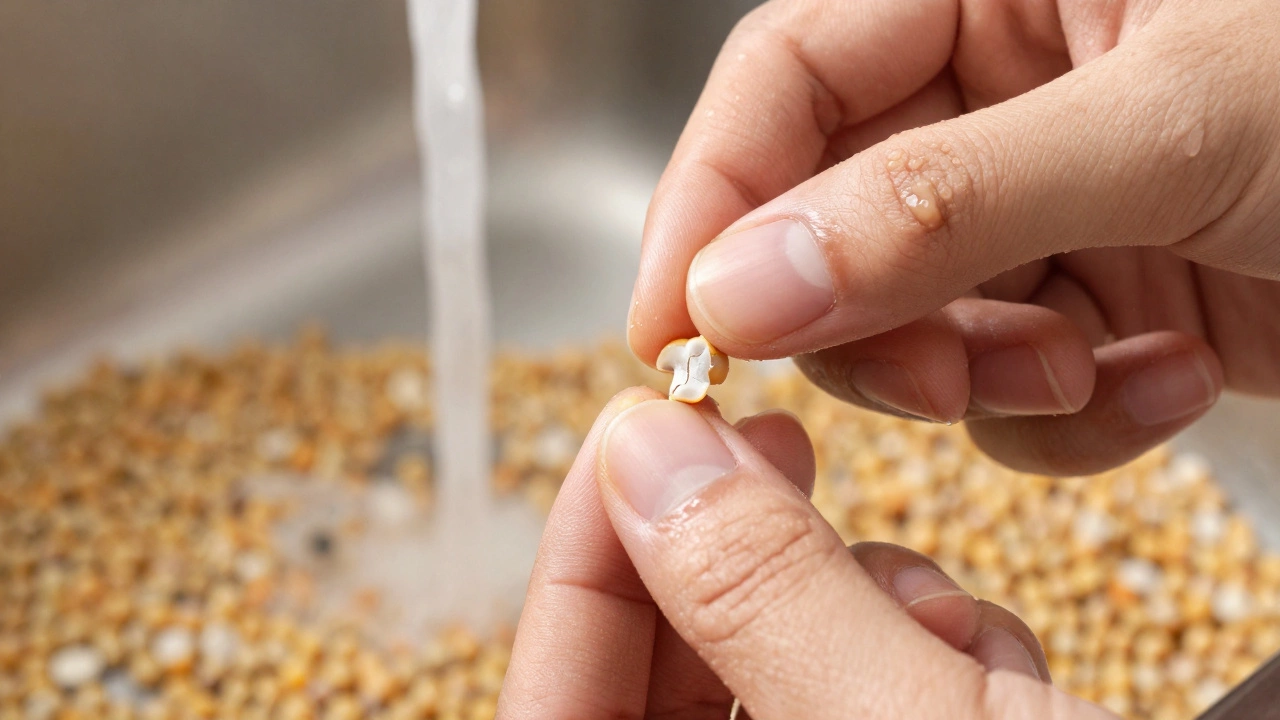
Clocks lie. Your fingers don’t. Before you drain the water, perform the finger test. Take a single grain of dal between your thumb and forefinger. Squeeze it gently.
If the grain cracks open cleanly and the inside is completely white and soft, it’s ready. If there’s any translucent or hard center, give it another thirty minutes. If the grain squishes flat and loses its structure entirely, it’s over-soaked. Drain it immediately and rinse it once with cold water to stop the hydration process.
This tactile check is more reliable than any timer because dal quality varies. Older stock takes longer to soak than fresh harvests. Some brands mill the dal finer than others, affecting surface area and absorption rates. Trust your hands.
Grinding Technique: Where Soaking Pays Off
Once your dal is perfectly soaked, the next step is grinding. This is where many people mess up even after a perfect soak. The goal is to create a thick, creamy batter that separates slightly from the water. This separation is key. The solid parts provide structure; the free water creates steam pockets during frying, which puff up the vada.
Add ice-cold water while grinding. Why ice? Because friction heats up the blades. Heat kills the gluten-like proteins in the dal that help trap air. By keeping the batter cold, you maintain its elasticity. Add water in small increments-about a quarter cup at a time. Pulse the grinder rather than running it continuously. This helps incorporate air bubbles manually.
Check the consistency by dipping a spoon into the batter. Lift it up. The batter should fall off the spoon in thick ribbons, not a stream. It should look like thick whipped cream, not pancake batter. If it’s too thin, your vada will spread out and become flat chips. If it’s too thick, it won’t expand and will stay dense.

Common Mistakes to Avoid
Even with perfect soaking, small errors can ruin the batch. Here are the top pitfalls I see home cooks make:
- Adding Salt Too Early: Salt draws out moisture through osmosis. If you add salt before grinding or immediately after, it can make the batter watery and prevent proper aeration. Wait until just before frying to season your batter.
- Using Tap Water Directly: Hard water can affect the texture. Filtered or bottled water yields a cleaner taste and more predictable results. Also, ensure the water is cold, not warm.
- Ignoring the Rest Period: After grinding, let the batter rest for 15-20 minutes. This allows the flour particles to fully hydrate and the air bubbles to stabilize. Skipping this step leads to uneven cooking.
- Frying in Cold Oil: Your oil needs to be medium-hot (around 170°C / 340°F). Test by dropping a tiny bit of batter. If it sinks, the oil is too cold. If it burns instantly, it’s too hot. Proper heat seals the outside quickly, trapping the steam inside.
Troubleshooting Your Vada
Did your vada turn out wrong? Don’t toss it. Diagnose the issue to fix it next time.
Hard and Chewy: Likely under-soaked dal or batter that was too thick. Next time, extend soaking by 30 minutes and add a splash more water during grinding.
Dissolved in Oil: Batter was too thin or dal was over-soaked. Reduce soaking time and add less water when grinding. Ensure you’re using whole skin-on dal unless specified otherwise.
Dense and Heavy: Not enough air incorporated during grinding, or the oil wasn’t hot enough. Pulse the grinder more often and check your oil temperature with a thermometer if possible.
Bitter Taste: The skins weren’t rinsed properly after soaking, or the dal was old and rancid. Always rinse the soaked dal thoroughly under running water to remove excess starch and any impurities. Store your dry dal in an airtight container away from sunlight.
Pro Tips for the Best Results
To elevate your vada game, try these professional tricks used in South Indian restaurants:
- Chia Seeds or Fenugreek: Adding a teaspoon of fenugreek seeds (methi) to the soaking dal adds a subtle bitterness that balances the richness. Soak them together. Note: Fenugreek gets bitter if over-soaked, so stick to the 3-hour mark.
- Mustard Seeds: Cracking a pinch of mustard seeds into the batter right before frying adds aroma and visual appeal.
- Green Chilies: Finely chop green chilies and fold them in gently after grinding. Do not blend them into the batter, as this releases too much water and makes the batter runny.
- Coriander Leaves: Fresh coriander adds freshness. Again, fold in gently at the end.
Remember, the beauty of vada lies in its simplicity. It’s just dal, water, and spice. Master the soak, master the grind, and you’ll never need a complicated recipe again.
Can I soak urad dal overnight for vada?
Generally, no. Overnight soaking (8+ hours) at room temperature causes the dal to ferment and become sour. For vada, which relies on fresh, non-fermented batter, this results in a dense, acidic texture. If you must prep ahead, soak in the refrigerator for up to 6 hours, but bring it to room temperature before grinding.
What happens if I don't soak urad dal enough?
Under-soaked dal requires more water to grind, leading to a runny batter. It also generates excessive heat in the grinder, which destroys the airy texture. The resulting vada will be hard, gritty, and may not cook through properly, leaving a raw center.
Should I rinse urad dal after soaking?
Yes, always rinse soaked urad dal thoroughly under cold running water. This removes excess starch that can make the batter sticky and ensures any dust or impurities are washed away. It also helps cool the dal down if it was soaked in warm water.
Can I use a pressure cooker to speed up soaking?
No, do not cook the dal. Pressure cooking partially cooks the starch, changing the chemical structure. This prevents the batter from aerating properly. Vada batter requires raw, hydrated dal to achieve its signature fluffy texture. Stick to cold or lukewarm water soaking.
How long can I keep the ground vada batter?
Freshly ground vada batter should be used within 2-3 hours. Unlike idli/dosa batter, it does not ferment well and loses its airiness quickly. If you refrigerate it, the batter tightens up and becomes harder to work with. For best results, grind and fry immediately.
Is it better to use a wet grinder or a blender?
A traditional stone wet grinder produces the fluffiest batter because it generates less heat and incorporates more air. However, a high-speed blender works fine if you grind in short pulses and add ice cubes to keep the temperature low. The key is avoiding heat buildup, regardless of the tool.
