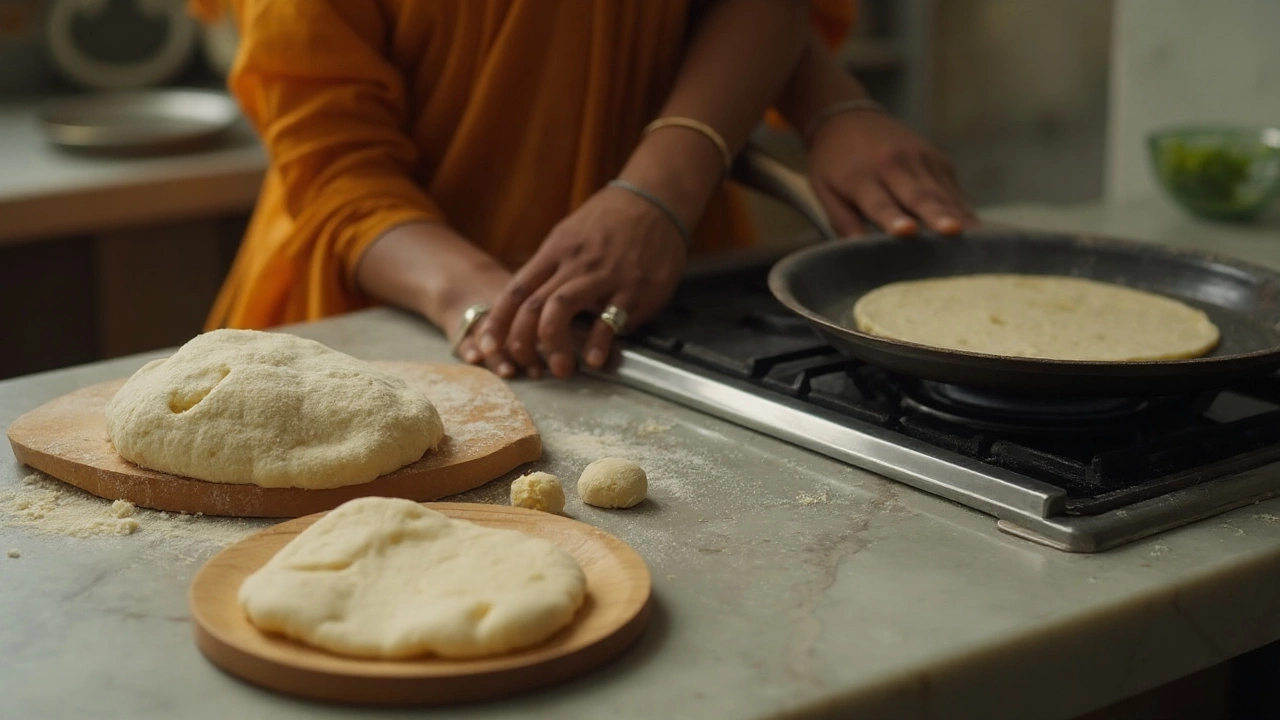
Chapati Dough: How to Make Soft, Fluffy Indian Flatbreads Every Time
When you make chapati dough, a simple blend of whole wheat flour, water, and a pinch of salt used to make everyday Indian flatbreads. Also known as roti dough, it’s the foundation of meals across India—from breakfast to dinner, served with dal, curry, or just ghee. It’s not just flour and water. Get the balance wrong, and you end up with a tough, dry roti that cracks when you fold it. Get it right, and it puffs up like a cloud, soft enough to wrap around spicy sabzi without tearing.
The secret isn’t in fancy tools or exotic ingredients. It’s in the hydration level, how much water you mix into the flour to activate gluten without making the dough sticky. Most people use too little water, thinking dry dough is easier to roll. But dry dough = hard roti. The right amount—usually about 60% water to flour by weight—makes the dough feel like your earlobe: soft, pliable, just a little tacky. Then you let it rest. Not five minutes. At least 30. That’s when the flour fully absorbs the water, the gluten relaxes, and the dough becomes forgiving. Skip this, and your rotis will shrink back when you roll them out.
And then there’s the cooking method, how you apply direct heat to make the dough puff and develop those golden spots. A tawa isn’t optional—it’s essential. Too hot, and the outside burns before the inside cooks. Too cool, and the roti just dries out. You need medium-high heat, and you flip it once. Let it puff naturally. Don’t press it down. That’s how you get that airy, layered texture you see in street-side rotis. It’s not magic. It’s science. And it’s repeatable.
What you’ll find in the posts below isn’t just recipes. It’s the real talk from Indian kitchens—why your roti turns hard after cooking, how much water to use, whether you should add oil or milk, and what to do if your dough won’t stretch. You’ll see how chapati dough connects to dosa batter, a fermented mix of rice and urad dal used for crispy pancakes, and how both rely on the same principles of hydration and resting. You’ll learn why some cooks swear by whole wheat only, while others mix in a bit of all-purpose flour. And you’ll find out why the best rotis aren’t made with the most expensive flour, but with the most patient hands.