Indian Breakfast: Real Morning Meals from Streets to Homes
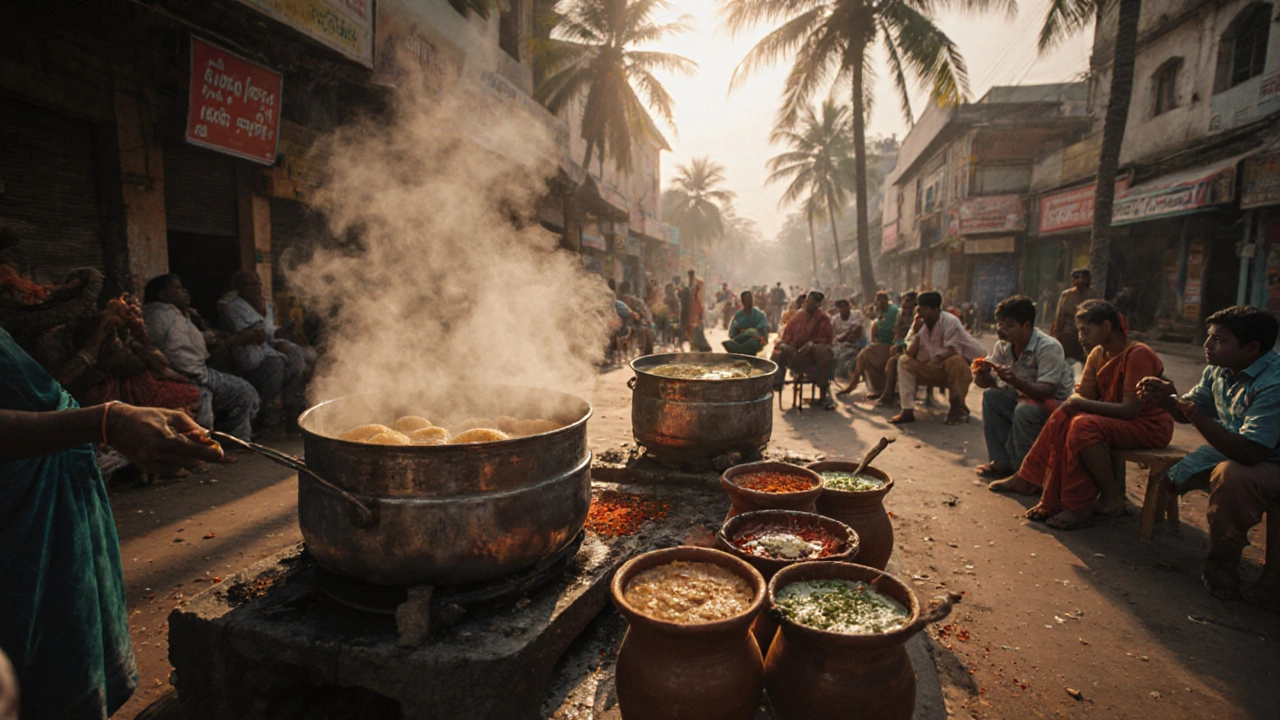
When people think of Indian breakfast, a daily meal tradition across India that blends regional flavors, quick prep, and deep cultural roots. Also known as morning Indian cuisine, it’s not just food—it’s a ritual that starts with steam, spice, and street-side vendors before the sun is fully up. This isn’t toast and coffee. It’s hot, crispy dosa, a fermented rice and urad dal batter cooked thin and crispy, often served with coconut chutney and sambar straight off the griddle. Or roti, a soft, round flatbread made from whole wheat dough, rolled by hand and cooked on a dry skillet until it puffs up, eaten with butter or leftover dal. These aren’t fancy dishes. They’re the kind your aunt makes before work, or the guy on the corner sells for 20 rupees while you wait for the bus.
What makes Indian breakfast different? It’s not about sitting down with a newspaper. It’s about speed, flavor, and texture. You eat chutney, a spicy or tangy condiment made from fresh herbs, tamarind, or mango, served alongside everything from idli to paratha cold to cut through the richness, or warm if it’s been cooked down with onions and spices. You don’t ask if it’s healthy—you eat it because it sticks to your ribs and wakes you up. The urad dal to rice ratio, the exact mix of lentils and rice used to ferment dosa and idli batter matters more than you think. Too much dal, and it’s gummy. Too little, and it won’t rise. Same with baking soda, a leavening agent sometimes added to dosa batter to boost fluffiness without full fermentation. A pinch can save a bad batch. A tablespoon ruins it.
And it’s not just South India. In Delhi, you’ll find chole bhature, fried bread served with spicy chickpea curry, a breakfast staple that takes hours to make but only minutes to eat. In Maharashtra, it’s poha, flattened rice cooked with mustard seeds, curry leaves, and peanuts. In Punjab, it’s paratha with butter and pickles. No single dish rules the country—but every region has one that feels like home. You’ll find tips here on how to get your roti soft, why your dosa batter won’t ferment, and whether chutney should be warm or cold. No fluff. Just what works.