Roti Making Tips: Soft, Fluffy Roti Every Time with Indian Kitchen Secrets
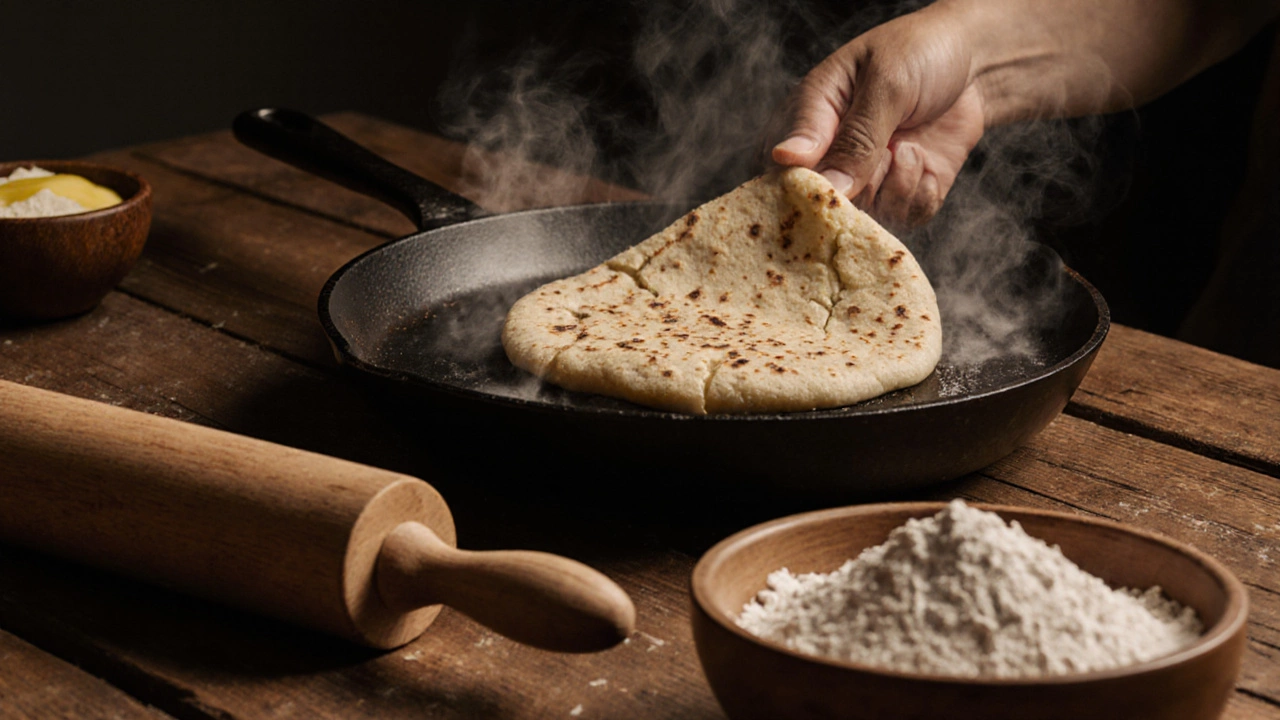
When you make roti, a traditional Indian flatbread made from whole wheat flour, water, and salt. Also known as chapati, it's the daily bread in millions of Indian homes—not just food, but a ritual tied to family, heat, and timing. If your roti turns out hard, dry, or tough, it’s not your fault. It’s usually one of four things: too little water, wrong heat, bad resting time, or skipping the right technique after cooking.
Good roti isn’t about fancy tools or expert hands. It’s about dough hydration, the exact amount of water mixed into the flour to create the right elasticity. Too little, and the roti cracks. Too much, and it sticks to everything. The sweet spot? Just enough to make the dough feel like your earlobe—soft, pliable, not sticky. Then there’s heat control, the single most overlooked factor in roti success. A too-hot tawa burns the outside before the inside puffs. A too-cold one turns it into a flat, rubbery disc. You want medium heat—enough to let the steam build inside, making it balloon like a little pillow.
And don’t forget what happens right after cooking. Many people stack hot roti straight into a container. Big mistake. That trapped steam turns soft roti into a soggy mess by dinner time. The real trick? Wrap each one in a clean kitchen towel while still warm. It keeps the moisture in without making them wet. This is how Indian grandmas do it—no plastic, no fancy gadgets, just a towel and patience.
Some think roti is just bread. But it’s more than that. It’s the base for dal, the wrap for aloo sabzi, the spoon that picks up chutney. If your roti breaks or turns hard, the whole meal feels off. That’s why these roti making tips matter—not just for taste, but for how the meal comes together. You don’t need a professional oven or a chef’s knife. You need to understand the dough, respect the heat, and treat the roti like it’s meant to be eaten fresh.
Below, you’ll find real stories and fixes from Indian kitchens—how one cook fixed her roti after years of failure, why adding a pinch of oil to the dough helps, what happens when you skip the resting time, and how humidity changes everything. These aren’t theories. They’re the kind of advice passed down between sisters, mothers, and neighbors over decades. No fluff. No jargon. Just what works.