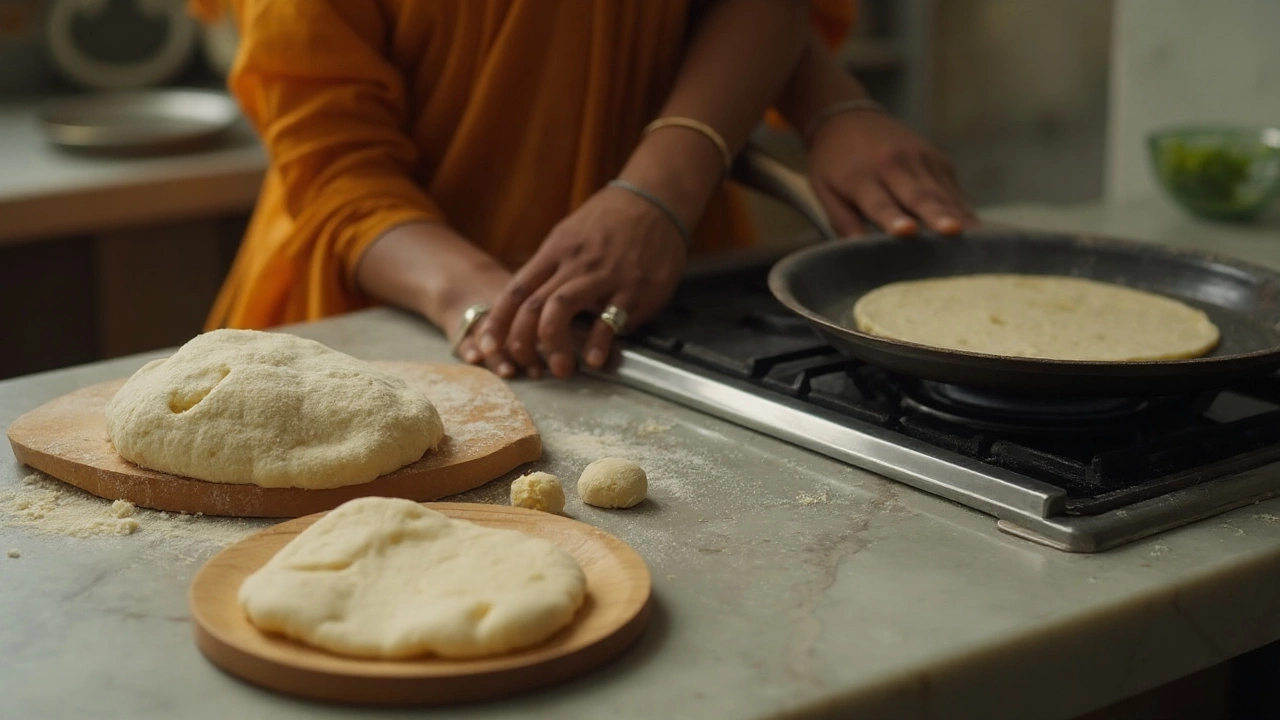
Roti Rolling Tips: How to Roll Soft, Fluffy Indian Flatbreads Every Time
When you roll a roti, a traditional Indian flatbread made from whole wheat flour, water, and a pinch of salt. Also known as chapati, it's the daily bread in millions of Indian homes—simple, but easy to mess up. If your rotis turn hard, brittle, or stick to the rolling pin, it’s not your fault. Most people blame the flour or the tawa, but the real issue? How you roll it.
Rolling a perfect roti isn’t about strength—it’s about technique. The dough needs the right hydration, rest, and pressure. Too dry, and it cracks. Too wet, and it sticks. Too fast, and it tears. Too slow, and it dries out. roti dough, a mixture of atta flour, water, and sometimes a bit of oil or milk should feel like your earlobe—soft, pliable, not sticky. And before you even pick up the roller, let it rest for at least 30 minutes. That’s when the gluten relaxes, making it stretch without snapping.
Here’s what most guides skip: the way you hold the roller matters. Don’t grip it like a hammer. Hold it lightly, like you’re guiding a pencil. Use your whole arm, not just your wrists. Start from the center and roll outward in one smooth motion—no back-and-forth sawing. Rotate the roti a quarter turn after each roll. That’s how you get a perfect circle, not a lopsided mess. And never dust with too much flour. A light dusting on the surface is enough. Extra flour dries out the dough and turns your roti into a cardboard disc.
roti texture, the soft, slightly chewy, airy quality that makes roti enjoyable to eat comes from heat, not magic. Once rolled, cook it on a hot tawa until small bubbles form. Flip it, then press gently with a cloth or spatula. That’s when it puffs up like a balloon—sign you’ve done it right. If it doesn’t puff, your tawa isn’t hot enough, or the dough was under-rested.
And don’t forget the towel. Right after cooking, stack your rotis and cover them with a clean kitchen towel. That traps steam and keeps them soft for hours. Skip this, and even the best-rolled rotis turn hard in minutes. This isn’t just tradition—it’s science. Moisture retention is everything.
These aren’t fancy tricks. They’re the methods used in homes across Uttar Pradesh, Punjab, and Tamil Nadu—not in fancy restaurants, but in kitchens where roti is eaten three times a day. You don’t need a chef’s knife or a fancy oven. Just flour, water, patience, and these tips.
Below, you’ll find real advice from people who make rotis every morning—how to fix dry dough, why your rotis stick, what oil to use (if any), and how to roll them fast without sacrificing softness. No fluff. No theory. Just what works.