Which City Has the Tastiest Food in India? A Street Food Showdown
 Jun, 9 2026
Find Your Perfect Indian Street Food City
Not sure which city's street food scene matches your taste? Answer these quick questions to discover if Mumbai, Delhi, Kolkata, Hyderabad, or Chennai is your culinary match.
Ask ten people which city has the tastiest food in India, and you’ll likely get ten different answers. Some will swear by the spicy chaos of Mumbai’s streets, while others will defend the rich, buttery gravies of Lucknow or the fiery chutneys of Chennai. There is no single winner because "tasty" is subjective. However, if we are talking about iconic **street food** that defines a culture, a few cities stand head and shoulders above the rest.
India is not just one cuisine; it is a collection of hundreds. The food in Kolkata tastes like history and British colonial influence mixed with Bengali refinement. The food in Hyderabad tastes like royalty and ancient spice routes. To find the "best," you have to understand what each city brings to the table. Let’s walk through the heavy hitters and see which flavor profile wins your vote.
Mumbai: The King of Speed and Spice
If street food had a capital, it would be Mumbai. This city never sleeps, and neither does its food scene. The food here is designed for people on the move-commuters rushing to catch local trains, office workers grabbing lunch, and tourists exploring Marine Drive at midnight. The key characteristic of Mumbai street food is intensity. It is salty, spicy, tangy, and messy, all at once.
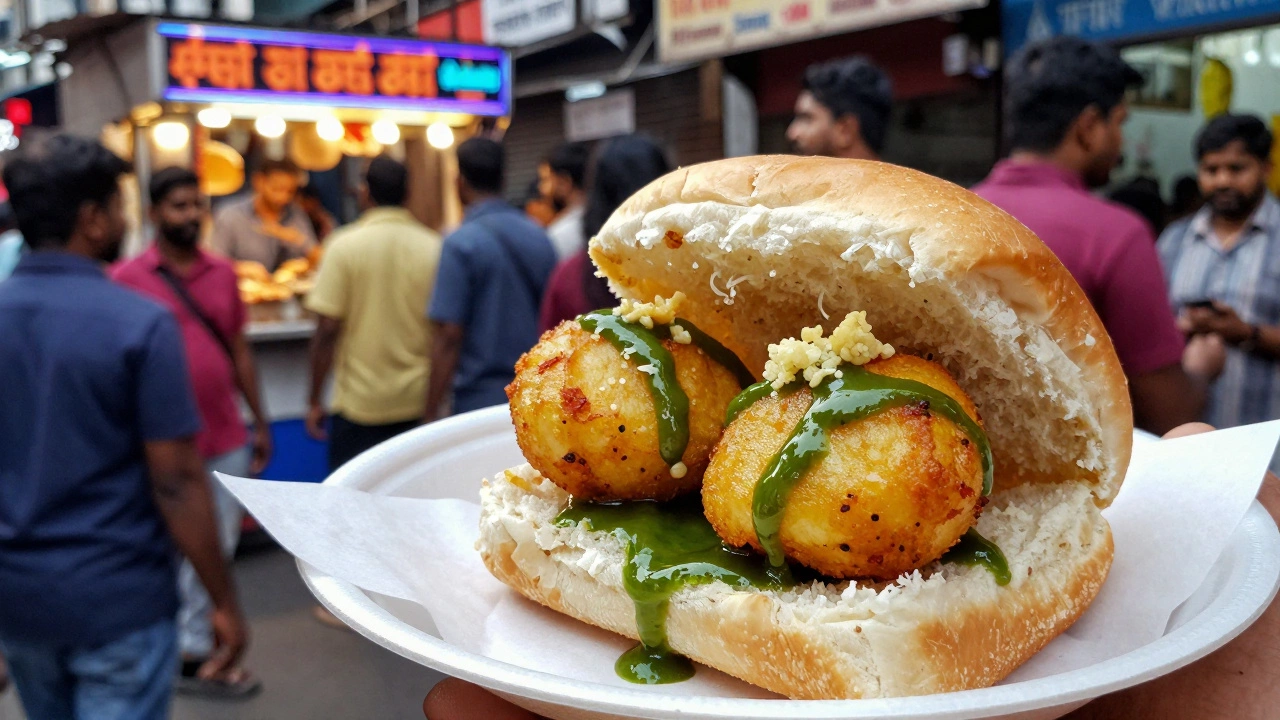
The undisputed champion here is Vada Pav, a spiced potato fritter served in a soft bread bun with chutneys. It is often called the Indian burger, but comparing it to a burger does it a disservice. A good vada pav is a symphony of textures: the crisp outer layer of the fried potato dumpling, the soft interior, the crunch of the green chili inside, and the heat of the garlic and tamarind chutneys oozing from the sides. You don’t eat it with a fork; you eat it with your hands, usually standing up.
But Mumbai offers more than just vada pav. Try the pav bhaji, a mashed vegetable curry cooked with butter and spices, served with toasted bread. Or look for bhel puri, a savory snack made of puffed rice, sev (crispy chickpea noodles), onions, tomatoes, and lemon juice. What makes Mumbai special is the variety available within a two-block radius. You can go from sweet to sour to spicy in five minutes without leaving the sidewalk.
- Must-try: Vada Pav, Pav Bhaji, Bhel Puri, Sevpuri.
- Best area: Crawford Market, Juhu Beach stalls, Fort area.
- Vibe: Fast-paced, chaotic, affordable.
Delhi: The Chaat Capital of the World
If Mumbai is about speed, Delhi is about indulgence. The national capital has a deep Mughal heritage, which influences even its street food. But where Delhi truly shines is in its mastery of chaat. Chaat refers to a category of savory snacks that balance sweet, sour, spicy, and creamy flavors. Delhiites take this seriously. The queues outside famous chaat stalls in Chandni Chowk can stretch for blocks, yet the turnover is so fast that you rarely wait long.
The star here is Aloo Tikki Chaat, spiced potato patties topped with chickpeas, yogurt, tamarind sauce, and mint chutney. When done right, the potato patty should be crispy on the outside and fluffy inside. The toppings are crucial-the yogurt must be fresh and tangy, the tamarind chutney thick and sweet, and the mint chutney sharp and herbaceous. Another Delhi classic is Paneer Tikka, marinated cottage cheese grilled over charcoal. The smoky flavor (dhungar) is unmistakable.
Don’t leave Delhi without trying Nihari or Biryani from a street-side stall in Old Delhi. These dishes are slow-cooked for hours, resulting in tender meat and deeply spiced gravy. While they are often served in restaurants, many authentic shops serve them in simple aluminum containers on the street, offering a taste that rivals high-end dining.
- Must-try: Aloo Tikki Chaat, Paneer Tikka, Nihari, Parathe Wali Gali parathas.
- Best area: Chandni Chowk, Karol Bagh, Khan Market.
- Vibe: Rich, hearty, historic.
Kolkata: Sweet, Sour, and Literary
Kolkata has a slower pace, and its food reflects that. Bengali cuisine is known for its subtle use of spices and its love for fish and sweets. But the street food scene in Kolkata is unique because it blends traditional Bengali flavors with British-era influences. The result is some of the most sophisticated street food in the country.
The most famous export is Kathi Roll, a wrap made with paratha bread filled with kebab meat, eggs, potatoes, and chutneys. Legend says it was invented in the 1940s by a chef named Abdul Ghani to help factory workers who didn’t have time to sit down for meals. Today, Kathi Rolls come in endless variations: chicken, mutton, egg, and vegetarian options. The bread is flaky, the filling is juicy, and the chutneys add a kick that keeps you coming back.
Another Kolkata staple is Puchka (known as Pani Puri elsewhere). In Kolkata, the water inside the hollow puri is flavored with cumin and mint, giving it a distinctively refreshing taste compared to the sweeter versions found in other parts of India. Also, try Kosha Mangsho (mutton curry) if you find a stall serving it-it’s a dry, intensely spiced dish that is pure comfort food.
- Must-try: Kathi Roll, Puchka, Kosha Mangsho, Phuchka.
- Best area: Park Street, College Street, North City Center.
- Vibe: Relaxed, intellectual, flavorful.
Hyderabad: Where Royalty Meets the Streets
Hyderabad is synonymous with biryani, but its street food scene is much more than just rice and meat. The city has a strong Islamic culinary tradition, thanks to its history as the seat of the Nizam rulers. This means the food is aromatic, rich, and heavily spiced with saffron, cardamom, and cloves.
While Hyderabadi Biryani, a fragrant rice dish cooked with marinated meat, saffron, and whole spices using the 'dum' method is often associated with restaurants, many street vendors and small eateries serve incredible versions. The key is the dum cooking method, where the pot is sealed with dough and cooked slowly over low heat. This traps the steam and allows the flavors to meld perfectly.
For true street food, look for Haleem, especially during Ramadan. This stew-like dish is made from wheat, lentils, and meat, simmered for hours until it becomes a thick, porridge-like consistency. It is topped with fried onions, ginger, and lemon juice. Another favorite is Ilish Polao, a rice dish made with hilsa fish, which is a delicacy in the region. Hyderabad also offers Osmania Biscuits, a sweet, flaky biscuit that pairs well with tea.
- Must-try: Hyderabadi Biryani, Haleem, Ilish Polao, Osmania Biscuits.
- Best area: Laad Bazaar, Charminar, Begum Bazaar.
- Vibe: Royal, aromatic, slow-cooked.
Chennai: The Tangy South
South Indian street food is often overlooked by outsiders, but Chennai (formerly Madras) offers some of the healthiest and most flavorful options. The base of most dishes is idli (steamed rice cakes) and dosa (fermented crepes), but the magic lies in the accompaniments.
The star here is Filter Coffee, strong, sweet coffee brewed using a metal filter and mixed with hot milk. It is not just a drink; it is an experience. Served in a tumbler and davara (small cup), the coffee is poured from a height to create froth. It is strong, sweet, and aromatic, perfect for pairing with a Medu Vada (savory donut) or a Parotta (layered flatbread).
Try Chettinad Chicken from a street stall if you can handle the heat. The Chettinad community is known for using freshly ground spices, including black pepper, star anise, and cinnamon. The result is a dish that is complex and fiery. For vegetarians, Appalam (rice crackers) dipped in sambar (lentil soup) is a simple yet satisfying snack.
- Must-try: Filter Coffee, Medu Vada, Chettinad Chicken, Appalam.
- Best area: T. Nagar, George Town, Anna Nagar.
- Vibe: Fresh, tangy, spicy.
| City | Signature Dish | Flavor Profile | Price Range (USD) | Best Time to Eat |
|---|---|---|---|---|
| Mumbai | Vada Pav | Spicy, Salty, Tangy | $0.50 - $2 | Anytime (24/7) |
| Delhi | Aloo Tikki Chaat | Creamy, Sweet, Spicy | $1 - $3 | Evening/Night |
| Kolkata | Kathi Roll | Savory, Herby, Mildly Spicy | $1 - $4 | Late Night |
| Hyderabad | Biryani | Aromatic, Rich, Hearty | $2 - $5 | Lunch/Dinner |
| Chennai | Filter Coffee & Vada | Tangy, Sweet, Fiery | $0.50 - $2 | Morning/Mid-day |
How to Choose Your Favorite?
So, which city has the tastiest food? It depends on what you crave. If you want quick, spicy, and energetic bites, go to Mumbai. If you prefer rich, creamy, and indulgent snacks, Delhi is your place. For those who appreciate wraps and subtle flavors, Kolkata is unbeatable. If you love aromatic rice and slow-cooked meats, Hyderabad delivers. And if you want healthy, tangy, and fresh options, Chennai is the way to go.
When traveling, keep these tips in mind:
- Follow the crowds: Local queues are the best indicator of quality and hygiene.
- Watch the preparation: Ensure the food is cooked fresh and hot. Avoid pre-cooked items sitting out.
- Start mild: Indian street food can be very spicy. Ask for "medium" or "less spicy" if you are sensitive to heat.
- Drink bottled water: Avoid ice cubes and tap water to prevent stomach issues.
Ultimately, the "tastiest" food is the one that resonates with your palate. Each city offers a unique window into India’s diverse culinary heritage. Whether you are biting into a vada pav in Mumbai or sipping filter coffee in Chennai, you are tasting history, culture, and passion.
Is Indian street food safe for foreigners?
Yes, it is generally safe if you choose busy stalls with high turnover. Look for places where locals eat, ensure the food is cooked fresh and hot, and avoid raw vegetables or ice unless you trust the water source. Always carry oral rehydration salts just in case.
What is the cheapest street food in India?
Vada Pav in Mumbai and Pani Puri in Delhi are among the cheapest, often costing less than $0.50. Idli and Dosa in South India are also very affordable, typically ranging from $0.50 to $1.50 depending on the city and toppings.
Can vegetarians find good street food in India?
Absolutely. India has a huge vegetarian population, and street food is predominantly plant-based. Options include Vada Pav, Samosas, Pakoras, Dosa, Idli, and various Chaats. Most stalls clearly label vegetarian items with a green dot.
Which city has the spiciest street food?
Chennai and Kerala are known for their fiery curries and chutneys. However, Mumbai’s Vada Pav and Delhi’s Chaat can also be quite spicy due to the use of green chilies and red chili powder. It varies by vendor, so always ask about the heat level.
What is the best time to eat street food in India?
Evening and night are the best times, especially between 6 PM and 10 PM. This is when most stalls are open, and the atmosphere is lively. Morning is great for breakfast items like Idli, Dosa, and Parathas. Avoid midday heat if possible, as hygiene can be harder to maintain.
